Joint security operations expand across Syria to prevent resurgence of Islamic State networks
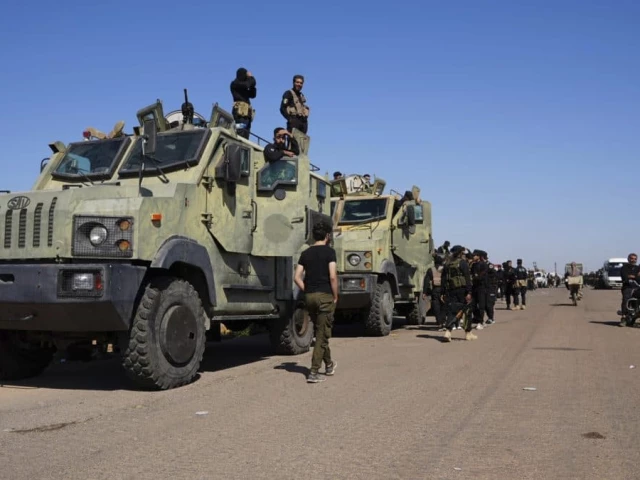
Syrian security forces, working in coordination with the international coalition, have intensified efforts to identify and dismantle Islamic State (IS) sleeper cells operating across various regions of the country. Although IS no longer controls large territories as it once did, the group continues to pose a persistent threat through covert networks that exploit security gaps, remote terrain, and local instability. These sleeper cells are believed to be responsible for sporadic attacks, assassinations, and acts of sabotage targeting civilians, infrastructure, and security personnel.
The current campaign is largely intelligence-driven, relying on surveillance, informant networks, and data analysis to pinpoint suspected militant hideouts. Officials involved in the operations say the strategy has shifted from large-scale military engagements to precise, targeted actions designed to minimize civilian harm while maximizing operational effectiveness. Raids are often conducted during early morning hours, with security forces surrounding specific locations to prevent suspects from escaping or destroying evidence.
A key focus of these operations is disrupting the logistical backbone that allows sleeper cells to survive. This includes cutting off funding streams, intercepting communication channels, and seizing weapons and explosives stored for future attacks. Militants are known to rely on smuggling routes, informal money transfers, and encrypted messaging platforms to avoid detection. By targeting these systems, authorities aim to weaken the cells’ ability to coordinate and operate independently.
Another critical element of the campaign is the arrest and interrogation of suspected IS affiliates. Intelligence officials say information gathered during questioning has led to the identification of additional cells, safe houses, and support networks. This chain-reaction effect is considered vital in countering decentralized terrorist structures, where individual cells may operate with limited direct contact with central leadership.
Despite these efforts, challenges remain significant. Syria’s vast geography, combined with years of conflict, has created areas with limited state presence where militants can hide. Desert regions, rural villages, and displacement camps are often cited as environments where sleeper cells attempt to blend in or recruit new members. Security forces must balance enforcement with sensitivity to local populations to avoid alienation that could fuel further radicalization.
International coalition partners continue to provide technical support, training, and aerial reconnaissance to assist Syrian forces. Coalition officials stress that preventing an IS resurgence requires sustained pressure, not short-term operations. Analysts warn that even a small number of active sleeper cells can destabilize communities if left unchecked, making long-term vigilance essential.
Experts on regional security emphasize that the fight against Islamic State sleeper cells in Syria is not only a national issue but a broader regional concern. IS has historically demonstrated the ability to adapt to changing circumstances, shifting from territorial control to insurgency tactics when under pressure. Sleeper cells are a core component of this strategy, allowing the group to remain operational even after major military defeats.
These covert networks typically consist of small groups that operate independently, reducing the risk of mass exposure. Members often live seemingly normal lives, enabling them to gather intelligence, move supplies, or plan attacks without attracting attention. This makes detection difficult and requires constant monitoring by security agencies. Analysts note that even a single successful attack can have an outsized psychological impact, undermining public confidence and creating a perception of instability.
The continued presence of IS sleeper cells also complicates reconstruction and recovery efforts in post-conflict areas. Investors, humanitarian organizations, and displaced civilians may hesitate to return if security conditions remain uncertain. For this reason, counterterrorism operations are closely linked to broader goals of economic recovery and social stabilization. Authorities argue that eliminating sleeper cells is essential to creating an environment where rebuilding efforts can succeed.
Regional dynamics further influence the situation. Border security remains a concern, as militants may attempt to move between neighboring countries to evade capture or coordinate cross-border activities. Intelligence sharing between regional governments and international partners is therefore considered a critical tool in countering IS networks. Joint databases, coordinated patrols, and shared surveillance assets help close gaps that militants could otherwise exploit.
At the same time, analysts caution that military and security measures alone are not sufficient. Addressing the root causes that allow extremist ideologies to persist—such as poverty, displacement, and lack of access to education—remains an ongoing challenge. Programs aimed at community engagement, deradicalization, and economic inclusion are increasingly viewed as necessary complements to hard security approaches.
Looking ahead, security officials stress that the fight against IS sleeper cells will likely be prolonged. While large-scale attacks may be prevented, the threat is unlikely to disappear entirely in the near future. Continuous intelligence gathering, international cooperation, and adaptive strategies will be required to keep militant networks under pressure and prevent them from exploiting periods of reduced vigilance.
Ultimately, sustained counterterrorism operations are seen as essential not only for Syria’s internal security but for the stability of the wider Middle East. Preventing the re-emergence of Islamic State in any form remains a shared priority for regional and international actors alike.