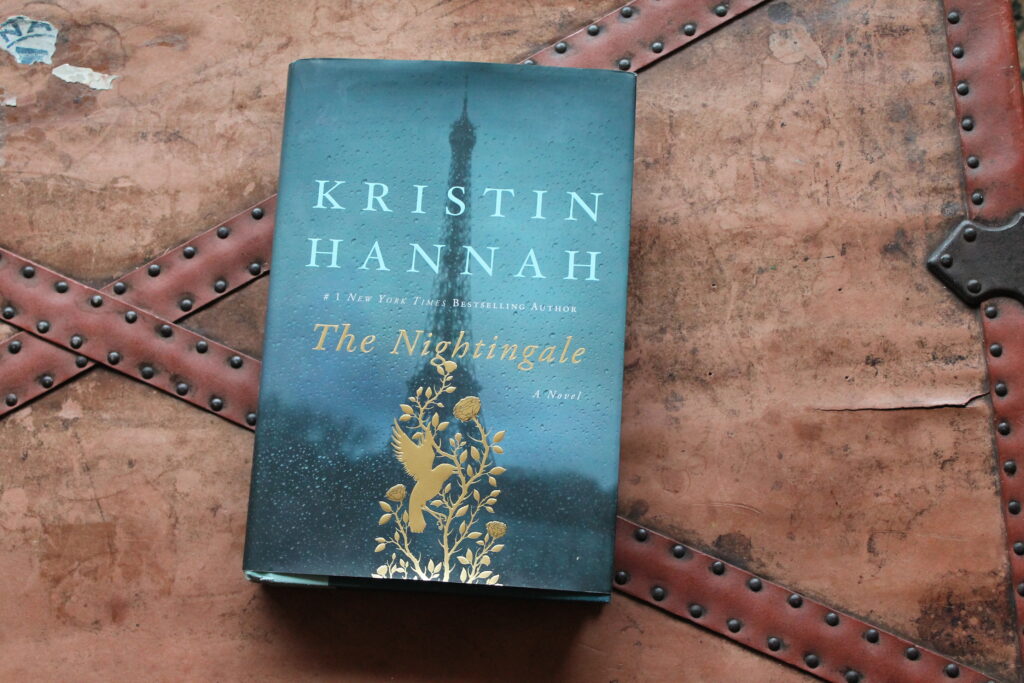
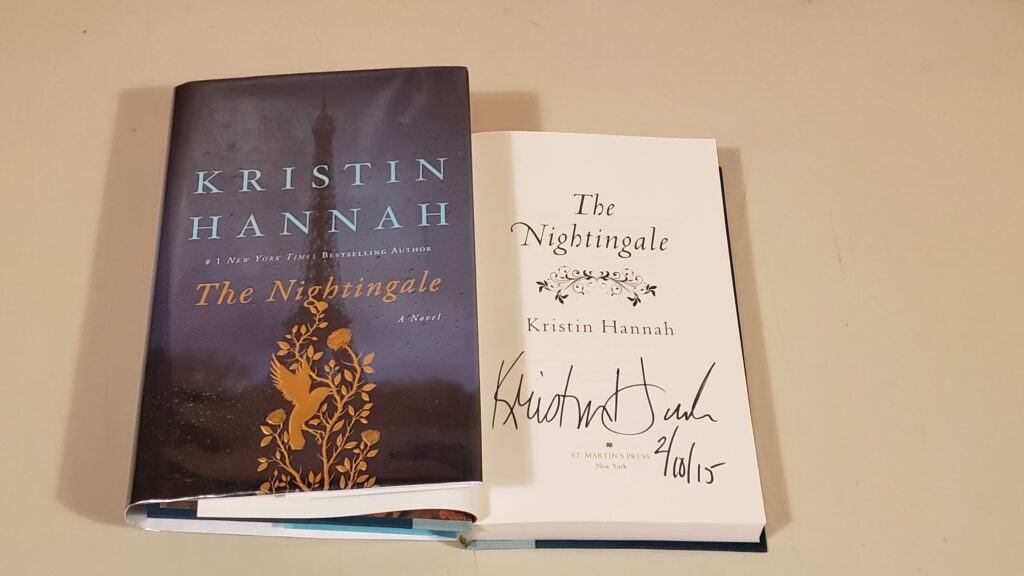
Author: Kristin Hannah Genre: Historical Fiction (World War II) Setting: Nazi-Occupied France (1939–1945)
Overview
The Nightingale tells the story of two French sisters—Vianne Mauriac and Isabelle Rossignol—during World War II under Nazi occupation. The novel explores courage, sacrifice, survival, and the often-overlooked role of women in wartime resistance.
Main Characters
- Vianne Mauriac – The older sister; calm, practical, and focused on protecting her daughter Sophie.
- Isabelle Rossignol – The younger sister; rebellious, bold, and determined to fight against the Nazis.
- Antoine Mauriac – Vianne’s husband, captured as a Prisoner of War.
- Captain Beck – A German officer assigned to live in Vianne’s home.
- Gaëtan – A member of the French Resistance who works with Isabelle.
Detailed Summary
1. The War Begins (1939–1940)
When Germany invades France, Vianne’s husband Antoine is sent to fight and is soon captured. France quickly falls to Nazi forces. Vianne remains in her village alone with her young daughter, Sophie.
Meanwhile, Isabelle is living in Paris. She has always been rebellious and refuses to accept the occupation quietly.
2. Occupation and Survival (Vianne’s Story)
The Nazis assign a German officer, Captain Beck, to live in Vianne’s home.
Vianne’s primary goal becomes simple:
Protect her daughter and survive.
As the occupation intensifies:
- Jews are ordered to register.
- Food is rationed.
- Public executions increase.
- Jewish families are deported to concentration camps.
Initially, Vianne tries to remain neutral. However, when her Jewish best friend is deported, she can no longer ignore what is happening.
She begins secretly:
- Hiding Jewish children in her home.
- Creating false identity papers.
- Arranging for their escape to safer locations.
If discovered, she would face execution.
3. Isabelle Joins the Resistance
Isabelle refuses to remain passive.
She joins the French Resistance and adopts the code name:
“The Nightingale” (Le Rossignol).
Her mission includes:
- Smuggling downed Allied pilots across the Pyrenees Mountains into Spain.
- Delivering secret messages.
- Arranging false documentation.
She repeatedly risks her life escorting pilots through dangerous mountain crossings.
Isabelle also develops a romantic relationship with Gaëtan, a fellow resistance fighter.
4. Escalation of Brutality
As the war continues:
- Food shortages worsen.
- Public executions become common.
- Jewish deportations increase.
A more violent German officer replaces Captain Beck. During this period, Vianne endures sexual assault, adding deep emotional trauma to her struggle.
Despite everything, she continues saving Jewish children.
5. Isabelle’s Capture
Isabelle’s resistance network is betrayed.
She is arrested, interrogated, and tortured. Eventually, she is sent to the Ravensbrück concentration camp.
In the camp, she faces:
- Starvation
- Forced labor
- Brutal conditions
Even under torture, she never reveals her identity as “The Nightingale.”
6. Liberation and Aftermath (1945)
The war ends.
- France is liberated.
- Antoine returns from the POW camp.
- Survivors attempt to rebuild their lives.
Isabelle is eventually released from the concentration camp but is severely weakened by illness and suffering.
Shortly after returning home, she dies due to health complications caused by the camp.
Her bravery is later officially recognized, though she did not live to see that honor.
7. Final Revelation (Present Timeline)
The novel opens in the present day with an elderly woman reflecting on her wartime memories.
In the final reveal, readers learn that the narrator is Vianne.
Isabelle was the legendary resistance hero known as “The Nightingale.”
Vianne carries her sister’s memory and ultimately ensures her story is told.
Core Themes
1. Women’s Role in War
The novel highlights that heroism is not limited to soldiers on battlefields. Women resisted through intelligence, protection, sacrifice, and survival.
2. Survival vs. Resistance
- Vianne represents survival and quiet courage.
- Isabelle represents bold resistance and open defiance.
Both are forms of bravery.
3. Sisterhood
Despite conflict and differences, their bond ultimately reflects deep loyalty and love.
4. Sacrifice
Isabelle sacrifices her life.
Vianne sacrifices safety, stability, and emotional peace.
Conclusion
The novel emphasizes that true heroism often happens away from the battlefield. Courage can be quiet, unseen, and deeply personal.