Trump’s bold declaration about the destruction of Iran’s military command raises global concerns over the future of U.S.–Iran relations and regional stability.
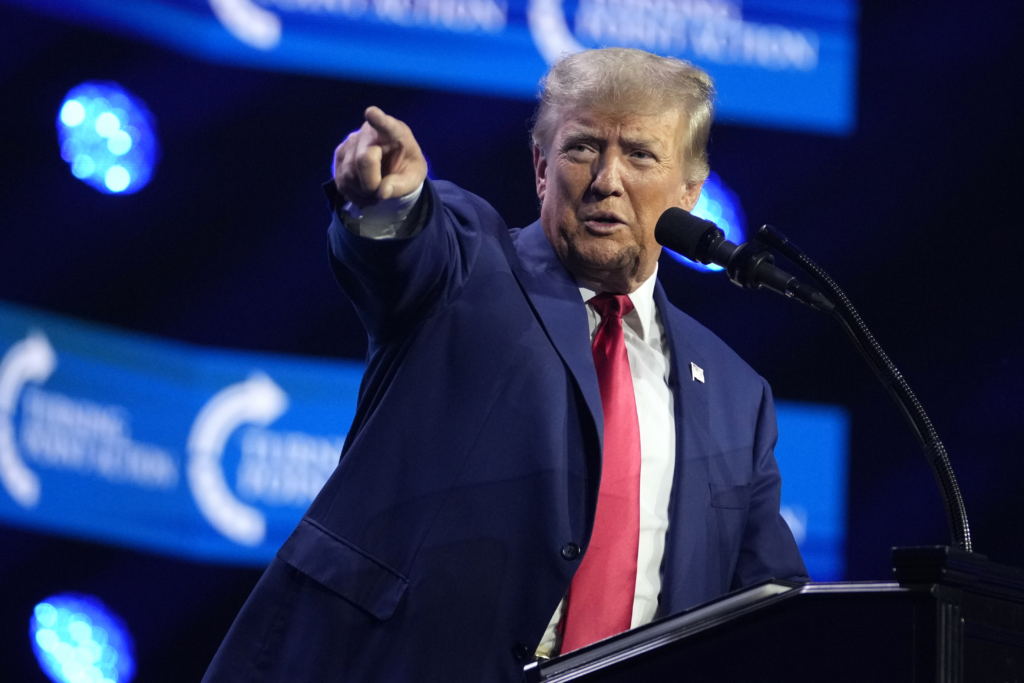
In a startling development, President Donald Trump recently declared that Iran’s entire military command is gone, raising alarm worldwide about the extent of the military actions taken against Tehran and what this means for the region’s stability. Trump’s statement comes at a time when tensions between the United States and Iran are at an all-time high. With missile strikes, air raids, and proxy wars dominating the landscape, Trump’s claim signals a critical shift in the power balance in the Middle East. While the full extent of the destruction remains unclear, the potential ramifications for both U.S. foreign policy and Iran’s military capabilities are significant.
Trump’s Bold Statement: What Does It Mean?
In a tweet and subsequent public remarks, Trump asserted that Iran’s military command structure has been completely dismantled. While he did not provide specific details or corroborating evidence, the President emphasized that this event marks a decisive blow to Iran’s ability to retaliate or further escalate hostilities. The remarks are a stark escalation in the ongoing war of words and actions between the two nations.
Trump’s statement implies that the central command structure of Iran’s military leadership has been incapacitated to the point of non-functionality. Such a claim suggests that key figures within the Iranian leadership, including high-ranking generals and strategic planners, may have been targeted in coordinated strikes or cyber operations. This aligns with a pattern of targeted operations against Iranian military assets in the past, including the assassination of General Qasem Soleimani in early 2020, a move that significantly raised tensions between the two nations.
Context: Escalating U.S.–Iran Conflict
The U.S. and Iran have been locked in a decades-long conflict, punctuated by both diplomatic efforts and military confrontations. The United States has accused Iran of sponsoring terrorism, developing nuclear weapons, and threatening regional stability, especially in the Persian Gulf and Syria. Meanwhile, Iran has repeatedly criticized the U.S. for its military presence in the region and its support for Israel.
In recent months, the escalation between the two nations has intensified. Following Ayatollah Khamenei’s death and the U.S. airstrikes that reportedly targeted key Iranian military leaders, tensions have been rising. The exchange of missile attacks and drone strikes between U.S. and Iranian forces has caused widespread concern among global powers, particularly those in the European Union and the Middle East.
Trump’s statement is likely in response to recent military strikes or a series of cyberattacks that have disrupted Iran’s internal military operations. If confirmed, the claim that Iran’s military command has been eliminated represents a severe blow to Tehran’s power projection capabilities and its ability to coordinate military efforts, both domestically and through proxy groups in Syria, Lebanon, and Yemen.
What Would It Mean for Iran’s Military Capability?
If true, Trump’s assertion that Iran’s entire military command is “gone” would dramatically alter the balance of power in the region. The Iranian military plays a critical role in Tehran’s ability to exert influence over its proxy forces and its nuclear ambitions. Dismantling its central command structure would render its leadership fragmented and hinder its ability to direct operations with any degree of coordination.
Iran’s military strength is heavily reliant on its General Staff of the Armed Forces, the Islamic Revolutionary Guard Corps (IRGC), and its elite Quds Force, responsible for overseeing operations outside Iran’s borders. With key leadership figures potentially taken out of the equation, the country could face a period of operational paralysis, which may severely limit its capacity for retaliation and military mobilization.
The immediate consequences would be felt in Iran’s relationships with its regional allies, such as Hezbollah, Hamas, and militias in Iraq. Iran’s ability to support these groups, both financially and militarily, could be significantly weakened. As a result, this would likely diminish Iran’s influence in Lebanon, Syria, and Yemen, where its proxies have been actively engaged in combat against U.S.-backed forces.
Implications for U.S. Strategy and Global Security
Trump’s announcement has far-reaching implications for the U.S. and its strategy in the region. If Iran’s military command has been successfully neutralized, this would represent a strategic victory for the United States and its allies. It would demonstrate the U.S.’s military superiority and intelligence capabilities, which could lead to a shift in global power dynamics in favor of the West.
However, such an action could also trigger unintended consequences. Iran, though severely weakened, may still seek retribution through proxy warfare or cyberattacks against U.S. interests. The risk of escalating into a broader regional war remains high, especially as Iran is unlikely to back down from defending its sovereignty and regional influence. The Gulf States, Israel, and U.S. forces stationed in the region would likely be at increased risk of retaliatory attacks from Iranian-backed militias and other hostile entities.
From a global perspective, the U.S. must also navigate the diplomatic fallout from this bold claim. European allies and other international powers may criticize the aggressive approach, calling for de-escalation and a return to diplomatic talks. This could challenge efforts to form a united front against Iran’s nuclear ambitions, as many countries, including China and Russia, continue to support Iran’s stance on regional sovereignty.
A Dangerous Precedent?
President Trump’s declaration regarding the elimination of Iran’s military command raises questions about the future trajectory of U.S.–Iran relations and the broader geopolitical landscape. While military action may have temporarily neutralized Iran’s ability to wage war, it also opens the door to more covert operations and proxy conflicts. Iran’s regional influence is deeply entrenched, and even with its military leadership reportedly gone, its ideology and proxy network may allow it to continue influencing the region for years to come.
The situation remains highly volatile, and international observers will be keenly watching to see how Iran responds in the coming weeks. If Trump’s statement is accurate, it marks a turning point in the long-standing standoff between the U.S. and Iran, though the true consequences of this development are yet to fully unfold.