Controversy erupts after Israeli military says targeted individual was a Hezbollah member posing as a journalist during southern Lebanon operations
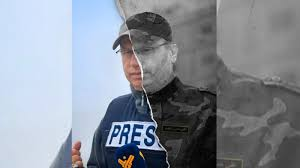
The Israel Defense Forces has acknowledged responsibility for the killing of a journalist in southern Lebanon, while simultaneously claiming that the individual was not a civilian reporter but a Hezbollah operative allegedly operating under the cover of journalism.
The incident took place amid ongoing cross-border fighting in Southern Lebanon, where Israel and Hezbollah have been engaged in intense military exchanges for weeks. The Israeli military stated that the targeted individual was involved in surveillance and coordination activities for Hezbollah, using journalistic cover to operate near conflict zones.
Israel’s Version of Events
According to Israeli military statements, intelligence assessments indicated that the individual had ties to Hezbollah’s military wing and was allegedly involved in collecting battlefield information. The IDF argued that such activity justified the strike, framing it as a targeted operation against a militant rather than a media worker.
The military emphasized that Hezbollah has previously been accused of embedding operatives within civilian roles, including media and humanitarian positions, to gather intelligence and avoid direct targeting.
Concerns from Media and Rights Groups
The killing has sparked strong reactions from press freedom organizations and international observers, who argue that targeting journalists—regardless of allegations—raises serious concerns under international humanitarian law.
Media watchdog groups stress that journalists operating in conflict zones are protected under international conventions, unless there is clear and verifiable evidence of direct participation in hostilities. The absence of transparent proof has led to calls for an independent investigation into the incident.
Rising Tensions in Southern Lebanon
The killing comes amid escalating violence along the Israel–Lebanon border, where cross-border strikes, rocket fire, and air raids have become increasingly frequent. Southern Lebanon has emerged as a key battleground in the wider regional conflict involving Israel and Hezbollah.
Both sides have intensified operations, with Israel targeting suspected militant infrastructure and Hezbollah launching coordinated attacks on Israeli military positions. Civilian areas and infrastructure have also been impacted, raising fears of a broader escalation.
Information Warfare and Conflicting Narratives
The incident highlights the growing complexity of modern conflict, where information warfare and battlefield narratives play a critical role. Israel maintains that Hezbollah embeds operatives within civilian roles, while critics argue that such claims are often used to justify strikes that result in civilian casualties.
Without independent verification, competing narratives make it difficult to establish clear accountability in real time, especially in active war zones where access for journalists and investigators is limited.
Humanitarian and Legal Implications
If the killed individual was indeed a journalist, the strike could raise serious questions under international humanitarian law. However, if the IDF’s claims are accurate, the case may fall under the category of lawful targeting of combatants disguised as civilians.
Legal experts emphasize that such cases often require detailed post-incident investigations to determine the true status and role of the individual at the time of death.
Conclusion
The killing of a journalist—amid Israeli claims that he was a Hezbollah operative—adds another layer of controversy to an already highly volatile conflict in southern Lebanon. With both sides presenting conflicting accounts, the incident underscores the challenges of distinguishing combatants from civilians in modern warfare.
As the conflict continues, scrutiny over military actions and media safety is likely to intensify, especially in regions where journalism and combat zones increasingly overlap.