Buenos Aires aligns with U.S. and allies by labeling IRGC a terrorist group, enabling sanctions and signaling stronger stance against Tehran’s proxies
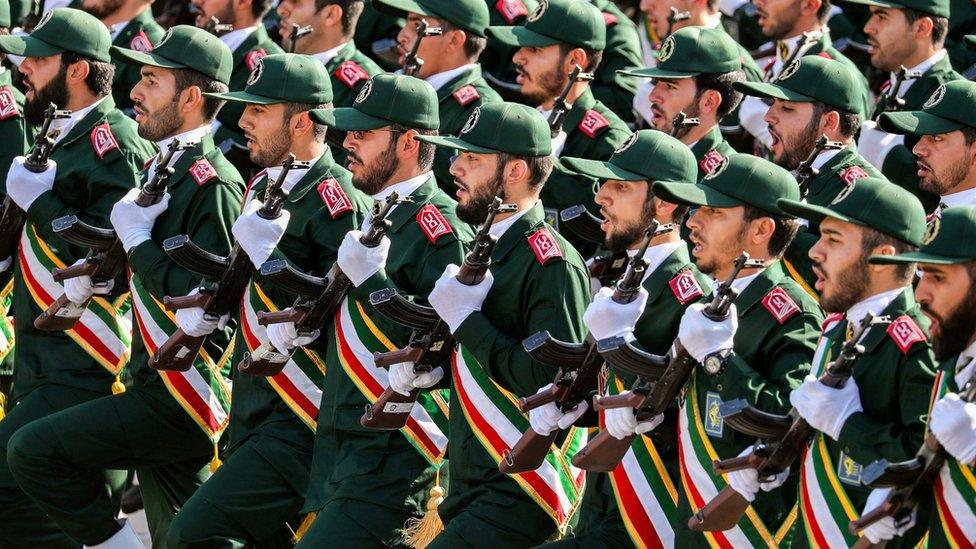
Argentina has officially designated Iran’s Islamic Revolutionary Guard Corps (IRGC) as a terrorist organization, marking a significant escalation in global diplomatic pressure against Tehran’s military and proxy networks. The move, announced by the presidential office in Buenos Aires, aligns Argentina more closely with the United States and other nations that have already proscribed the IRGC under counterterrorism laws.
The decision reflects growing international concern about the IRGC’s role in supporting militant groups abroad, particularly Hezbollah, which Argentina holds responsible for the deadliest terrorist attack in its modern history — the 1994 bombing of the AMIA Jewish community center in Buenos Aires that killed 85 people and injured hundreds.
Under the new designation, the Argentine government gains expanded legal authority to impose financial sanctions, freeze assets, and restrict operations connected to the IRGC. This includes curbs on any financial flows, commercial activities, or logistical support that might benefit the organization or its affiliates.
Why Argentina Took This Step
Argentina’s decision comes amid a broader international trend of classifying the IRGC as a terrorist entity. The United States designated the IRGC as a Foreign Terrorist Organization years ago, and recent months have seen other Western nations and regional allies adopt similar stances. The European Union, for example, formally listed the IRGC as a terrorist organization earlier in 2026, subjecting it to EU-wide sanctions.
Buenos Aires’ action also follows domestic pressure and historical grievances. Argentine authorities have long accused Iran and its proxies of orchestrating or facilitating terrorist attacks on Argentine soil. The IRGC’s alleged support for Hezbollah and other armed groups abroad has been cited as justification for expanding the list of proscribed entities beyond Hezbollah itself.
Strategic and Political Implications
By aligning its policy with that of the United States and several European countries, Argentina is signaling a more assertive role in international counterterrorism efforts. The move is seen as part of President Javier Milei’s broader foreign policy agenda, which emphasizes security cooperation with Western allies and a tougher stance on state actors accused of supporting terrorism.
This alignment could enhance Argentina’s diplomatic leverage, particularly with countries that have made IRGC designation a cornerstone of their foreign policy. It also opens the door to closer cooperation on intelligence sharing, sanctions enforcement, and legal measures aimed at disrupting terrorist financing networks.
IRGC’s Global Network and Controversy
The IRGC is not a conventional military force; it operates as a parallel institution within Iran’s political and economic system. Beyond its military functions, it wields significant influence over Iran’s economy and foreign policy. The IRGC’s Quds Force, its elite overseas operations arm, has been particularly active in supporting allied militias and proxy groups across the Middle East, including in Lebanon, Syria, Iraq, and Yemen.
Critics argue that the IRGC’s activities have contributed to regional instability and violence, while supporters within Iran view the organization as a defender of national sovereignty and regional influence. The dichotomy underscores why the IRGC remains one of the most contentious entities in global geopolitics.
Legal and Economic Effects
The designation enables Argentina to adopt legal mechanisms that can disrupt the IRGC’s financial and logistical networks. For instance, Argentine banks and financial institutions are now prohibited from engaging in transactions that could benefit the IRGC. These restrictions can also extend to entities indirectly linked to the IRGC through business relationships or shared leadership.
On the economic front, the move may discourage Iranian investment or partnerships in Argentina, particularly in sectors where IRGC-affiliated businesses are active. While Argentina does not have extensive economic ties with Iran, the designation sends a strong message to global markets about Buenos Aires’ commitment to counterterrorism norms.
Reactions and Future Outlook
International reactions have been mixed. Western allies and countries already critical of the IRGC welcomed the decision as a reinforcement of global pressure on Iran’s military apparatus. However, nations sympathetic to Tehran or opposed to unilateral designations outside the United Nations framework may view Argentina’s action as politically motivated.
Looking ahead, Argentina’s move could encourage other countries in Latin America and beyond to reconsider their stance on the IRGC and similar groups. It also underscores how the fight against terrorism has evolved, with state-linked military organizations increasingly subject to the same legal scrutiny as non-state militant groups.
Ultimately, Argentina’s designation of the IRGC as a terrorist organization marks a notable shift in international counterterrorism policy — one that blends historical grievances, geopolitical alignment, and legal strategy into a potent diplomatic statement.