Tehran escalates digital battlefield, warning satellite internet network could be attacked amid growing US-Iran tensions
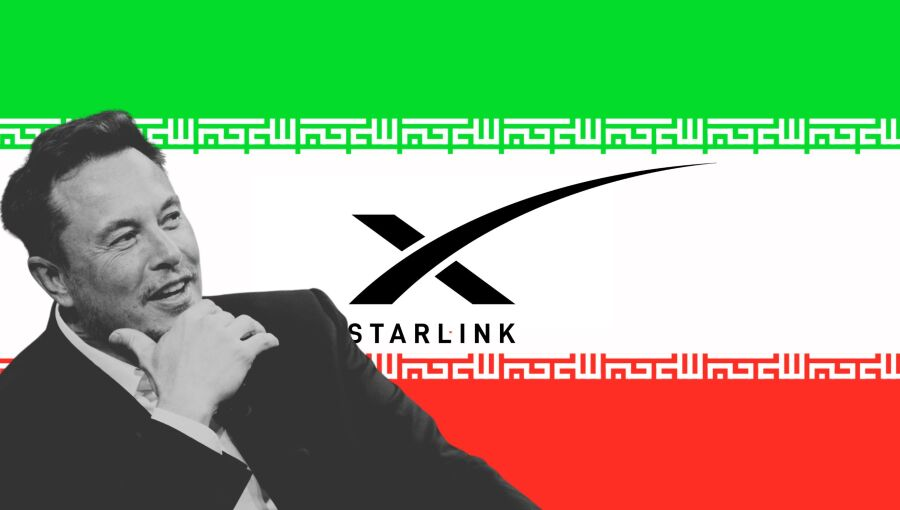
Iran has significantly escalated the technological dimension of its ongoing conflict with the United States and its allies by declaring Elon Musk’s Starlink satellite internet network a “legitimate target.” The announcement, reported by Iranian state-linked media, signals a major shift in how modern warfare is being defined—expanding beyond traditional military assets to include private technology infrastructure.
According to reports, Iranian officials framed Starlink not as a civilian communication tool but as part of a broader military and strategic ecosystem supporting U.S. and allied operations in the region. The designation effectively places Starlink infrastructure—both satellites and ground terminals—within the scope of potential military action.
The move comes amid an intensifying regional conflict that has already seen conventional warfare, cyber operations, and proxy engagements across the Middle East. By targeting Starlink, Iran appears to be opening a new front in what analysts are calling a “digital war,” where control over information and connectivity is as critical as control over territory.
Starlink, operated by SpaceX and led by Elon Musk, has played a controversial and influential role in Iran in recent years. During periods of unrest and government-imposed internet blackouts, the satellite network has provided a vital communication lifeline for civilians, activists, and journalists seeking to bypass state censorship.
The Iranian government, however, has long viewed Starlink as a threat to its internal security. Authorities have banned its use, criminalized possession of its terminals, and deployed sophisticated jamming technologies to disrupt its signals. Despite these measures, thousands of terminals have reportedly been smuggled into the country, enabling limited but critical access to the global internet.
Iran’s latest declaration builds on this history of confrontation with the platform. Officials argue that Starlink is being used not only for civilian communication but also for intelligence gathering, coordination of protests, and potentially even military targeting. This perception has led Tehran to blur the line between civilian and military technology—a move that could have far-reaching consequences under international law.
The timing of the announcement is also significant. It comes as Iran’s Islamic Revolutionary Guard Corps (IRGC) has expanded its list of potential targets to include major U.S. technology companies, accusing them of facilitating attacks and assassinations within Iran. In a recent statement, the IRGC warned that institutions linked to what it described as “terrorist operations” would now be considered legitimate targets.
Experts warn that targeting a global satellite network like Starlink could have unpredictable and dangerous consequences. Unlike traditional infrastructure, Starlink operates through a vast constellation of low-Earth orbit satellites, making it difficult to disable without affecting services across multiple countries. Any attempt to attack or disrupt the network could therefore escalate tensions far beyond the Middle East.
Additionally, Starlink’s presence is not limited to Iran. Iranian media reports have highlighted its deployment across Gulf countries such as Bahrain, Kuwait, and the United Arab Emirates, suggesting that any action against the network could impact regional connectivity and potentially draw neighboring states into the conflict.
The situation also raises broader questions about the role of private companies in modern warfare. As firms like SpaceX, Google, and Microsoft become increasingly embedded in global communications and defense systems, they are finding themselves on the front lines of geopolitical conflicts. Iran’s decision to classify Starlink as a target underscores how these companies are no longer مجرد commercial entities but strategic assets in international power struggles.
From a legal perspective, the move could challenge established norms governing armed conflict. International humanitarian law traditionally distinguishes between civilian and military targets, but the dual-use nature of technologies like Starlink complicates this distinction. If widely adopted, Iran’s approach could set a precedent for other nations to target private infrastructure during conflicts.
Meanwhile, the humanitarian implications cannot be ignored. For many Iranians, Starlink represents one of the few remaining channels to access uncensored information and communicate with the outside world. Any effort to disable or attack the network could further isolate the population and exacerbate the country’s ongoing information blackout.
As tensions continue to rise, the designation of Starlink as a “legitimate target” highlights a critical turning point in the evolution of warfare. The battlefield is no longer confined to land, sea, and air—it now extends into space and cyberspace, where satellites and data networks have become strategic assets.
Whether this development leads to direct action against Starlink or serves as a warning to the United States and its allies remains to be seen. However, one thing is clear: the lines between civilian technology and military infrastructure are rapidly disappearing, and the consequences of this shift could reshape global conflict for years to come.