Former U.S. President Donald Trump’s remarks on NATO funding and commitments reignite debate over America’s role in the alliance and Europe’s security future.
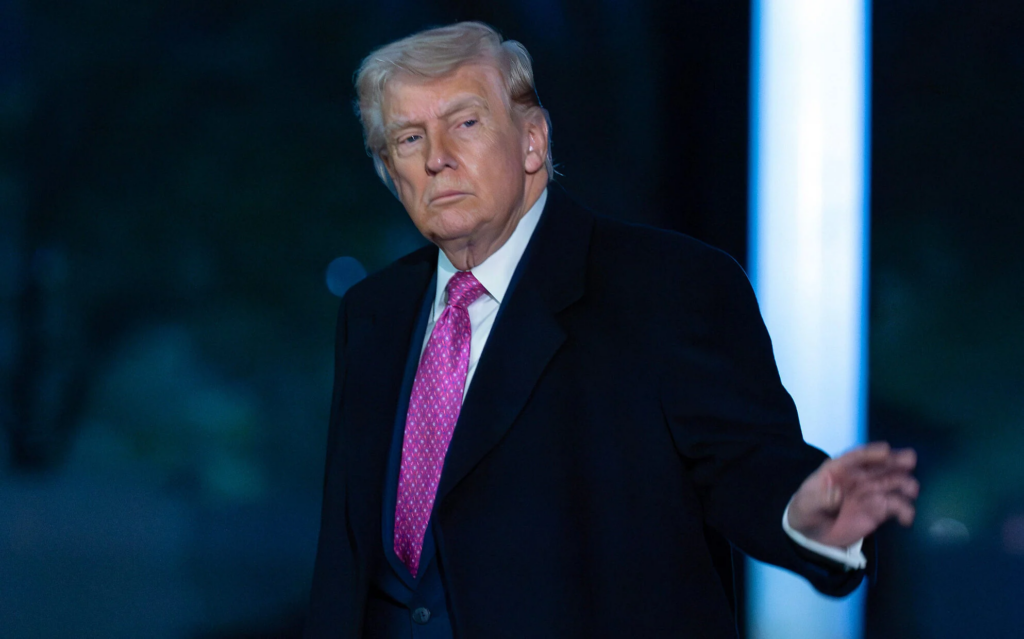
Former U.S. President Donald Trump has once again triggered global political debate after stating that he is “strongly considering pulling out of NATO” if conditions regarding defense spending and burden-sharing are not met. The statement has sparked concern among European allies and renewed discussions about the future stability of the North Atlantic Treaty Organization (NATO), the world’s most powerful military alliance.
Trump’s comments were made during a political briefing where he criticized what he described as “unfair burden sharing” within NATO, arguing that the United States carries a disproportionate share of the alliance’s financial and military responsibilities. He reiterated his long-standing position that NATO members should meet or exceed defense spending targets instead of relying heavily on U.S. military protection.
Trump’s Long-Standing NATO Criticism
Donald Trump has consistently expressed skepticism about NATO since his first term in office. During his presidency from 2017 to 2021, he repeatedly pressured European allies to increase their defense budgets to at least 2% of GDP, as agreed under NATO guidelines.
He previously suggested that the U.S. might reconsider its commitment to NATO if member states fail to meet their obligations, a stance that has often caused diplomatic tension between Washington and European capitals such as Berlin, Paris, and Brussels.
His latest remarks mark a continuation—and escalation—of that position, suggesting the possibility of a full U.S. withdrawal from the alliance, something that would represent a historic shift in global security architecture.
What NATO Is and Why It Matters
The North Atlantic Treaty Organization (NATO) was established in 1949 as a collective defense alliance between North America and Europe. Its core principle is Article 5, which states that an armed attack against one member is considered an attack against all members.
The United States has been the dominant military power within NATO since its creation, providing nuclear deterrence, military logistics, intelligence, and rapid deployment capabilities. Any potential U.S. withdrawal would fundamentally reshape the alliance’s operational strength and global influence.
Reactions From Europe and NATO Members
Trump’s statement has prompted concern among European leaders, many of whom rely heavily on NATO for security, particularly amid ongoing tensions with Russia.
Several NATO member states have in recent years increased defense spending in response to U.S. pressure and rising geopolitical threats. However, officials across Europe have repeatedly emphasized that U.S. leadership remains essential to NATO’s effectiveness.
Diplomatic observers warn that even the suggestion of a U.S. exit from NATO could weaken deterrence strategies and embolden adversarial powers. European defense planners have long argued that replacing U.S. capabilities—especially in intelligence, air power, and nuclear deterrence—would take decades and massive investment.
Strategic Implications of a Possible U.S. Exit
If the United States were to leave NATO, it would mark one of the most significant geopolitical shifts since World War II. Analysts say it could lead to:
- A major restructuring of European defense systems
- Increased military spending across EU nations
- Reduced U.S. influence in European security affairs
- Greater uncertainty in Eastern Europe, especially near Russia’s borders
Such a move could also encourage alternative defense arrangements within Europe, including proposals for a more independent European military framework.
Domestic Political Context in the U.S.
Trump’s comments also reflect ongoing debates within American politics regarding foreign policy priorities. Supporters of his “America First” doctrine argue that the U.S. should reduce overseas military commitments and focus more on domestic issues.
Critics, however, warn that withdrawing from NATO would undermine decades of American-led global stability and weaken strategic alliances that have helped deter major conflicts since 1945.
Conclusion
Donald Trump’s statement that he is considering pulling the United States out of NATO has reignited a major international debate about the future of Western security cooperation. While no formal policy change has been announced, the remarks alone have created uncertainty among allies and raised questions about the long-term role of the United States in global defense structures.
As geopolitical tensions continue to rise worldwide, NATO’s unity—and America’s commitment to it—remains a central pillar of international security discussions.