Iran’s Revolutionary Guards intensify strategic missile campaign with a three‑hour barrage targeting U.S., Israeli and allied positions
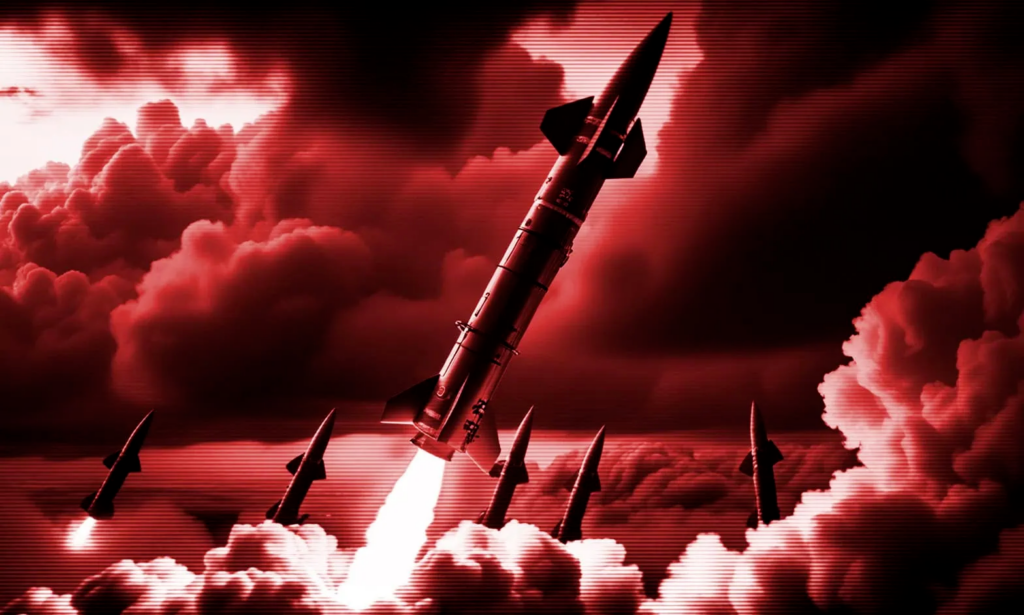
The Islamic Revolutionary Guard Corps (IRGC) of Iran has announced the launch of the 37th wave of its ongoing strategic bombardment campaign, known as Operation True Promise IV, delivering an extended missile and drone salvo that lasted more than three hours and marked another dramatic escalation in the broader Middle East conflict. According to IRGC statements, this sustained barrage targeted sensitive military and strategic infrastructure across the region, including positions linked to U.S. and Israeli forces.
Launched late on March 10, 2026, the 37th wave was one of the most intense rounds of the operation to date. State‑aligned Iranian outlets reported that the barrage involved a combination of ballistic and hypersonic missiles, as well as attack drones, aimed at strategic sites in Iraqi Kurdistan, Bahrain, and central Israel near Tel Aviv. The missiles used reportedly included systems such as Kheibar Shekan, Qadr, and Khorramshahr, many equipped with multiple warheads designed to overwhelm advanced air‑defense systems.
Origins and Evolution of Operation True Promise IV
Operation True Promise IV is the latest phase of Iran’s long‑running series of offensive operations that have expanded as the conflict between Iran and the U.S.–Israel alliance deepened in early 2026. These operations are described by Tehran as retaliatory efforts in response to coordinated American and Israeli strikes against Iranian military infrastructure and leadership targets. The campaign — which has included dozens of sequential waves — is intended to degrade enemy capabilities while asserting Iranian military resilience and strategic reach.
The IRGC first announced Operation True Promise IV in late February, shortly after a significant uptick in cross‑border hostilities. Previous waves involved precision missile strikes on U.S. military bases, air defense sites, and infrastructure hubs in the Gulf and Israeli territories. Each phase has intensified over time, with the 30th, 31st, and 35th waves featuring heavy use of advanced ballistic missiles, hypersonic systems, and unmanned attack drones across multiple theaters.
Targets and Tactical Impact
According to the IRGC’s Public Relations Office, the 37th wave was aimed at striking “hostile targets” across critical regions. Reported impacts included:
- Erbil in Iraqi Kurdistan, a base used by U.S. coalition forces and regional allies.
- U.S. Fifth Fleet installations in Bahrain, a lynchpin of American naval power in the Gulf.
- Be’er Ya’akov and Tel Aviv, major population centers and strategic hubs in central Israel.
Iranian statements claimed that the strikes successfully hit these targets, using missile variants capable of extended range and payload, including multi‑warhead configurations. The operations were described by Iranian officials as a decisive response to what Tehran casts as “unprovoked aggression” by U.S. and Israeli forces.
While independent confirmations of specific impacts remain limited due to the fog of war, the reports align with broader patterns seen in earlier waves of Operation True Promise IV, which have increasingly targeted both military and infrastructure objectives across a broad swath of the region. Observers note that the sheer volume and frequency of waves reflect IRGC intent to sustain pressure on adversaries and signal Iran’s capacity to wage prolonged missile campaigns.
Warfare Context and Regional Escalation
Operation True Promise IV’s sustained salvos come amid a deepening and multifaceted Middle East war that has drawn in regional powers and global players. What began as a confrontation sparked by targeted airstrikes has evolved into a full‑scale exchange involving ballistic missiles, drones, and cyber elements — spanning from the Persian Gulf to the Levant.
The Iranian campaign has intersected with proxy engagements through allied groups in Iraq, Yemen, and Lebanon, contributing to a multi‑front conflict dynamic. At the same time, the United States and Israel have reinforced military positions and conducted their own strikes against Iranian infrastructure deep inside Iran.
The significance of the 37th wave also lies in its duration. A multi‑hour barrage of missiles and drones is intended not only to inflict damage but also to demonstrate operational endurance and the ability to coordinate large‑scale strategic assaults without immediate interruption, a factor analysts say could shape future strategic and diplomatic calculations.
Humanitarian and Strategic Consequences
Prolonged missile salvos such as the one seen in the 37th wave inflict ripple effects beyond direct military targets. Civilian populations in affected areas have faced repeated disruptions from air‑raid alerts and intercepted projectiles, while infrastructure damage and economic strain have compounded humanitarian needs in several nations. The escalation has also pressured neutral neighboring states to reinforce defenses and recalibrate diplomatic stances.
International humanitarian bodies have expressed growing concern about the cumulative toll on civilian life and regional stability. With each wave of strikes, fears of broader conflagration increase, as the risk of miscalculations and unintended consequences escalates. Analysts have warned that the sustained intensity of operations could deepen divisions and prolong conflict timelines absent significant diplomatic intervention.
Looking Ahead: What the 37th Wave Signals
The launch of the 37th wave of Operation True Promise IV underscores Iran’s strategic reliance on missile warfare and its intent to uphold pressure on adversaries despite military setbacks. It also highlights how the conflict has shifted from isolated engagements to relentless sequences of retaliatory strikes, with each side seeking to dictate pace and leverage.
As the war evolves, military analysts will closely watch how future waves unfold and whether they push the region closer to cease‑fire negotiations or toward deeper entrenchment of hostilities. For now, the sustained duration and breadth of the 37th wave reflect a high‑stakes chapter in a conflict that continues to reshape Middle Eastern geopolitics.