U.S. President responds to Iranian threat of prolonged conflict as tensions rise over potential troop deployment
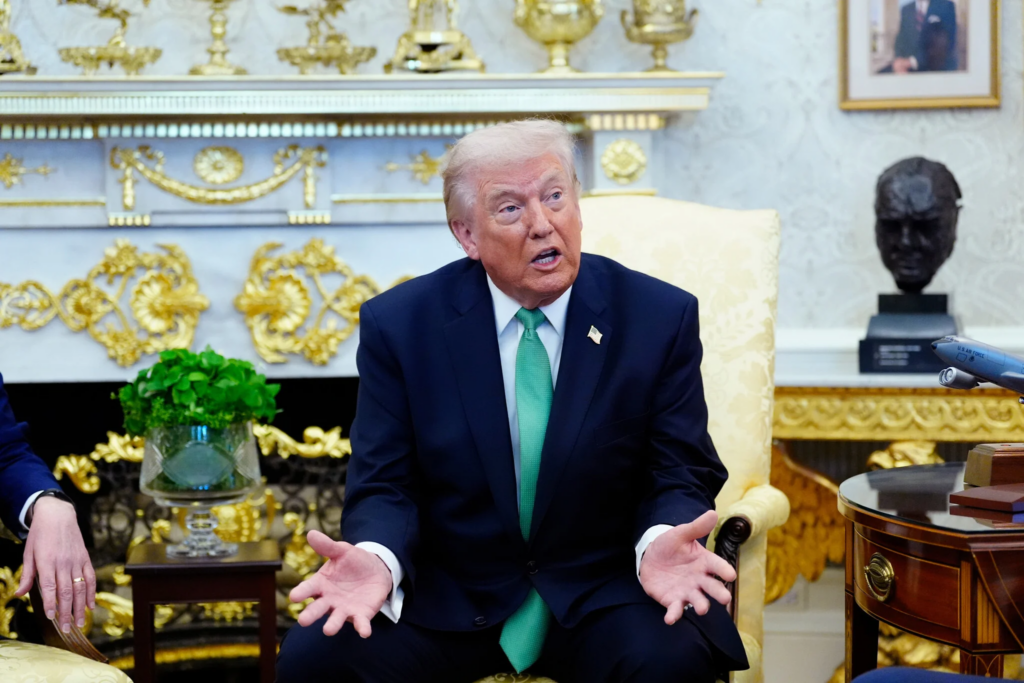
U.S. President Donald Trump has forcefully dismissed warnings from Iranian officials that any American ground invasion of Iran could turn into “another Vietnam,” declaring in a recent exchange that he is “not afraid of anything.” The remarks come amid intensifying speculation over whether the United States could deploy “boots on the ground” in Iran as part of the ongoing conflict involving the U.S., Israel, and Iran.
The warning referenced by Trump originated from Iranian officials speaking to international media, including Sky News, where they cautioned that a U.S. ground intervention would likely lead to a prolonged and costly war similar to the Vietnam War. The Vietnam War, which lasted for years and resulted in heavy casualties and political backlash in the United States, is often cited as a cautionary example of military overreach in complex regional conflicts. Iran’s comparison reflects its belief that its geography, military capabilities, and regional alliances could make any invasion extremely difficult for foreign forces.
When asked directly whether such a scenario concerned him, Trump responded bluntly, rejecting the premise of fear and projecting confidence in U.S. military strength. His comments align with a broader pattern of rhetoric from the White House, where the administration has repeatedly emphasized American military superiority while downplaying the risks of escalation. At the same time, Trump has stopped short of confirming any immediate plans to deploy ground troops, maintaining strategic ambiguity about the next phase of the conflict.
The concept of “boots on the ground” refers to the deployment of combat troops physically inside a foreign country, as opposed to relying solely on airstrikes, drones, or naval operations. In recent weeks, Trump has made it clear that he is not ruling out such a move, stating that while ground troops may not be necessary, they could be used if the situation demands it. This position marks a departure from the approach of previous U.S. presidents, who often explicitly avoided committing to ground wars in the Middle East following the experiences of Iraq and Afghanistan.
The debate over potential U.S. troop deployment comes as the broader conflict continues to escalate. Airstrikes, missile exchanges, and proxy engagements have intensified across the region, raising concerns about the possibility of a wider war. Reports indicate that the United States has already positioned forces and assets in strategic locations near Iran, though officials insist that no full-scale ground invasion has been initiated.
Iran, for its part, has sought to deter further escalation by highlighting the potential costs of a ground war. Analysts note that Iran’s terrain—characterized by mountains, deserts, and densely populated urban areas—would present significant challenges for invading forces. Additionally, Iran’s military structure, which includes both conventional forces and irregular units such as the Islamic Revolutionary Guard Corps (IRGC), is designed to support prolonged resistance. These factors contribute to Tehran’s confidence in drawing parallels to historical conflicts like Vietnam.
The political dimension of the issue is equally significant. Within the United States, there is growing debate over the risks and benefits of deeper military involvement in Iran. Some lawmakers and officials have expressed concern that a ground war could lead to a prolonged and costly conflict, while others argue that decisive action is necessary to achieve strategic objectives, including limiting Iran’s nuclear ambitions and weakening its regional influence.
Internationally, Trump’s remarks have drawn mixed reactions. Allies have urged caution, emphasizing the need for diplomatic solutions to avoid further destabilization in the Middle East. At the same time, adversaries have interpreted his comments as a signal that the United States may be willing to escalate the conflict if necessary. This uncertainty has contributed to rising tensions and increased volatility across global markets, particularly in energy and security sectors.
Ultimately, Trump’s dismissal of the “Vietnam” comparison reflects a broader strategy of projecting strength and deterrence. By rejecting the notion that the United States could become bogged down in a prolonged conflict, the administration aims to maintain pressure on Iran while avoiding the perception of hesitation or weakness. However, experts warn that such rhetoric carries risks, particularly if it underestimates the complexity of the situation on the ground.
As the conflict continues to evolve, the question of whether the United States will deploy ground troops remains unresolved. What is clear, however, is that the stakes are high, and the potential consequences of escalation could reshape the geopolitical landscape of the Middle East for years to come.