Reports of blasts in Iranian capital fuel fears as military activity intensifies across the region
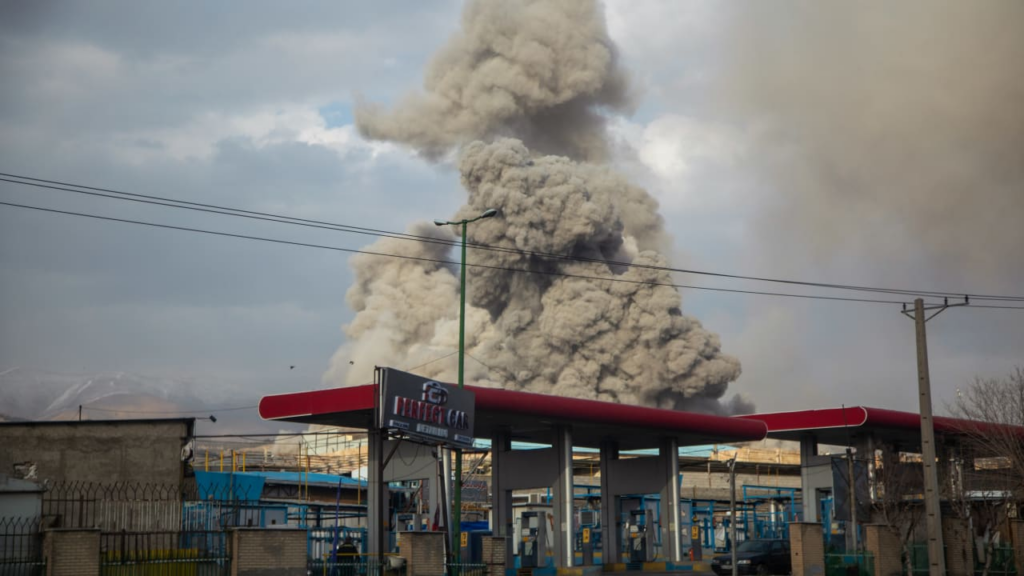
Multiple reports have emerged of an explosion heard in Tehran, adding to growing concerns over the security situation in the Iranian capital as the ongoing conflict in the region continues to escalate. Witness accounts and media reports indicate that loud blasts were heard across several areas of the city, though official confirmation regarding the exact cause and extent of the incident remains limited at this stage.
According to recent updates, explosions in Tehran have become increasingly frequent in recent weeks, often linked to airstrikes, missile interceptions, or drone activity tied to the broader conflict involving Iran, the United States, and Israel. In several instances, residents reported hearing multiple loud blasts in quick succession, suggesting either incoming strikes or air defense systems intercepting aerial threats.
Recent news coverage indicates that explosions have also been associated with active military operations in and around Tehran. Reports describe airstrikes hitting various locations in the capital, with civilians experiencing ongoing fear and uncertainty due to the lack of warning systems and the unpredictability of attacks.
In one recent development, a significant explosion was reported at a protest site in Tehran, highlighting how even public gatherings have become vulnerable amid the intensifying conflict. These incidents reflect a broader pattern of instability in the capital, where both military and civilian areas have been affected by the ongoing hostilities.
Experts note that the exact source of such explosions can vary widely. In some cases, they may result from direct airstrikes targeting military or strategic infrastructure, while in others, they could be caused by intercepted missiles, drone impacts, or even internal explosions linked to industrial or military facilities. Without official confirmation, it remains difficult to determine the precise cause of each individual blast.
The frequency of explosions in Tehran underscores the intensity of the current conflict. According to documented timelines, multiple explosions have been reported across the city and other parts of Iran during recent military operations, with some occurring during coordinated strikes targeting key installations.
For residents of Tehran, the situation has become increasingly tense. Reports describe widespread anxiety, with many people staying indoors, avoiding public spaces, and relying on informal communication channels to track developments. The psychological impact of repeated explosions and the constant threat of attack has added to the strain on daily life in the capital.
Infrastructure has also been affected. In previous incidents, explosions have caused damage to buildings, disrupted services, and in some cases led to fires or secondary blasts. Emergency response teams are typically deployed quickly, but ongoing military activity can complicate rescue and repair efforts.
The broader geopolitical context is critical to understanding these developments. The conflict has expanded beyond traditional battlefields, with urban centers like Tehran increasingly becoming focal points of military operations. This reflects a shift in modern warfare, where strategic targets within cities are often prioritized due to their political, military, or symbolic significance.
International observers have expressed concern about the implications of continued explosions in densely populated areas. The risk to civilians is significant, particularly in a city as large and densely populated as Tehran. Humanitarian organizations have warned that prolonged conflict could lead to increased casualties, displacement, and damage to critical infrastructure.
At the same time, Iranian authorities have maintained a strong security presence in the capital, aiming to control the situation and prevent unrest. However, the combination of external attacks and internal pressure has created a complex and volatile environment.
As of now, details about the latest reported explosion remain limited, and it is unclear whether it was part of a larger coordinated attack or an isolated incident. Authorities are expected to release further information as investigations continue.
What is clear, however, is that explosions in Tehran are no longer isolated events but part of a broader pattern linked to the ongoing conflict. Each new blast adds to the uncertainty and underscores the fragile security situation in the region.
As tensions remain high, the situation in Tehran will continue to be closely monitored by both regional and international observers. Any further escalation could have significant consequences not only for Iran but for the wider Middle East and global stability.