Military chief’s remarks spark global attention amid escalating Iran-Israel tensions
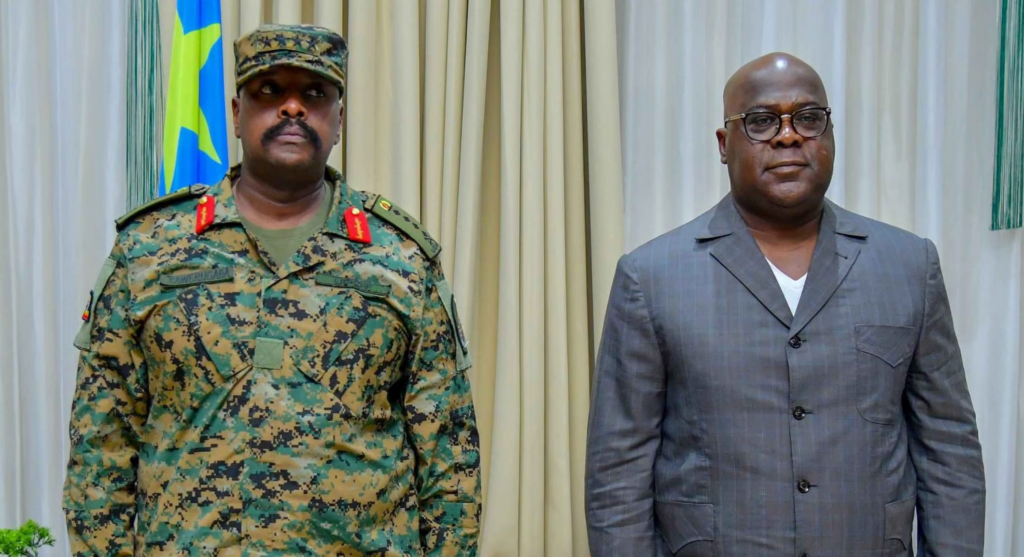
Uganda has signaled strong support for Israel amid the ongoing conflict with Iran, with a senior military official stating that the country is prepared to join the war if Israel faces an existential threat.
The comments were made by Muhoozi Kainerugaba, Uganda’s military chief and a key political figure, who declared that any attempt to destroy Israel would prompt Uganda to enter the conflict on Israel’s side. His remarks quickly gained international attention, highlighting the widening global impact of the Middle East crisis.
According to his statement, Uganda’s position is rooted in longstanding ties with Israel, as well as shared historical and ideological connections. He emphasized that Uganda would not remain neutral if Israel’s survival were at risk, framing the موقف as both strategic and principled.
The declaration comes at a time of rapidly escalating tensions between Iran and Israel, with missile strikes, air raids, and proxy clashes intensifying across the region. While Uganda is geographically distant from the conflict, the statement underscores how the الأزمة is drawing reactions from countries far beyond the Middle East.
Analysts note that Uganda’s stance does not necessarily indicate immediate military involvement but serves as a strong political signal of alignment. Public declarations of support can play a role in shaping diplomatic narratives, alliances, and perceptions during times of conflict.
Uganda and Israel share a unique historical relationship, most notably linked to the 1976 Entebbe operation, in which Israeli commandos rescued hostages from a hijacked plane in Uganda. The legacy of that event continues to influence ties between the two nations, and recent statements by Ugandan leadership suggest that this connection remains significant today.
However, experts caution that such statements should be viewed in context. Military chiefs and political figures sometimes make strong public remarks that are not immediately followed by policy changes or troop deployments. Uganda’s official government position has traditionally emphasized diplomacy and balanced relations, particularly as the country holds roles in international organizations such as the Non-Aligned Movement.
The comments have also sparked debate internationally, with observers questioning the implications of broader global involvement in the conflict. If more countries begin to openly align with either side, the risk of a wider, multi-regional confrontation could increase significantly.
At the same time, Uganda itself faces domestic and regional considerations, including economic pressures and security priorities within East Africa. Any potential involvement in a distant conflict would require careful strategic planning and political consensus.
In conclusion, Uganda’s statement expressing readiness to support Israel highlights the expanding geopolitical dimensions of the Iran-Israel conflict. While it remains unclear whether such support would translate into direct military action, the remarks reflect growing international polarization and the خطر of further escalation beyond the Middle East.