Coordinated strikes from Iran and Hezbollah trigger widespread alarms in northern Israel, signaling a dangerous escalation in the 2026 Middle East war
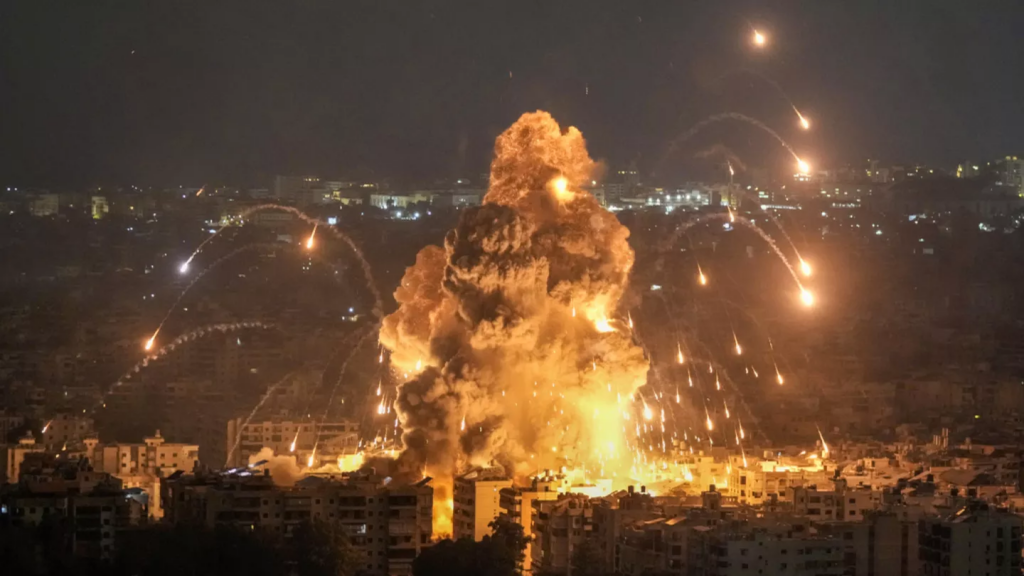
The ongoing Middle East conflict entered a dangerous new phase as Iran and Hezbollah launched a coordinated dual attack on northern Israel, triggering air raid sirens across multiple regions and raising fears of a broader regional war. The latest escalation reflects a deepening alliance between Tehran and its regional proxy Hezbollah, as both actors intensify their military operations in response to ongoing Israeli strikes.
According to multiple reports, missiles launched from Iran and rockets fired by Hezbollah from southern Lebanon targeted northern Israeli territories simultaneously. Air raid sirens were activated across key areas including the Galilee region and the occupied Golan Heights, forcing civilians to rush into shelters as Israel’s air defense systems attempted interceptions.
Israeli military sources confirmed that their defense systems were actively engaged in intercepting incoming threats, while emergency services reported no immediate casualties or direct hits in populated areas. However, some projectiles reportedly landed in open areas, highlighting both the scale and intensity of the coordinated assault.
This dual-front attack is part of a broader escalation that has been unfolding since late February 2026, when the United States and Israel initiated large-scale military operations targeting Iranian nuclear and military infrastructure. In response, Iran has significantly increased its missile campaigns against Israel, while Hezbollah has intensified rocket and drone attacks from Lebanon, effectively opening a northern front.
Hezbollah’s involvement has been particularly significant. The group has launched dozens of attacks in recent weeks, with some reports indicating a sharp rise in daily operations compared to earlier phases of the conflict. These attacks include rockets, drones, and coordinated strikes aimed at overwhelming Israel’s multi-layered defense systems, such as Iron Dome and David’s Sling.
Simultaneously, Iran has adopted more sophisticated tactics, including launching multiple waves of ballistic missiles designed to stretch Israeli defenses and increase the chances of impact. In some instances, these attacks have involved advanced munitions capable of bypassing interception systems, exposing vulnerabilities in even the most advanced air defense networks.
The strategic coordination between Iran and Hezbollah is not coincidental. Analysts point to direct involvement by Iran’s Islamic Revolutionary Guard Corps (IRGC), which has played a key role in rebuilding and restructuring Hezbollah’s military capabilities following earlier losses. This includes reorganizing its command structure, retraining fighters, and planning joint operations such as simultaneous missile and rocket attacks on Israel.
On the ground, the psychological impact of these attacks is significant. Sirens sounding across northern Israel serve as a constant reminder of the ongoing threat, with civilians often having less than 90 seconds to seek shelter once alarms are triggered. The repeated activation of warning systems underscores the sustained pressure on Israeli society and infrastructure.
Meanwhile, the broader regional implications of this escalation are alarming. The conflict has already spread beyond Israel and Iran, with missile and drone attacks reported in countries such as Saudi Arabia, the United Arab Emirates, and even Yemen. This raises concerns about a full-scale regional war involving multiple state and non-state actors.
In Lebanon, Hezbollah’s actions have also contributed to internal instability, as Israeli retaliatory strikes have displaced large populations and increased political tensions. The risk of further escalation remains high, particularly as both sides continue to exchange threats and expand their military operations.
Despite the intensity of the current conflict, there are still no clear indications of de-escalation. Israeli officials have vowed to continue targeting Iranian and Hezbollah assets, while Tehran has promised further retaliation. The dual attack on northern Israel serves as a stark reminder that the conflict is no longer limited to isolated incidents but has evolved into a coordinated, multi-front war with far-reaching consequences.
As the situation continues to unfold, the possibility of a wider regional confrontation grows, with global powers closely monitoring developments. The coming days will be critical in determining whether diplomatic efforts can contain the crisis or whether the region will slide further into prolonged and devastating conflict.