Israeli media and opposition outlets allege IRGC pressure shaped Iran’s leadership transition amid regional crisis
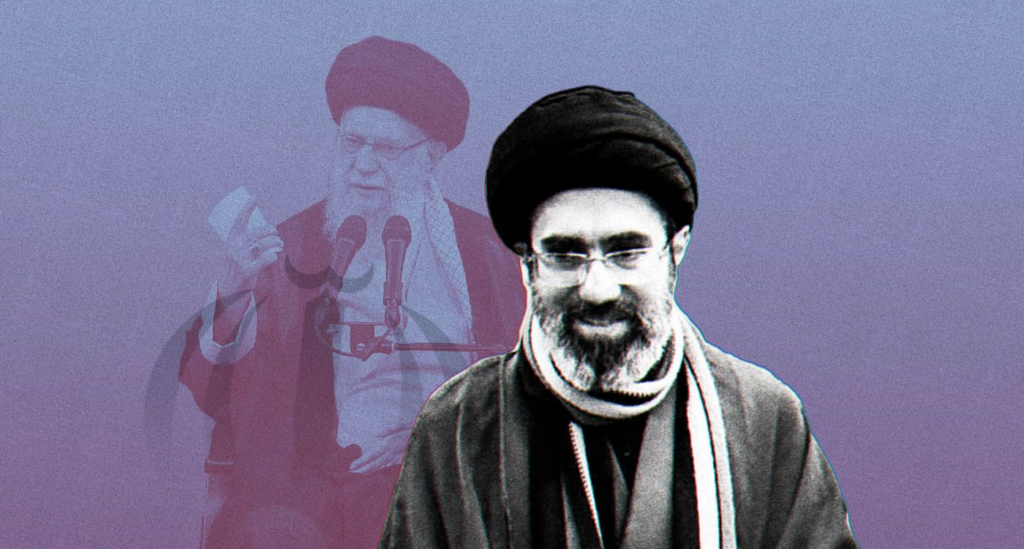
Iran’s political landscape has entered a critical and highly uncertain phase after reports emerged claiming the country’s powerful clerical body, the Assembly of Experts, has selected Mojtaba Khamenei, son of Ali Khamenei, as the next Supreme Leader. The claims—circulating widely in Israeli and opposition-linked media—have not been officially confirmed by Tehran, but they have intensified global scrutiny of Iran’s succession process at a moment of deep regional instability. According to informed sources cited by Iran International, Mojtaba was chosen under heavy pressure from the Islamic Revolutionary Guard Corps (IRGC), a development that, if verified, could mark one of the most consequential power shifts in the Islamic Republic since 1989.
The succession question became urgent following the reported death of Ali Khamenei during escalating military conflict involving Iran, Israel, and the United States. The Assembly of Experts—an 88-member clerical body elected by the public but vetted by the Guardian Council—holds the constitutional authority to appoint and supervise the Supreme Leader. Historically, the body has exercised this power only once before, when it selected Khamenei after the death of Ayatollah Ruhollah Khomeini in 1989.
Reports suggesting Mojtaba’s elevation remain controversial and unverified by Iranian state authorities. Analysts caution that the opaque nature of Iran’s political system makes independent confirmation difficult, particularly during wartime conditions. Some Iranian-linked outlets indicated the leadership-selection process was conducted remotely after fears of possible strikes on Assembly facilities, underscoring the extraordinary security environment surrounding the transition.
Mojtaba Khamenei, believed to be in his mid-50s, has long been viewed by observers as an influential behind-the-scenes power broker within Iran’s political structure. Though not holding a major formal government position, he reportedly maintained close ties with the IRGC and was involved in managing aspects of the Supreme Leader’s office. Supporters among hardline factions have quietly promoted him for years, while critics—both inside and outside Iran—warn that his appointment could be perceived as turning the Islamic Republic into a hereditary system, something the revolution originally sought to avoid.
Even before the latest reports, multiple names were circulating as potential successors, including senior clerics and judiciary figures. Analysts note that figures such as Gholam-Hossein Mohseni-Eje’i, Hassan Khomeini, and Alireza Arafi had been widely discussed as possible candidates, highlighting the competitive and factional nature of Iran’s elite politics.
The alleged IRGC pressure described in the reports is particularly significant. The Revolutionary Guard has expanded its political and economic influence dramatically over the past two decades and is widely considered the most powerful security institution in Iran. If the Guard indeed played a decisive role in shaping the succession outcome, it could signal further militarization of Iran’s political system and a consolidation of hardline authority.
Regionally, the timing of these reports is fueling geopolitical anxiety. Iran is already engaged in heightened confrontation with Israel and facing mounting economic and diplomatic pressure. Leadership uncertainty in Tehran raises concerns about potential instability within the Iranian establishment, as well as the risk of more aggressive foreign policy moves designed to project strength during the transition period.
International reactions so far have been cautious. Western governments and regional powers are closely monitoring developments but have largely avoided definitive statements, reflecting the lack of official confirmation from Iranian authorities. Experts emphasize that Iran’s succession process is often secretive and can involve complex negotiations among clerical, military, and political elites before any formal public announcement is made.
Ultimately, whether Mojtaba Khamenei has truly been selected—or is merely one of several contenders—remains unclear. What is certain is that Iran is undergoing one of the most sensitive leadership moments in its modern history. The coming days are likely to determine not only who leads the Islamic Republic next but also how power will be balanced between Iran’s clerical establishment and its increasingly influential security apparatus. For now, the world is watching Tehran closely, aware that the outcome could reshape Middle East geopolitics for years to come.