Hamas spokesperson Abu Obaida praises demonstrations in Syria opposing Israel’s controversial death penalty law, calling for regional unity amid escalating tensions.
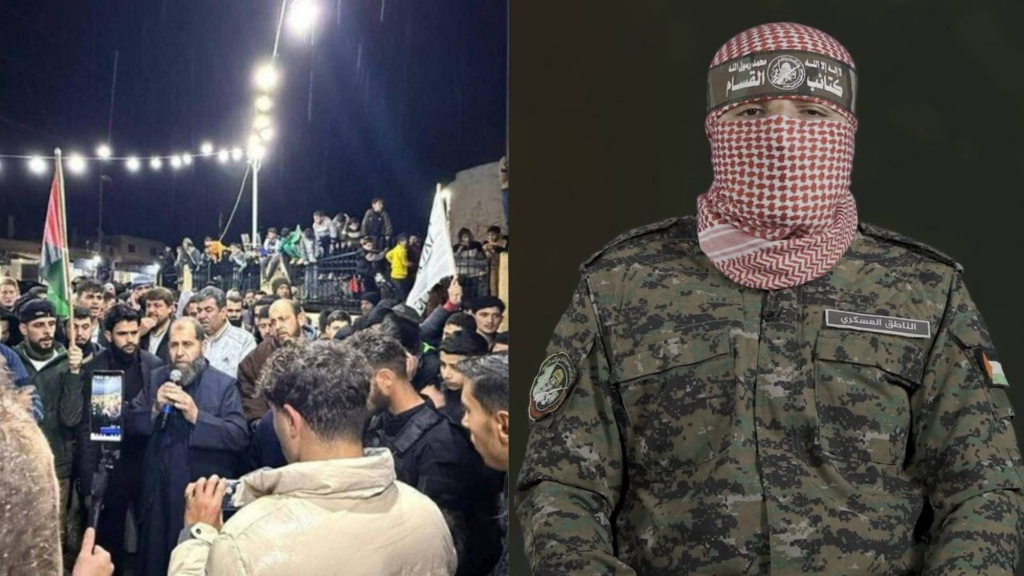
The spokesperson of Hamas’ military wing, Abu Obaida, has praised recent protests in Syria against the newly introduced Israeli Death Penalty Law, describing them as a powerful symbol of “unity” across the region.
In a statement released through official Hamas channels, Abu Obaida commended demonstrators who gathered in Syrian cities to protest the controversial law passed by Knesset, which mandates the death penalty for certain acts classified as terrorism. He described the protests as evidence of growing regional solidarity against Israeli policies, particularly those affecting Palestinians.
Background of the Protests
The protests in Syria emerged shortly after Israel’s parliament approved the new legislation, which has drawn widespread criticism from human rights organizations and several international governments. Demonstrators reportedly took to the streets in multiple Syrian areas, expressing opposition to what they view as a discriminatory law targeting Palestinians.
The Israeli Death Penalty Law has become a focal point of controversy in the Middle East, with critics arguing that it could disproportionately impact Palestinians and further inflame tensions in the region.
Abu Obaida’s Message of “Unity”
In his remarks, Abu Obaida emphasized the importance of unity among Arab and Muslim populations, stating that the Syrian protests represent a broader regional stance against Israeli actions. He framed the demonstrations as part of a collective resistance, highlighting the interconnected nature of political and social movements across Middle Eastern countries.
His use of the term “unity” reflects a recurring theme in Hamas messaging, particularly during periods of heightened conflict involving Israel and Iran-aligned groups.
Regional Context and Rising Tensions
The statement comes amid escalating tensions across the Middle East, with ongoing conflict involving Iran, Israel, and allied groups. The introduction of the death penalty law has added another layer of complexity to an already volatile situation, fueling protests and political reactions beyond Israel’s borders.
Syria, which has long been aligned with Iran and hosts various armed groups opposed to Israel, has seen increased political mobilization in response to recent developments. The protests also reflect broader regional sentiment, where public opinion is often shaped by developments in the Israeli-Palestinian conflict.
International Reaction to the Law
The Israeli Death Penalty Law has faced criticism from international organizations, including human rights groups that argue it violates international legal standards. Concerns have been raised about due process, potential discrimination, and the broader implications of expanding capital punishment.
European governments and global institutions have also expressed concern, warning that such legislation could deepen divisions and complicate efforts toward diplomatic resolution in the region.
Impact on Regional Dynamics
Analysts suggest that statements like Abu Obaida’s are part of a broader effort to mobilize regional public opinion and strengthen alliances among groups opposed to Israel. By highlighting protests in Syria, Hamas seeks to reinforce the narrative of widespread opposition and solidarity.
At the same time, such rhetoric may contribute to further polarization, as regional actors increasingly align along ideological and geopolitical lines.
Conclusion
Abu Obaida’s praise for Syrian protests against Israel’s death penalty law underscores the growing regional response to the controversial legislation. Framed as a symbol of “unity,” the demonstrations reflect broader tensions and shifting dynamics in the Middle East.
As political rhetoric intensifies and public demonstrations spread, the impact of the law is likely to extend beyond Israel’s borders, influencing both regional discourse and international debate in the weeks ahead.