New Delhi is likely to discuss buying more units of the S-400 air defence system.

President Putin returns to India after four years.
India and Russia plan to extend their nuclear energy relationship.
Moscow is likely to seek assistance in getting spares for its oil assets.
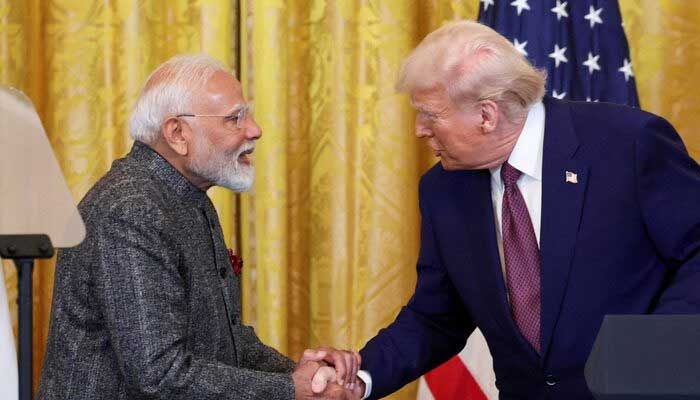
NEW DELHI: Russian President Vladimir Putin will begin a two-day visit to India on Thursday, advocating for increased sales of Russian oil, missile systems, and fighter jets in an effort to rebuild energy and defence relations strained by US pressure on the South Asian country.
Russia has been supplying armaments to India for decades, with New Delhi becoming as its main consumer of seaborne oil despite Western sanctions imposed following Moscow’s invasion of Ukraine in February 2022.
However, India’s crude imports are likely to fall to a three-year low this month, after the strengthening of sanctions on Russia, which coincides with its increasing purchases of US oil and gas.
Putin will be accompanied by Russian defence minister, Andrei Belousov, and a diverse entourage from business and industry on his first visit to the Indian capital in four years for a summit with Prime Minister Narendra Modi.
“Putin’s visit offers an opportunity for Delhi to reassert the strength of its special relationship with Moscow, despite recent developments, and make headway in new arms deals,” said Michael Kugelman of the Atlantic Council.
“India-Russia summits are never solely optics-driven affairs, given the substance of the relationship,” says Kugelman, a senior South Asia fellow at the Washington-based organisation.
He predicted that new initiatives will be unveiled, even if they were primarily about low-hanging fruit in ties.
Possible US response
However, Indian officials are concerned that any new energy and security deals with Russia will elicit a reaction from US President Donald Trump, who increased tariffs on Indian imports to 50% in August as retaliation for New Delhi’s purchases of Russian crude.
Before Putin’s visit, officials from both sides met to discuss issues ranging from defence to shipping and agriculture. In August, they agreed to begin talks on a free trade agreement between India and the Russian-led Eurasian Economic Union.
According to Indian analysts, they are also discussing expanding their relationship in civilian nuclear energy.
Putin’s group includes the CEOs of Russia’s largest lender Sberbank and state arms exporter Rosoboronexport, as well as the CEOs of sanctioned oil majors Rosneft and GazpromNeft, according to an industry source with firsthand knowledge of the situation.
Moscow is expected to seek India’s assistance in obtaining supplies and technical equipment for its oil assets during the negotiations, as sanctions have limited access to major suppliers, according to an industry source and a separate Indian government official.
They talked on the condition of anonymity because the topic is sensitive.
According to a government source, India is set to advocate for the return of a 20% ownership in national gas exploration ONGC Videsh Ltd’s Sakhalin-1 project in Russia’s far east.
India is expected to sign a trade agreement with the United States before the end of the year, since most of its refiners have ceased importing Russian oil, while rising discounts are attracting some state refiners.
Indian Oil Corp has placed orders from non-sanctioned Russian businesses for December and January loading, while Bharat Petroleum Corp is in the process of placing an order, according to sources at both companies.
The sources requested anonymity since they were not permitted to speak to the media.
Reliance in the defence sector
Unlike crude, India does not intend to cut defence ties with Moscow anytime soon because it requires ongoing assistance for the several Russian systems it maintains, Defence Secretary Rajesh Kumar Singh stated last week.
The majority of India’s 29 fighter squadrons are equipped with Russian Sukhoi-30 jets, and Moscow has also offered its most sophisticated fighter, the Su-57, which is expected to be discussed this week, according to two Indian officials familiar with the situation.
According to officials who spoke on the condition of anonymity, India has not yet decided whether or not to purchase the jet.
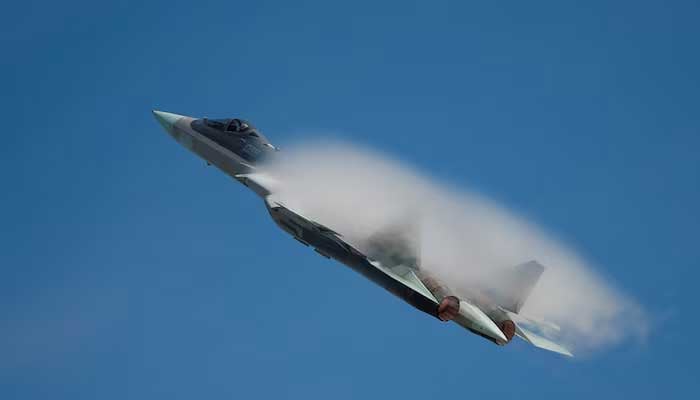
However, India is likely to consider purchasing additional units of the S-400 air defence system, Singh stated last week. It now has three units, with two more on order for delivery in 2018.
Harsh Pant, head of foreign policy studies at India’s Observer Research Foundation think tank, believes that recent US-Russia discussions to resolve the Ukraine war may make it easier for Indian authorities to interact with Moscow.
However, he stated that relations remain strained.
“A large part of the trading relationship was based on energy, which is now losing traction under the threat of sanctions from the United States,” the minister said.
“And at the end of the day, only defence remains, which continues to bind the two together.”