Trump’s Bold Trade Move: A Response to Greenland’s Growing Ties with Foreign Powers
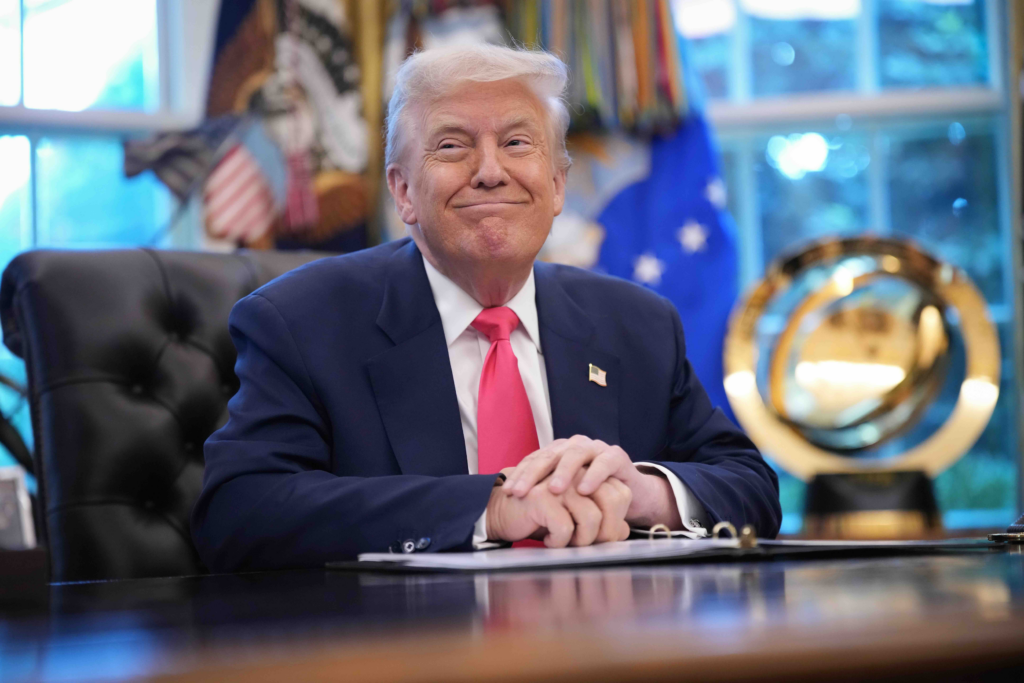
In a surprising and highly controversial statement, former President Donald Trump has announced that he would impose 50% tariffs on countries that support Greenland’s efforts to assert its independence from U.S. interests. The declaration came amid growing concerns over Greenland’s geopolitical significance and its increasingly warm relations with foreign powers, including China and Russia. Trump’s remark, made during a recent public address, has raised eyebrows in international trade circles, as it suggests a dramatic shift in the U.S.’s foreign policy and trade stance.
Greenland, an autonomous territory of Denmark, has been at the center of a geopolitical tug-of-war, particularly in light of its vast natural resources and strategic location in the Arctic region. While the U.S. has historically viewed Greenland as a critical ally, particularly in the context of military operations and Arctic exploration, tensions have been brewing due to Greenland’s moves toward enhancing its foreign relationships, especially with China, which has been investing heavily in the region.
The Context Behind Trump’s Remark
President Trump’s comments seem to stem from his administration’s prior interest in Greenland, which gained global attention in 2019 when Trump proposed purchasing the territory from Denmark. His suggestion was met with strong opposition from Denmark and Greenland’s leadership, who rejected the idea outright. Since then, the U.S. has continued to view Greenland as a vital strategic location, particularly for military purposes, as it lies close to Russia and plays a key role in Arctic geopolitics.
Despite the rejection of the purchase proposal, U.S.-Greenland relations have remained crucial for the U.S., particularly in terms of military and economic interests. The Thule Air Base, located in Greenland, is one of the most important U.S. military bases in the Arctic, providing a crucial position for American missile defense and early warning systems. Additionally, Greenland’s vast untapped natural resources, including rare earth minerals, oil, and natural gas, have attracted significant attention from both the U.S. and other global powers, most notably China and Russia.
In recent years, Greenland has sought to increase its international partnerships, exploring opportunities with China, which has been actively seeking to expand its influence in the Arctic. China’s involvement in Greenland has been a point of contention for the U.S., particularly due to concerns over China’s strategic interests in the region and its long-term ambitions to control vital shipping routes in the Arctic. This growing Chinese influence in Greenland has prompted U.S. officials to take a more aggressive stance in the region, as seen in Trump’s recent remarks about tariffs.
The 50% Tariff Threat: A High-Stakes Diplomatic Gamble
Trump’s threat to impose 50% tariffs on countries that support Greenland against U.S. interests is a dramatic escalation in the U.S.’s trade and foreign policy. Tariffs, as an economic tool, are typically used to protect domestic industries and exert pressure on foreign governments to align with U.S. policies. In this case, the threat serves as a warning to countries that may be considering strengthening ties with Greenland, particularly in the face of U.S. opposition.
The idea of imposing such high tariffs, however, raises significant concerns about the potential impact on global trade and diplomatic relations. A 50% tariff is an aggressive stance that could provoke retaliation from countries involved in the dispute. If implemented, it could potentially affect countries in the European Union, Canada, and other allies, many of which have strategic interests in Greenland and the Arctic. This would not only harm bilateral relations but could also have broader implications for international trade dynamics, especially in sectors such as energy, technology, and military cooperation.
The Geopolitical Significance of Greenland
Greenland’s geographical location, sitting between North America and Europe, has long made it a key asset in the global power struggle, particularly in terms of military strategy. The region’s vast natural resources, including oil, gas, and precious minerals, make it highly attractive to world powers, with China and Russia vying for influence in the area.
In addition to its military importance, Greenland’s role in the Arctic is becoming increasingly vital as climate change melts polar ice caps and opens up new shipping routes. The Arctic has the potential to become a significant global trade route, and control of these waterways is seen as a major strategic advantage. For the U.S., maintaining strong ties with Greenland is crucial not only for military and economic reasons but also for ensuring that global shipping routes remain secure and open.
China, which has been actively expanding its footprint in the Arctic, has shown interest in Greenland’s resources and infrastructure. The Chinese government has made significant investments in Greenland’s mining and energy sectors, further complicating the U.S.-Greenland relationship. Russia, too, has shown an interest in the Arctic, with its growing military presence in the region raising alarms in Washington.
Impact on U.S.-Denmark Relations
While Trump’s remarks were aimed primarily at countries supporting Greenland, Denmark, as Greenland’s sovereign state, is likely to be a key player in this geopolitical clash. Denmark has historically maintained strong ties with the U.S. but has also sought to develop its own independent relationships with other global powers. The 50% tariff threat could strain U.S.-Denmark relations, particularly if Denmark continues to back Greenland’s efforts to assert its autonomy in the face of U.S. opposition.
The potential for increased friction between the U.S. and Denmark could have broader implications for NATO, of which both countries are members. Denmark has been a reliable ally in the alliance, and any move by the U.S. to impose tariffs could jeopardize this relationship and raise questions about the future of transatlantic cooperation. For Denmark, maintaining its alliances with both the U.S. and the European Union, as well as balancing relations with China, will require careful diplomacy in the coming months.
The Larger Trade and Diplomatic Picture
Trump’s tariff threat adds another layer of complexity to the already fraught global trade environment. The U.S. has been engaged in several trade disputes, most notably with China, and the threat of tariffs has been a key tool in these confrontations. However, applying such a high tariff rate on countries supporting Greenland could have unintended consequences, leading to diplomatic fallout that could harm the broader global economy.
The stakes are high as Greenland’s geopolitical position becomes more important in the context of global power struggles. The actions taken by the U.S., Denmark, and other involved parties will shape the future of Arctic relations and set the tone for future trade and diplomatic efforts in the region.
Conclusion: A Bold Stance with Uncertain Consequences
Former President Trump’s threat to impose 50% tariffs on countries supporting Greenland’s autonomy marks a bold and controversial shift in U.S. foreign policy. The situation in Greenland reflects the growing strategic importance of the Arctic and the intense competition for resources and influence in the region. While the tariffs may serve as a powerful signal of U.S. interests, they also raise questions about the potential economic and diplomatic consequences of such a high-stakes move. As the world watches, the response from both allies and adversaries will likely shape the future of Arctic geopolitics and global trade.