Modi’s Gesture of Friendship Marks a New Era in Indo-Israeli Relations, Strengthening Bilateral Ties
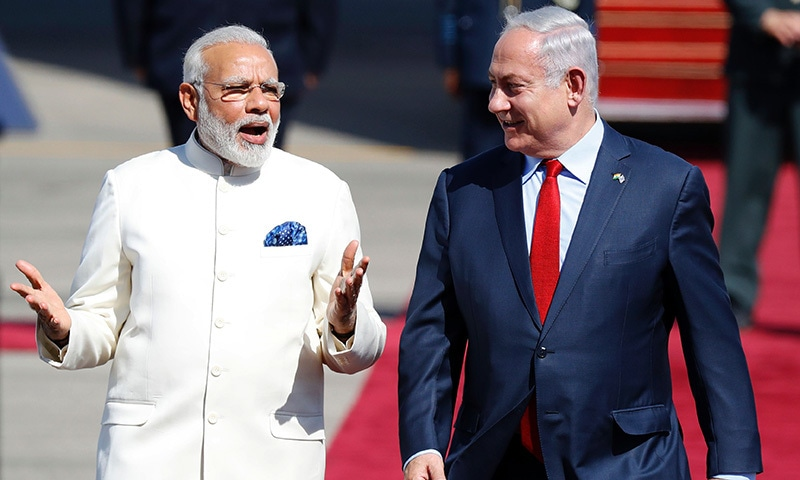
Indian Prime Minister Narendra Modi was recently seen sharing a warm hug with Israeli Prime Minister Benjamin Netanyahu upon his arrival in Israel, a gesture that has caught the attention of both global and regional observers. This display of camaraderie symbolizes a significant milestone in the ever-developing relationship between India and Israel. Modi’s visit to Israel has been hailed as a clear indication of the growing diplomatic, economic, and strategic ties between the two nations, marking a moment of renewed solidarity and collaboration in the face of shifting geopolitical dynamics.
The hug between Modi and Netanyahu came as part of Modi’s official state visit to Israel, the first by an Indian Prime Minister in nearly three decades. This trip is viewed as not just a diplomatic gesture but also a reflection of the long-standing partnership between the two countries, especially in the fields of defense, technology, and trade. Given the evolving global landscape, the visit underscores the importance of India’s foreign policy as it strengthens relations with key players in the Middle East, especially Israel.
A Warm Welcome: The Significance of the Hug
When Prime Minister Modi arrived in Israel, he was welcomed by Netanyahu at the airport with open arms—quite literally. The image of the two leaders embracing was significant not only for its display of friendship but also for its symbolic value. The hug conveyed warmth, mutual respect, and an acknowledgment of the deep bond that has been forged between India and Israel over the past two decades.
India and Israel have historically maintained diplomatic relations since 1992, but their partnership has truly blossomed in recent years under Modi’s leadership. As India has increasingly moved towards strengthening ties with Israel, Netanyahu has reciprocated by championing the partnership, recognizing the strategic importance of India as a global power. Modi’s embrace of Netanyahu in front of the cameras reinforced the growing personal and political connection between the two leaders, who have cultivated a strong rapport since they first met in 2017.
The Modi-Netanyahu Bond: A Strategic Partnership
The Modi-Netanyahu hug also carries immense geopolitical significance. Under Prime Minister Modi’s leadership, India has pivoted towards strengthening its relationships with nations like Israel that are crucial in terms of security, technological advancements, and defense cooperation. Israel, for its part, has been more than willing to share its expertise with India, particularly in counterterrorism, defense systems, and agricultural technology.
In recent years, the defense cooperation between India and Israel has grown substantially. India is one of Israel’s largest defense clients, with both countries having worked together on various defense projects, including the procurement of advanced missile defense systems and unmanned aerial vehicles (UAVs). The military ties between the two countries have been bolstered by joint military exercises, intelligence sharing, and cooperation in combating extremism and terrorism.
Beyond defense, both nations are strengthening ties in other key sectors such as science, technology, and agriculture. Israel’s innovative expertise in fields like water management, renewable energy, and agricultural technology has been instrumental in addressing some of India’s critical challenges, including water scarcity and food security. Modi’s visit underscores the importance of these areas of cooperation, signaling to both nations and the world that the relationship is multi-dimensional and deeply rooted in shared interests.
The Role of Modi’s Visit in Middle Eastern Diplomacy
Modi’s visit to Israel is not just about bilateral relations between the two countries. It also reflects India’s broader approach to Middle Eastern diplomacy. India, which has traditionally maintained good relations with the Arab world, is now increasingly comfortable in strengthening ties with Israel without compromising its long-standing ties to Arab countries. Modi’s diplomatic balancing act highlights India’s growing influence in the region, as it navigates complex relationships with both Israel and its Arab neighbors.
India’s growing role in the Middle East is seen as a result of its increasing demand for energy resources, its growing defense needs, and its desire to expand trade ties with key regional players. While India has deep historical ties with the Arab world—especially with countries like Saudi Arabia, the UAE, and Qatar—Modi’s strategic outreach to Israel has reflected India’s changing geopolitical priorities. Modi’s embrace of Netanyahu also represents India’s shift towards a more assertive and independent foreign policy, one that is not solely dictated by historical considerations but also by current global realities.
Furthermore, India’s growing proximity to Israel is also about security. Israel’s expertise in counterterrorism, intelligence, and cybersecurity is highly valued by India, especially as it faces challenges from hostile neighbors like Pakistan and China. By strengthening its ties with Israel, India is positioning itself to tap into Israel’s technological advancements to enhance its own national security.
Israel’s Role in India’s Economic Growth
The economic partnership between India and Israel has been another cornerstone of the relationship. With a combined focus on innovation, research and development, and technology, Israel has become an important partner for India’s growth in the high-tech and defense sectors. Israel’s status as a global leader in cybersecurity, artificial intelligence, and startup ecosystems aligns well with India’s own push to become a global tech leader.
During the visit, the two leaders were expected to discuss several critical areas of economic collaboration, including startups, defense industry expansion, and high-tech innovation. Israel has long been a hub for high-tech entrepreneurship, and many Israeli companies are keen to tap into India’s burgeoning market for technology and innovation. India, in turn, has been increasingly reliant on Israel’s technological advancements to modernize its infrastructure and bolster its defense systems.
The Path Ahead: Future Prospects for India-Israel Relations
Modi’s historic visit to Israel, marked by the heartwarming hug with Netanyahu, sets the stage for deeper collaboration between the two nations in the years to come. The personal bond between Modi and Netanyahu, both of whom represent strong leadership in their respective countries, will undoubtedly continue to foster a closer relationship, with both sides focusing on areas that can advance their strategic, technological, and economic interests.
Looking forward, there are several key areas where India and Israel can further their partnership. These include:
- Defense Technology: With Israel’s advanced defense systems and India’s growing defense needs, the relationship in this sector will continue to flourish.
- Agricultural Innovation: Israel’s expertise in water conservation, irrigation technology, and agricultural management is particularly relevant to India’s growing food security challenges.
- Cybersecurity and AI: Israel is one of the world’s leading nations in cybersecurity and artificial intelligence, fields in which India is keen to advance its capabilities.
- Trade and Investment: As India seeks to diversify its trade relationships, Israel offers significant potential as a partner in high-tech, infrastructure, and energy sectors.
In conclusion, Prime Minister Modi’s visit to Israel and his warm embrace with Prime Minister Netanyahu are powerful symbols of the growing partnership between India and Israel. This relationship, based on mutual respect and shared strategic interests, is set to flourish in the coming years, bringing both nations closer to achieving their goals in defense, technology, and economic development.