Moscow says it is “not neutral” in the escalating Middle East conflict as geopolitical tensions rise between global powers
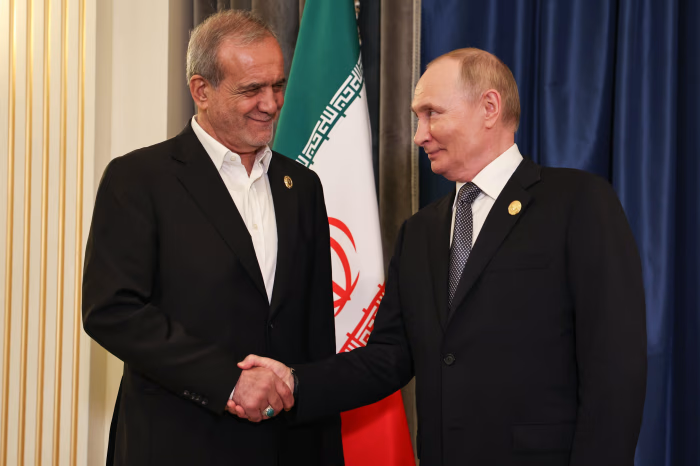
Russia has openly declared its political support for Iran in the ongoing war involving the United States and Israel, marking a significant escalation in global geopolitical tensions. In a recent interview with Sky News, Russia’s ambassador to the United Kingdom, Andrei Kelin, stated that Moscow does not consider itself neutral in the conflict and openly backs Tehran’s position. His remarks come at a time when the Middle East is experiencing one of its most volatile crises in decades, with missile strikes, military operations, and rising casualties across several countries.
According to Kelin, Russia views the current conflict as a situation where Iran is responding to aggression rather than initiating hostilities. The ambassador criticized Western governments for placing blame solely on Tehran while ignoring what he described as the role played by the United States and Israel in triggering the escalation. He argued that the narrative promoted by Western countries is “unfair,” emphasizing that Russia believes Iran is reacting to military attacks carried out by Washington and Tel Aviv. These comments represent one of the clearest acknowledgments from Moscow that it is politically aligned with Iran in the unfolding conflict.
The statement comes amid a rapidly expanding regional war that began after large-scale military strikes by the United States and Israel targeted Iranian military infrastructure, nuclear-related facilities, and strategic command centers. The coordinated operation triggered immediate retaliation from Iran, including missile and drone strikes against U.S. military bases and allied facilities across the Middle East. As the conflict intensified, several countries including Saudi Arabia, the United Arab Emirates, Iraq, and Lebanon became indirectly involved through attacks on infrastructure or the presence of foreign military forces.
Russia’s backing of Iran reflects the deepening strategic partnership between Moscow and Tehran in recent years. The two countries have strengthened political, military, and economic ties, particularly after Western sanctions imposed on both nations increased their need for alternative alliances. Cooperation between Russia and Iran has included military technology exchanges, intelligence sharing, and coordination in regional conflicts. Western officials have repeatedly accused Iran of supplying drones to Russia for use in the Ukraine war, while Moscow has reportedly supported Tehran diplomatically and technologically in return.
Reports from Western intelligence sources also suggest that Russia may have provided Iran with strategic information related to U.S. military positions during the conflict, although Moscow has not officially confirmed these claims. The alleged intelligence sharing has raised concerns among NATO and Western governments that the Iran conflict could evolve into a broader confrontation involving major global powers. Some analysts warn that increasing cooperation between Russia and Iran could significantly alter the balance of power in the Middle East and create new security challenges for the United States and its allies.
Despite expressing support for Iran, Russia has so far avoided direct military involvement in the war. Kremlin officials have emphasized that the conflict is not Russia’s war and have indicated that Moscow’s primary role remains diplomatic rather than operational. Russian leaders have repeatedly called for an immediate ceasefire and urged all sides to return to negotiations in order to prevent further regional destabilization. At the same time, the Kremlin has strongly criticized the U.S.-Israeli military campaign, describing it as reckless and dangerous for international security.
Analysts believe Russia’s position reflects a complex strategic calculation. On one hand, supporting Iran strengthens Moscow’s influence in the Middle East and counters Western power in the region. On the other hand, Russia is also cautious about becoming directly involved in another large-scale conflict while it remains engaged in the ongoing war in Ukraine. Experts say the Kremlin is likely to continue offering political backing and diplomatic support to Tehran while avoiding actions that could trigger direct confrontation with the United States.
The situation has also raised concerns about the possibility of a wider international crisis. If Russia were to deepen its involvement in support of Iran, the conflict could shift from a regional war into a broader geopolitical confrontation involving multiple global powers. Military analysts warn that such a scenario could destabilize global energy markets, disrupt international trade routes, and dramatically increase the risk of large-scale warfare.
As the war between Iran, Israel, and the United States continues to unfold, Russia’s open declaration of support for Tehran signals a significant shift in international alliances. While Moscow currently limits its involvement to political and diplomatic backing, its stance highlights the growing polarization of global politics and the increasing risk that regional conflicts could evolve into wider geopolitical confrontations. The coming weeks will likely determine whether diplomatic efforts can reduce tensions or whether the Middle East will move further toward a prolonged and potentially global conflict.