Tehran issues direct warning to U.S. president while clashes escalate across the Middle East
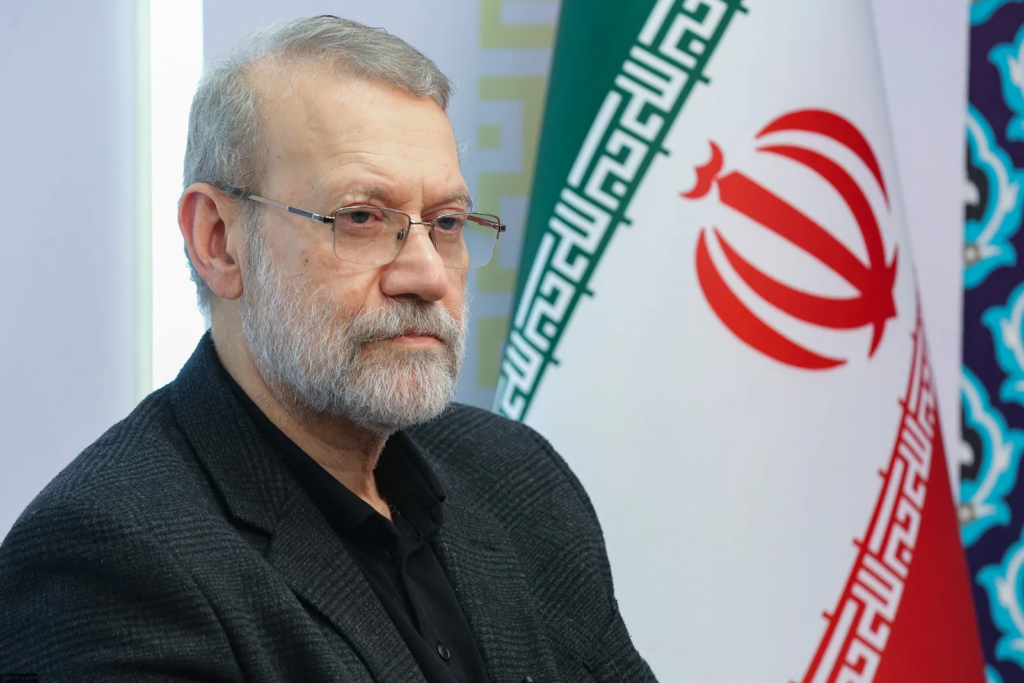
A senior Iranian security official has issued a stark warning to U.S. President Donald Trump, telling him to “be careful not to get eliminated yourself,” as tensions between Washington and Tehran intensify during the ongoing Iran war. The remark came from Ali Larijani, the powerful head of Iran’s Supreme National Security Council, who dismissed recent U.S. threats against Iran as “empty” while signaling that Tehran would not back down from confrontation.
Larijani’s statement represents one of the most direct rhetorical confrontations between Iran’s leadership and the U.S. president since the conflict began earlier in 2026. The warning was issued after Trump threatened severe retaliation if Iran interfered with oil shipments through the Strait of Hormuz, one of the world’s most critical energy routes.
The exchange underscores how the war between Iran, the United States, and their regional allies has moved beyond military operations into increasingly aggressive political messaging that could further escalate tensions across the Middle East.
Background: War Between Iran and the U.S.–Israel Alliance
The current conflict erupted after joint U.S.–Israeli strikes on Iranian targets, including a major operation that killed Iran’s long-time Supreme Leader Ali Khamenei in Tehran.
The killing of Khamenei triggered a dramatic escalation in hostilities across the region. Iran responded with waves of ballistic missile and drone attacks against Israeli territory, U.S. military bases, and Gulf states hosting Western forces. Meanwhile, the United States and Israel have carried out extensive airstrikes targeting Iran’s military infrastructure, missile sites, and command centers.
The war has quickly become one of the most intense military confrontations in the Middle East in decades, involving thousands of airstrikes, widespread missile launches, and mounting civilian casualties across multiple countries.
Larijani’s Warning to Trump
Ali Larijani’s statement was delivered in response to Trump’s remarks on social media and in interviews warning Iran that any attempt to disrupt global oil flows or attack U.S. interests would result in massive retaliation.
Trump reportedly warned that Iran would face consequences “twenty times harder” if it interfered with energy shipping routes in the Persian Gulf. In response, Larijani dismissed the threat as exaggerated and warned Trump to “watch out for yourself — lest you be eliminated.”
The Iranian official also suggested that Washington should not underestimate Tehran’s capabilities or resolve. According to Iranian state messaging, the country remains capable of responding forcefully despite ongoing U.S. and Israeli military pressure.
Larijani has emerged as one of the most prominent figures in Iran’s leadership structure since the war began. As secretary of the Supreme National Security Council, he plays a key role in coordinating Iran’s defense strategy and shaping its responses to external threats.
Trump’s Response to Iranian Threats
President Trump has largely dismissed the warning from Iranian officials. In interviews with U.S. media, he said he “couldn’t care less” about threats from Tehran and insisted that U.S. military operations against Iran would continue until the country agrees to what he called an “unconditional surrender.”
Trump has repeatedly argued that American and Israeli strikes have severely weakened Iran’s military infrastructure and leadership. U.S. officials claim that thousands of Iranian targets — including missile launch sites, military bases, and naval assets — have already been destroyed during the campaign.
Despite those claims, Iranian forces have continued launching missiles and drones toward Israel and U.S. facilities across the Middle East, demonstrating that Tehran still retains significant military capabilities.
Rising Regional Tensions
The escalating war rhetoric between Tehran and Washington is occurring alongside expanding military clashes throughout the region. Iranian missile and drone attacks have targeted locations in Israel, Bahrain, the United Arab Emirates, Qatar, and other Gulf states, while U.S. forces have intensified airstrikes across Iran.
These exchanges have heightened fears of a broader regional conflict that could involve additional countries and disrupt global energy markets. The Strait of Hormuz, through which roughly one-fifth of the world’s oil supply passes, has become a central flashpoint in the confrontation.
Any attempt by Iran to block or threaten shipping in the strait could trigger a massive international military response and send oil prices soaring worldwide.
Global Reaction and Diplomatic Concerns
International leaders and diplomatic organizations have expressed growing concern about the escalating rhetoric between the United States and Iran. Analysts warn that personal threats between senior officials — such as Larijani’s warning to Trump — can inflame tensions and make diplomatic solutions more difficult to achieve.
Several countries have called for urgent negotiations to prevent the conflict from spiraling into a larger regional war. However, with both sides maintaining aggressive military and political positions, prospects for immediate diplomacy remain uncertain.
Meanwhile, the humanitarian impact of the war continues to grow. Thousands of civilians have been displaced across Iran and neighboring countries, and infrastructure damage is affecting essential services such as hospitals, power grids, and transportation networks.
Strategic Implications for the War
The warning issued by Iran’s security chief highlights the deepening hostility between Tehran and Washington. It also reflects Iran’s attempt to project strength and deterrence despite ongoing military pressure.
For analysts, the statement signals that the conflict is entering a dangerous phase where political rhetoric and military operations increasingly reinforce each other. With neither side showing signs of backing down, the risk of further escalation remains high.
Whether the war ultimately ends through negotiation, military exhaustion, or international mediation remains unclear. What is certain is that exchanges like Larijani’s warning to Trump illustrate just how volatile the geopolitical environment in the Middle East has become.