Indian PM Projects Strategic Confidence in Military and Diplomatic Backing Amid Rising Regional Tensions
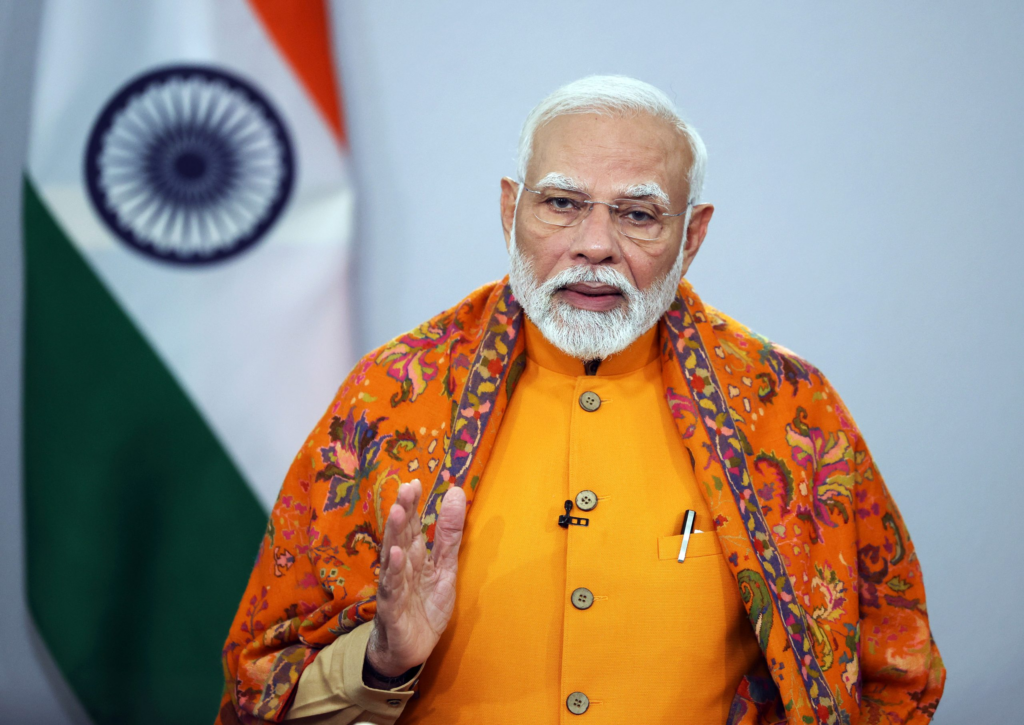
In a climate of persistent Indo‑Pakistani tensions, **Indian Prime Minister Narendra Modi has made bold statements asserting that Pakistan “cannot fight with us” while also highlighting strong international support — particularly from France — in India’s security and diplomatic posture.
This declaration comes amid ongoing friction on the Line of Control (LoC), competing narratives over cross‑border violence, and New Delhi’s efforts to build strategic partnerships that reinforce India’s defense capabilities and global influence.
Modi’s remarks reflect both India’s confidence in its military strength and its reliance on key international allies to balance geopolitical pressures in South Asia, especially regarding New Delhi’s relations with Islamabad and the issue of terrorism and regional security.
Modi’s Assertive Message on Pakistan’s Military Capability
Although there is no direct public transcript available of a specific quote reading “Pakistan cannot fight with us,” the broader context of Modi’s speeches and addresses to the nation after periods of heightened tension supports the narrative that India views itself as militarily superior and in control of the situation. After the May 2025 India‑Pakistan conflict, which involved mutual missile strikes and air engagements, Modi stated that India had only “paused” its military action and reserved the right to respond on its own terms to any future threats or attacks. This sentiment conveys a message of strength and readiness, indicating that India does not fear a conventional military confrontation with Pakistan.
This confidence is grounded in comparative military power: India ranks among the world’s top military spenders with significantly larger forces and defence budgets than Pakistan, which has historically been ranked lower in global military strength indices. Analysts have noted that India’s broader defense infrastructure and procurement programs place it in a more dominant position regionally.
France’s Support: Diplomatic Solidarity and Strategic Partnership
Alongside this assertive stance, France has been a visible diplomatic supporter of India, especially in discussions around terrorism and regional stability. In April 2025, after a deadly terror attack in Indian‑administered Kashmir — which New Delhi attributed to militant groups based in Pakistan — French President Emmanuel Macron called Prime Minister Modi to express France’s solidarity with India and condemned the attack, reaffirming support for New Delhi’s fight against terrorism. This reinforced diplomatic alignment was covered in international reporting and amplified via official channels.
The significance of France’s position becomes clearer when viewed in the context of India‑France bilateral relations. Beyond occasional diplomatic support, the two countries cultivate a deep strategic partnership encompassing defense cooperation (including fighter aircraft and defense technology), civil nuclear energy agreements, security collaboration, and broader geopolitical dialogue. Recent upgrades in their partnership reflect mutual trust and shared interests in counter‑terrorism and geopolitical stability.
This backing, while not a formal defense pact in the style of NATO, signals a level of international confidence in India’s regional leadership and India’s commitment to working with like‑minded global powers. It also sends a diplomatic message to Islamabad and other regional actors: India is not isolated on the world stage.
The Regional Security Landscape
India and Pakistan’s relationship remains fraught, rooted in historical conflicts such as the disputed Kashmir region, cross‑border militant incidents, and periodic military escalations. The 2025 clashes — including cross‑border strikes and military movements — raised serious concerns about the potential for a broader war between two neighboring nuclear‑armed states. Although fighting eventually de‑escalated through diplomatic channels, the crisis revealed deep distrust and the fragile nature of peace along the LoC.
In this fraught environment, statements by national leaders carry outsized importance. Modi’s recent rhetoric — emphasizing strength, readiness, and resilience — is designed for domestic audiences as well as international observers, presenting India as unafraid of conflict while underscoring its alliances and capabilities.
Criticism and International Calls for Restraint
Despite strong Indo‑French ties and Modi’s assertive posture, not all international reactions have been unqualified endorsements. For instance, France has also called for restraint and protection of civilians during escalations between India and Pakistan, urging both countries to avoid further violence. That reflects Paris’s broader diplomatic balancing act: supporting India’s right to defend itself while discouraging full‑scale war.
Similarly, global analyses emphasize the importance of sustained diplomatic engagement and highlight that military posturing alone cannot resolve long‑running disputes in South Asia. Analysts note that while the ceasefire agreements of 2025 reduced immediate hostilities, they did not address underlying causes of tension or guarantee long‑term stability.
Conclusion: Strength With Calls for Calm
Prime Minister Modi’s statements asserting India’s military superiority relative to Pakistan and highlighting France’s diplomatic support are shaped by ongoing regional dynamics. India’s strategic partnerships, especially with countries like France, reinforce its global positioning. Meanwhile, the international community continues to advocate for restraint and diplomatic dialogue to prevent renewed conflict.
As South Asia watches closely, the interplay between military readiness and diplomatic engagement will likely shape the trajectory of India‑Pakistan relations in the months ahead.