U.S.–Israel military campaign intensifies as Trump claims Iran’s navy and air force have been crippled and vows to block Tehran from obtaining nuclear weapons
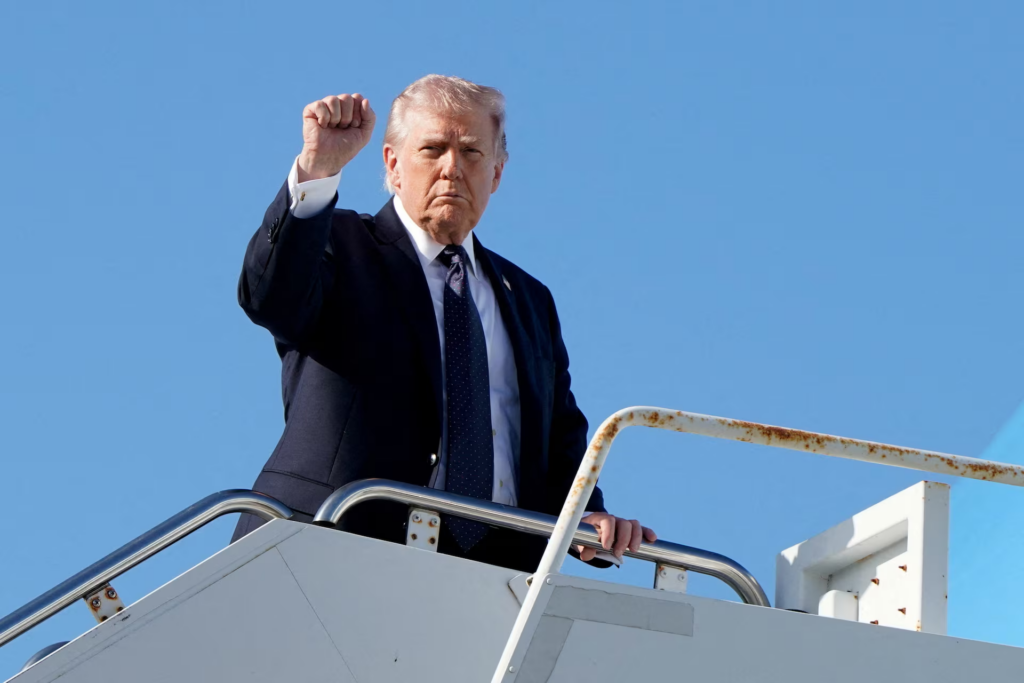
The geopolitical crisis in the Middle East has reached a new level of tension after U.S. President Donald Trump issued a stark warning regarding Iran’s future leadership. In a recent interview with ABC News, Trump said that Iran’s next supreme leader “is not going to last long” without approval from the United States, emphasizing Washington’s determination to prevent Tehran from acquiring nuclear weapons. His remarks come amid a rapidly escalating conflict involving the United States, Israel, and Iran, raising fears of a broader regional war and significant political changes within the Islamic Republic.
The crisis intensified following a large-scale military campaign against Iran that reportedly targeted key leadership figures and strategic military infrastructure. In late February 2026, a series of airstrikes in Tehran resulted in the death of Iran’s Supreme Leader Ayatollah Ali Khamenei, along with several high-ranking officials, in what analysts describe as a “decapitation strike” aimed at destabilizing Iran’s command structure. The attack triggered an immediate leadership transition process within Iran and significantly escalated tensions between Tehran and its adversaries.
During the interview, Trump defended the ongoing U.S. and Israeli military operations, claiming that the strikes had severely damaged Iran’s military capabilities. According to the U.S. president, the Iranian navy, air force, and missile systems have been largely destroyed, leaving the country in a weakened strategic position. He argued that the operation was necessary to prevent Iran from expanding its influence across the Middle East and pursuing nuclear weapons. Trump also asserted that Iran had ambitions to dominate the region, which he said posed a direct threat to global stability and U.S. allies.
The military campaign is part of a broader buildup of American forces across the Middle East that began earlier in 2026. The United States deployed aircraft carriers, missile defense systems, and additional troops to the region in what officials described as the largest military mobilization in the area since the 2003 Iraq War. The stated objective of this buildup was to counter Iran’s nuclear ambitions and deter further aggression by the Iranian government.
Iran has responded to the attacks with missile and drone strikes targeting U.S. bases and allied infrastructure across the region. Several Gulf countries and Israel have activated air defense systems to intercept incoming projectiles, while diplomatic facilities in neighboring nations have been placed on high alert. The escalating tit-for-tat attacks have raised fears that the conflict could spread beyond Iran and Israel, potentially drawing additional regional powers into the confrontation.
Meanwhile, Iran’s leadership is undergoing a critical transition. Following the death of Khamenei, the Assembly of Experts—an influential clerical body responsible for appointing Iran’s supreme leader—has reportedly selected a successor, though the identity has not yet been publicly announced. The leadership selection process is highly sensitive, as the supreme leader holds ultimate authority over Iran’s government, military, and judiciary. The uncertainty surrounding the new leadership has created both internal political tension and heightened international scrutiny.
Trump’s statement that the United States must have a role in determining Iran’s next leader has sparked global debate and criticism from analysts who argue that such comments could further inflame the conflict. Iranian officials have already issued warnings that the United States will “pay the price” for the recent attacks, signaling that retaliation could continue in the coming weeks.
Despite the risks of escalation, the U.S. administration has maintained that its primary goal is preventing Iran from developing nuclear weapons. American officials insist that a nuclear-armed Iran would destabilize the Middle East and threaten both regional allies and global security. For Washington, the current campaign is therefore framed as a preventive measure designed to eliminate Iran’s military capabilities and disrupt its nuclear program before it reaches a critical stage.
As the conflict continues to unfold, the world is watching closely to see how Iran’s new leadership responds and whether diplomatic channels can prevent further escalation. The coming weeks are likely to determine not only the future of Iran’s political system but also the balance of power across the Middle East.