Rising Middle East tensions deepen fears of a wider regional war as missile exchanges intensify
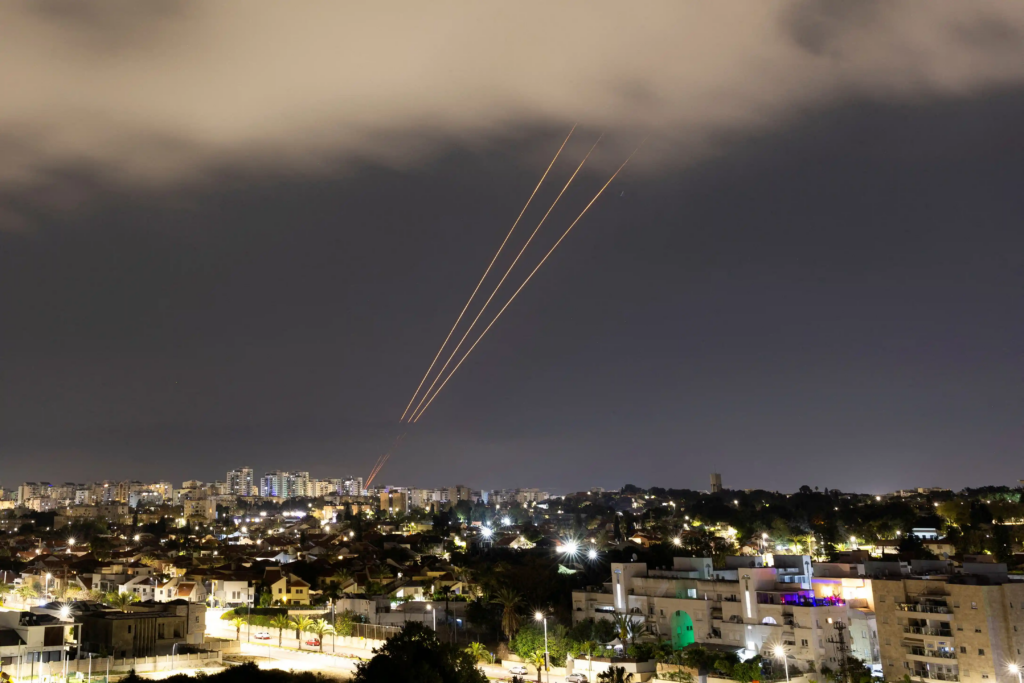
Reports circulating online about Iran and Lebanon simultaneously firing ballistic missiles toward Israel reflect a rapidly evolving and highly volatile regional situation. Verified developments from March 2026 indicate that Iran has indeed launched ballistic missile attacks on Israel, while Lebanon’s Iran-backed group Hezbollah has separately fired rockets and missiles from Lebanese territory. However, the exact claim of a fully coordinated simultaneous ballistic barrage from both states remains contested and requires careful contextual understanding.
The current escalation stems from a widening conflict between Israel, the United States, and Iran. Following joint U.S.–Israeli strikes on Iranian targets, Tehran retaliated with waves of ballistic missiles aimed at Israeli sites. Iranian officials claimed the strikes were part of a broader military response and even asserted that advanced missiles, including the Kheibar series, penetrated Israeli air defenses. Military analysts note that Iran has increasingly relied on ballistic missiles as its primary long-range strike capability during this confrontation.
At the same time, Hezbollah — Iran’s key regional ally based in Lebanon — entered the conflict by launching missiles and rockets into northern Israel. Israeli authorities reported intercepting some projectiles while others landed in open areas. This marked one of the most serious cross-border escalations since the previous Israel-Hezbollah clashes, significantly raising fears of a multi-front war.
Israel responded swiftly and forcefully. The Israeli military conducted extensive airstrikes on Hezbollah positions in Beirut’s southern suburbs and across southern Lebanon, causing dozens of casualties and large-scale displacement. Lebanese officials publicly distanced the government from Hezbollah’s actions, warning that unilateral attacks risk dragging the country into a broader regional conflict.
Importantly, some real-time military assessments have produced conflicting details. Certain Israeli defense updates indicated that while Iran fired ballistic missiles toward Israel, there were moments when no rocket fire from Lebanon was detected despite widespread online claims. This highlights the fog of war and the risk of misinformation spreading during fast-moving military crises.
Strategically, the situation represents a dangerous convergence of Iran’s direct missile campaign and Hezbollah’s proxy pressure on Israel’s northern front. Analysts warn that Hezbollah’s involvement dramatically increases the risk of regional spillover because it opens a second battlefield. Israel has already mobilized large numbers of reservists and signaled readiness for further escalation if attacks continue.
The broader geopolitical stakes are significant. Iran views its missile program as a core deterrent and has repeatedly demonstrated willingness to use ballistic strikes in response to Israeli actions. Meanwhile, Israel maintains one of the world’s most advanced missile defense networks, including Iron Dome and other layered systems, which have intercepted many incoming threats but not all. The continued testing of these defenses under real combat conditions is being closely watched by military planners worldwide.
Humanitarian concerns are also mounting. Israeli strikes in Lebanon have forced thousands of civilians to flee, while regional governments fear economic and security fallout if the conflict widens. Diplomatic efforts so far have struggled to contain the crisis, and international observers warn the Middle East could be entering its most dangerous phase in years.
In conclusion, while Iran has clearly launched ballistic missiles at Israel and Hezbollah in Lebanon has fired cross-border attacks, the narrative of a fully synchronized Iran-Lebanon ballistic strike should be treated cautiously. The reality is a rapidly escalating, multi-actor conflict with overlapping but not always perfectly coordinated actions. With tensions still rising and military operations ongoing, the risk of a broader regional war remains high.