Mamdani calls joint attacks a “catastrophic escalation” and urges focus on peace and domestic priorities amid global crisis
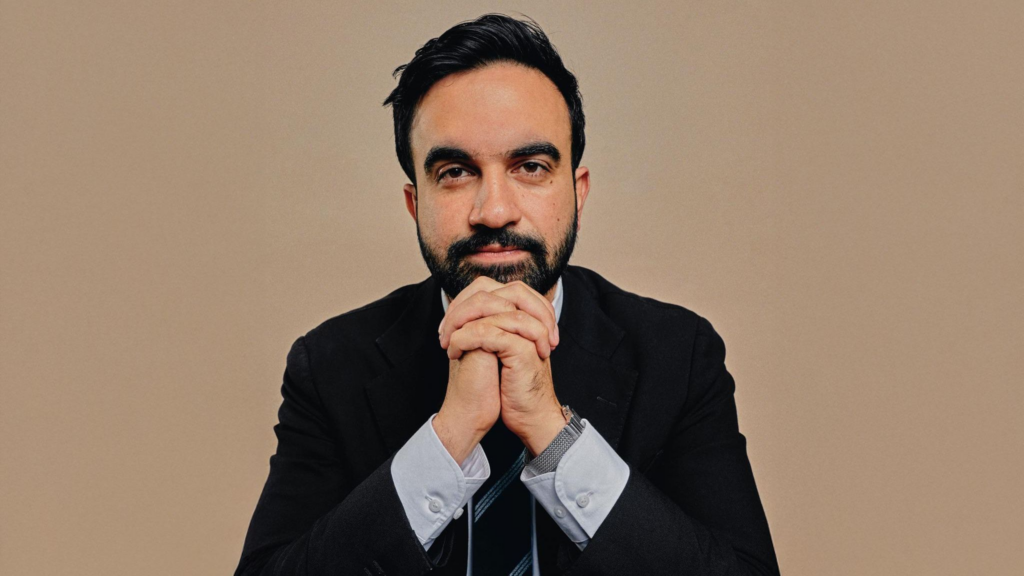
Zohran Mamdani, the mayor of New York City, has emerged as a vocal critic of recent military actions by the United States and Israel against Iran, describing them as a dangerous escalation that threatens both regional stability and American interests. In a series of public statements and social media posts, Mamdani condemned the strikes as an “illegal war of aggression” and argued that Americans want peace and stability, not further military conflict. His remarks have sparked both support from anti‑war advocates and sharp backlash from political opponents.
Mamdani’s denunciation came shortly after U.S. President Donald Trump announced coordinated military strikes with Israel targeting Iranian territory. In his post on the social platform X, Mamdani called the bombardment “a catastrophic escalation in an illegal war of aggression,” emphasizing his belief that the attacks represent a dangerous new phase in Middle East hostilities. He wrote that “bombing cities, killing civilians, and opening a new theater of war” are actions not supported by the American public.
The mayor’s comments reflect a broader anti‑war sentiment among many urban and progressive voters who oppose military escalation without clear congressional authorization. Mamdani argued that most Americans would rather see government attention focused on domestic issues — such as the cost of living and economic relief — than on foreign military campaigns. He stated that the public does not want another war pursued in the name of regime change.
Mamdani’s stance is notable not only because of his position as a major city mayor but because it departs from the views of many Democratic officials who have avoided outright condemnation of the strikes. While some have urged caution and a return to diplomatic channels, Mamdani’s comments were among the most direct and assertive critiques from a sitting U.S. political leader. His message underscored a belief that the escalation could entangle the United States in a deeper conflict with Iran, with serious human and economic costs.
In his remarks, Mamdani also made clear his intention to ensure public safety at home. Following the strikes, he said he had consulted with local law enforcement and emergency management officials to monitor sensitive areas and coordinate responses if needed, particularly for New York’s large and diverse immigrant communities. He specifically reassured Iranian‑American residents and others that the city would protect them and ensure their safety.
The mayor’s opposition to the military campaign has drawn support from anti‑war activists, youth organizations, and progressive groups who share his concerns about the human toll of the conflict and the lack of clear objectives in military escalation. Organizations such as Democratic Socialists of America have publicly aligned with Mamdani’s call for restraint, arguing that the attacks violate international law and could harm civilian populations.
However, Mamdani’s position has also drawn significant criticism from conservative commentators and some mainstream politicians, who argue that condemning joint U.S.–Israeli military action amounts to siding with adversaries. Critics have accused Mamdani of oversimplifying the geopolitical realities of the conflict and failing to acknowledge Iran’s long history of supporting militant groups and destabilizing regional actors. Some detractors went further to label his remarks as politically naive or unsupportive of U.S. strategic interests.
The response to Mamdani’s statement underscores a larger national debate over how the United States should engage with foreign conflicts, and whether military force or diplomatic negotiations should be the primary tool for addressing international security challenges. Polls suggest that a significant portion of the U.S. public is wary of extended military involvement overseas, a sentiment that Mamdani echoed in his critiques.
Mamdani’s comments also sparked discussions about the role of local officials in foreign policy debates. While mayors typically focus on municipal and domestic concerns, his outspoken stance highlights how international conflicts can reverberate at the city level — especially in diverse urban centers with connections to communities affected by global events.
In addition to his critique of the strikes, Mamdani emphasized the importance of prioritizing peace and diplomatic channels. He argued that military action without clear objectives or public support risks long‑term instability and may undermine American standing abroad. Many analysts view his approach as part of a broader movement within parts of the Democratic Party that calls for a more restrained foreign policy and greater emphasis on multilateral diplomacy.
As the conflict continues to unfold, Mamdani’s opposition to the U.S. and Israeli military action on Iran has positioned him as a leading voice among progressive critics of the war. Whether his stance influences broader national policy remains uncertain, but it has undoubtedly shaped the public conversation around the U.S. role in Middle East military engagements.