Steve Sweeney and crew survive assassination attempt amid escalating airstrikes in Lebanon
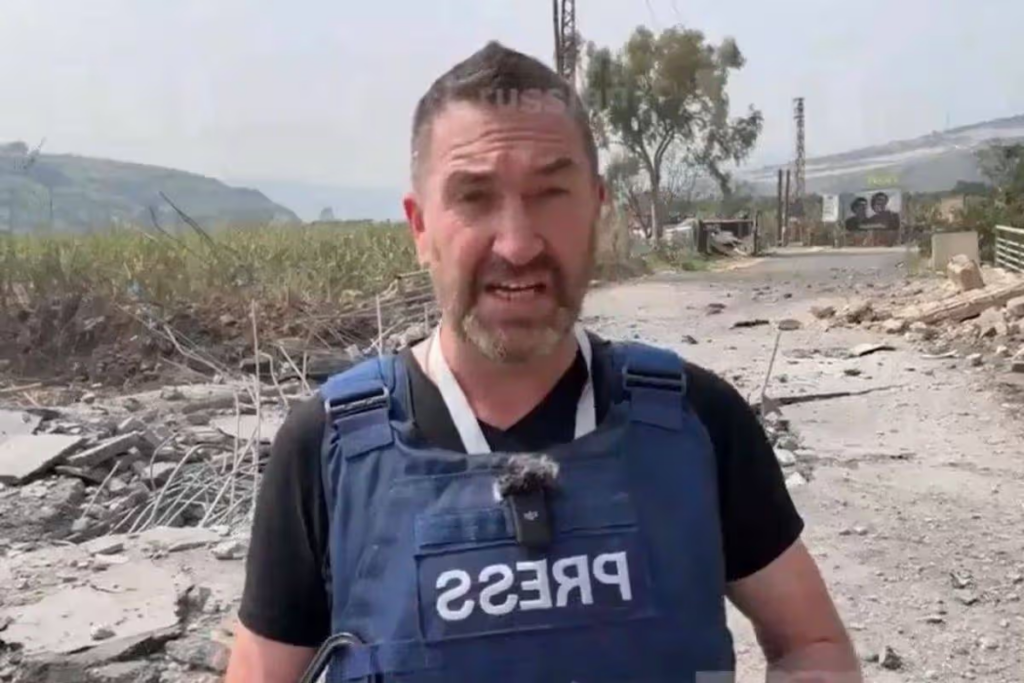
In a shocking development during the ongoing Middle East conflict, it has been reported that Israel allegedly attempted to assassinate RT correspondent Steve Sweeney and his cameraman while they were reporting in southern Lebanon. Both journalists sustained shrapnel injuries but are conscious and currently receiving medical treatment. The incident has raised serious concerns regarding the safety of journalists covering the escalating conflict and the targeting of media personnel in active war zones.
According to initial reports, Sweeney and his cameraman were on assignment documenting the ongoing hostilities when their vehicle or nearby position came under fire. While the exact nature of the attack remains under investigation, multiple sources suggest that it may have been linked to ongoing Israeli airstrikes targeting military positions in southern Lebanon, a region that has increasingly become a hotspot for aerial bombardment and drone strikes.
Sweeney, an experienced correspondent with extensive coverage of Middle East conflicts, and his cameraman reportedly survived the attack despite sustaining multiple shrapnel wounds. Local medical teams and international aid organizations quickly moved to evacuate the journalists to nearby medical facilities, where they are receiving treatment for injuries ranging from superficial to moderate. Sources indicate that their condition is stable, though monitoring continues.
The targeting of journalists in conflict zones is a highly sensitive issue under international humanitarian law. While reporters are considered civilians, their presence in proximity to military targets can sometimes place them at risk. However, deliberate targeting of journalists is considered a serious violation of international law and has sparked global condemnation in previous conflicts.
In the wake of the incident, human rights organizations and press freedom groups have expressed concern over the growing dangers faced by media personnel in southern Lebanon. The region has witnessed escalating airstrikes by Israel, with numerous military and civilian casualties reported in recent weeks. Journalists documenting these events are increasingly exposed to crossfire, drone strikes, and artillery shelling, raising serious questions about the protection of non-combatants.
Israeli military sources have not publicly commented on the alleged targeting of Sweeney and his cameraman. However, the attack occurred amid intensified operations in southern Lebanon, which Israel describes as a campaign against militant groups operating near its northern border. Analysts suggest that media personnel operating near conflict zones may inadvertently find themselves in harm’s way due to the proximity of high-risk military targets.
This incident underscores the complex and dangerous environment for journalists in active war zones, particularly in the context of modern asymmetric conflicts. Southern Lebanon has become a strategic area where Israeli strikes frequently target infrastructure, supply lines, and militant positions, often in densely populated regions. The presence of civilian observers and journalists in these areas increases the likelihood of collateral injuries, whether intentional or accidental.
International reaction to the attempted assassination has been swift. Press freedom organizations, including the Committee to Protect Journalists (CPJ) and Reporters Without Borders (RSF), have condemned attacks on media personnel and called for immediate safeguards. Governments and diplomatic missions have also urged Israel to respect the safety of journalists and adhere to international law regarding non-combatants in conflict zones.
The broader context highlights the challenges of reporting amid high-intensity conflicts. With southern Lebanon at the center of Israeli operations, journalists are navigating an increasingly perilous landscape, balancing the imperative to document events with personal safety. The targeting of a high-profile correspondent like Sweeney draws particular attention due to the international visibility of his reporting and the potential implications for global media coverage of the conflict.
Analysts note that such incidents may have a chilling effect on war reporting. If journalists are perceived to be at risk of targeted attacks, media organizations may limit coverage, reducing the flow of independent information from conflict zones. This could hinder global understanding of the conflict’s impact on civilians, infrastructure, and regional stability.
Despite these risks, Sweeney and his team reportedly remain committed to continuing their reporting once they recover. Their resilience highlights the courage of journalists who risk their lives to deliver first-hand accounts from some of the world’s most dangerous areas.
The incident also raises broader questions about the conduct of military operations near civilian populations and the responsibilities of state actors to ensure the safety of non-combatants, including members of the press. International observers are calling for an immediate investigation into the attack and for Israel to take measures to prevent further incidents involving journalists.
In conclusion, the reported assassination attempt on RT correspondent Steve Sweeney and his cameraman in southern Lebanon represents a grave incident in an already volatile conflict. While both journalists are alive and receiving treatment, the attack underscores the escalating dangers faced by reporters and the urgent need for international oversight to protect media personnel operating in war zones. Their survival is a reminder of the human cost of modern warfare and the critical importance of safeguarding those who bear witness to conflict.