Iran’s supreme leader highlights national solidarity as key strength while warning adversaries of strategic misjudgment
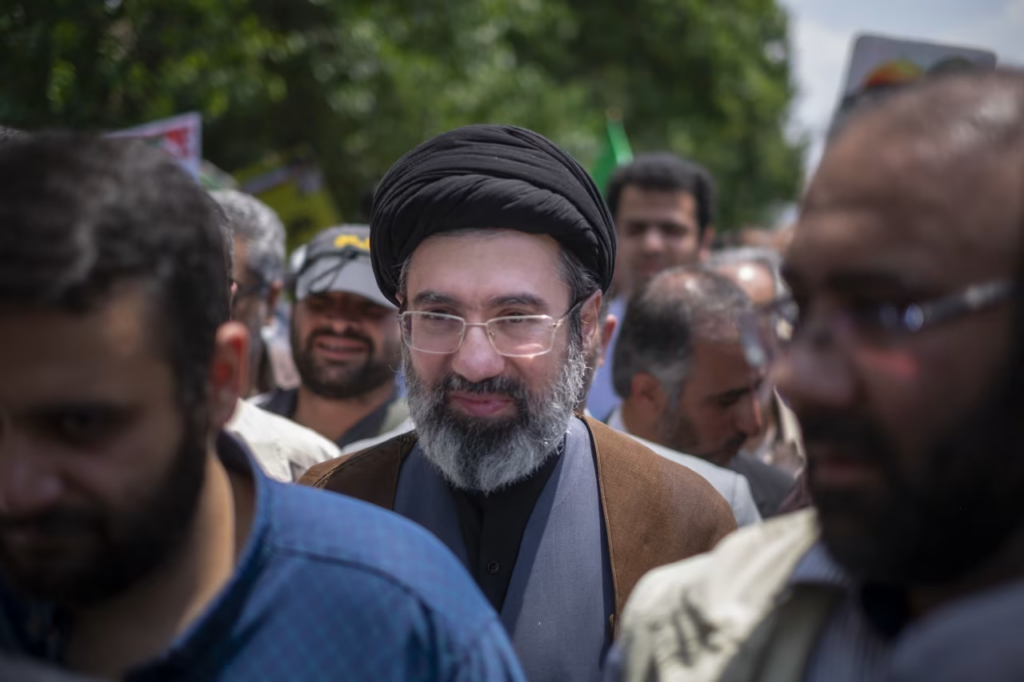
Iran’s Supreme Leader Mojtaba Khamenei has declared that Iran’s adversaries have “miscalculated” the country’s strength, praising the unity of the Iranian people as a decisive factor in resisting external pressure and ongoing military confrontation. The statement comes at a time of heightened tensions in the region, as conflict involving Iran, the United States, and Israel continues to intensify.
In his remarks, Khamenei emphasized that foreign powers had underestimated Iran’s internal cohesion and resilience. He argued that adversaries believed they could exploit internal divisions or public dissatisfaction to weaken the country, but instead, Iranians demonstrated strong national unity in the face of external threats. This unity, he suggested, has played a central role in countering both military and psychological pressure.
Khamenei’s statement aligns with a long-standing narrative within Iranian leadership that external actors consistently misjudge the country’s ability to withstand pressure. He noted that enemies had expected unrest or fragmentation within Iran but were met instead with what he described as a “powerful display of national solidarity.”
The comments come amid a broader escalation in the Middle East, where Iran has been engaged in a series of military exchanges, including missile launches, drone operations, and defensive actions against incoming strikes. The conflict has also seen attacks on energy infrastructure, leadership targets, and strategic sites, increasing the stakes for all parties involved.
Khamenei also used the opportunity to reinforce the importance of unity as a cornerstone of national strength. He stressed that Iran’s power does not rely solely on military capabilities such as missiles or advanced دفاع systems, but rather on the collective resolve of its population. This message appears aimed at both domestic and international audiences—boosting morale داخل the country while signaling resilience to external adversaries.
The Iranian leader’s remarks are consistent with recent messaging from Tehran emphasizing a “resistance economy” and national security through unity, particularly during times of crisis. Officials have repeatedly highlighted the role of public cohesion in sustaining the country through sanctions, الحرب, and diplomatic isolation.
Analysts suggest that such statements serve multiple strategic purposes. Domestically, they aim to reinforce public confidence and discourage dissent by framing unity as essential to national survival. Internationally, they act as a signal that Iran is unlikely to yield under pressure, whether economic or military. By portraying adversaries as having miscalculated, Iranian leadership seeks to project strength and deterrence.
The reference to “miscalculation” is particularly significant in the current context. Military conflicts often involve assumptions about an opponent’s capabilities, intentions, and internal stability. When these assumptions prove incorrect, it can lead to unexpected outcomes and prolonged संघर्ष. Khamenei’s remarks suggest that Iran believes its adversaries underestimated both its defensive capabilities and the resilience of its society.
At the same time, the emphasis on unity comes amid reports of significant challenges داخل Iran, including economic pressure, infrastructure damage, and ongoing military threats. By highlighting solidarity, the leadership is attempting to present a narrative of strength and continuity despite these challenges.
Regional experts note that such rhetoric is not uncommon during periods of conflict. Leaders often frame their nations as unified and resilient to counter external narratives and maintain internal stability. However, the effectiveness of this messaging depends on conditions on the ground and the public’s perception of the conflict.
The statement also carries implications for the مستقبل of the conflict. By asserting that enemies have miscalculated, Iran signals that it believes it is in a position to endure or even outlast its adversaries. This could reduce incentives for immediate de-escalation, as both sides may feel confident in their strategies.
International reaction to Khamenei’s remarks has been measured, with analysts focusing on what they reveal about Iran’s strategic outlook. Some view the emphasis on unity as a defensive posture, while others interpret it as a sign that Iran is preparing for a prolonged confrontation.
In conclusion, Khamenei’s statement that “enemies miscalculated” and his praise for Iranian unity highlight the central role of national cohesion in Iran’s current strategy. As the conflict continues to unfold, such messaging is likely to remain a key component of Tehran’s approach—both in sustaining domestic morale and in signaling resilience to the outside world. The coming weeks will determine whether this narrative translates into strategic advantage or further escalation in an already volatile region.