Tehran reiterates its long-standing nuclear stance as geopolitical pressure, war risks, and international scrutiny intensify in 2026
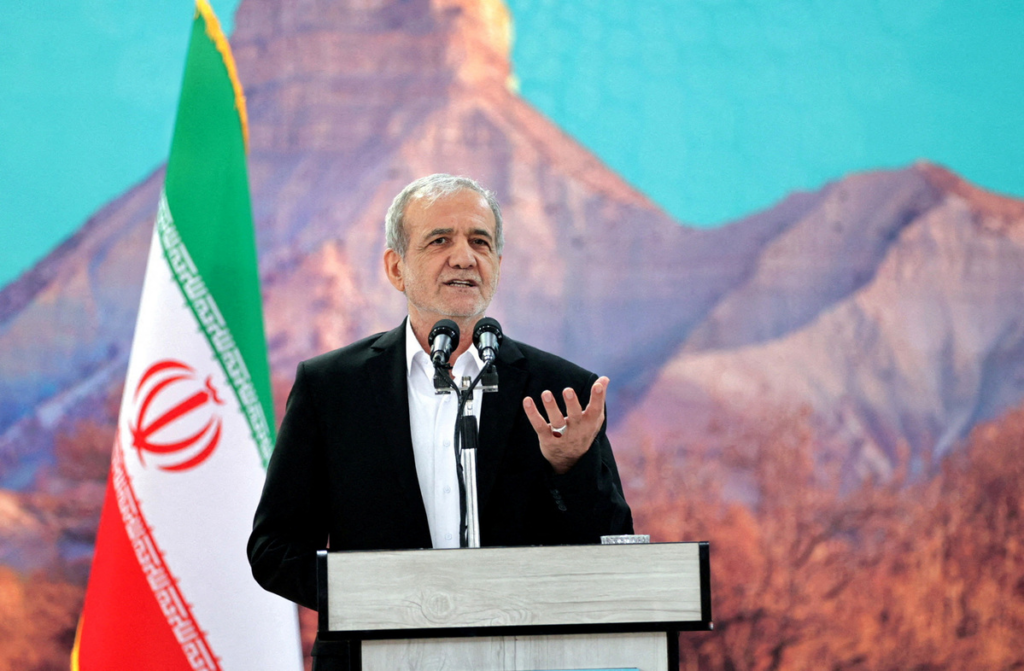
Iranian President Masoud Pezeshkian has once again declared that the Islamic Republic does not seek to develop nuclear weapons, reinforcing a long-standing policy that continues to shape global debates over Iran’s nuclear ambitions. His statement comes at a critical moment in 2026, as tensions in the Middle East escalate and international concerns over nuclear proliferation remain at the forefront of global security discussions.
Pezeshkian’s remarks are not isolated. Over the past year, Iranian leadership has consistently emphasized that its nuclear program is strictly peaceful. Speaking during multiple public addresses and diplomatic engagements, the president stated clearly that Iran is “not at all” pursuing nuclear weapons and is even open to international verification mechanisms to prove its claims. This position aligns with Tehran’s broader narrative that its nuclear activities are focused on civilian purposes such as energy production, medical research, and agricultural development.
A key pillar supporting Iran’s stance is the religious decree, or fatwa, issued by Supreme Leader Ayatollah Ali Khamenei, which explicitly prohibits the development and use of weapons of mass destruction, including nuclear bombs. Pezeshkian has repeatedly referenced this doctrine, asserting that such a ruling is binding and non-negotiable within Iran’s political and ideological framework. He emphasized that “when the Supreme Leader says we will not have nuclear weapons, it means we won’t,” reinforcing the religious and political weight behind the policy.
This position has also been echoed by other Iranian officials. Foreign Minister Abbas Araqchi recently stated that Iran’s nuclear doctrine is unlikely to change, even amid growing military conflict and international pressure. The continuity of this messaging suggests a coordinated effort by Tehran to maintain a consistent narrative, particularly as it faces accusations from the United States and Israel, both of which argue that Iran could be moving closer to nuclear weapon capability.
However, global skepticism remains strong. Western intelligence agencies and international watchdogs have long expressed concern over Iran’s uranium enrichment activities. While there is no definitive public evidence that Iran is actively building a nuclear weapon, reports indicate that the country possesses advanced nuclear capabilities and significant stockpiles of enriched uranium. This “threshold capability” keeps Iran at the center of non-proliferation debates, as experts warn that the line between civilian and military nuclear development can be thin.
The timing of Pezeshkian’s statement is particularly significant given the ongoing conflict involving Iran, the United States, and Israel. Recent military escalations, including strikes on nuclear-related infrastructure and energy facilities, have intensified fears of a broader regional war. Despite these developments, Iran continues to insist that its nuclear program remains peaceful and defensive in nature.
Diplomatic efforts to resolve the nuclear issue have seen mixed results. Talks between Iran and Western powers, including the United States, have produced what officials describe as “encouraging signals,” but no comprehensive agreement has yet been reached. Iran has maintained that it will not bow to external pressure, even as sanctions and military threats persist. This balancing act—between resisting pressure and engaging in negotiations—defines Tehran’s current foreign policy approach.
From a geopolitical perspective, Iran’s repeated denial of nuclear weapon ambitions serves multiple purposes. It aims to reduce the risk of further military escalation, maintain diplomatic channels, and reassure allies and neutral countries. At the same time, it challenges the narrative promoted by its adversaries, who view Iran’s nuclear advancements as a direct threat to regional and global security.
Critics, however, argue that Iran’s statements alone are insufficient without transparent and verifiable actions. International bodies such as the International Atomic Energy Agency (IAEA) continue to call for greater access to Iran’s nuclear facilities to ensure compliance with non-proliferation agreements. The success or failure of these verification efforts will likely play a decisive role in shaping future relations between Iran and the global community.
In conclusion, President Masoud Pezeshkian’s assertion that Iran does not seek nuclear weapons reflects a consistent and deeply rooted policy backed by religious doctrine and political messaging. Yet, in a world marked by distrust, conflict, and strategic competition, these assurances face ongoing scrutiny. As tensions continue to rise in 2026, the question is not only whether Iran intends to build nuclear weapons, but whether the international community is willing to accept its claims without concrete, verifiable proof.