Trump and Netanyahu trade blame in public statements while maintaining secret daily communication amid Iran conflict
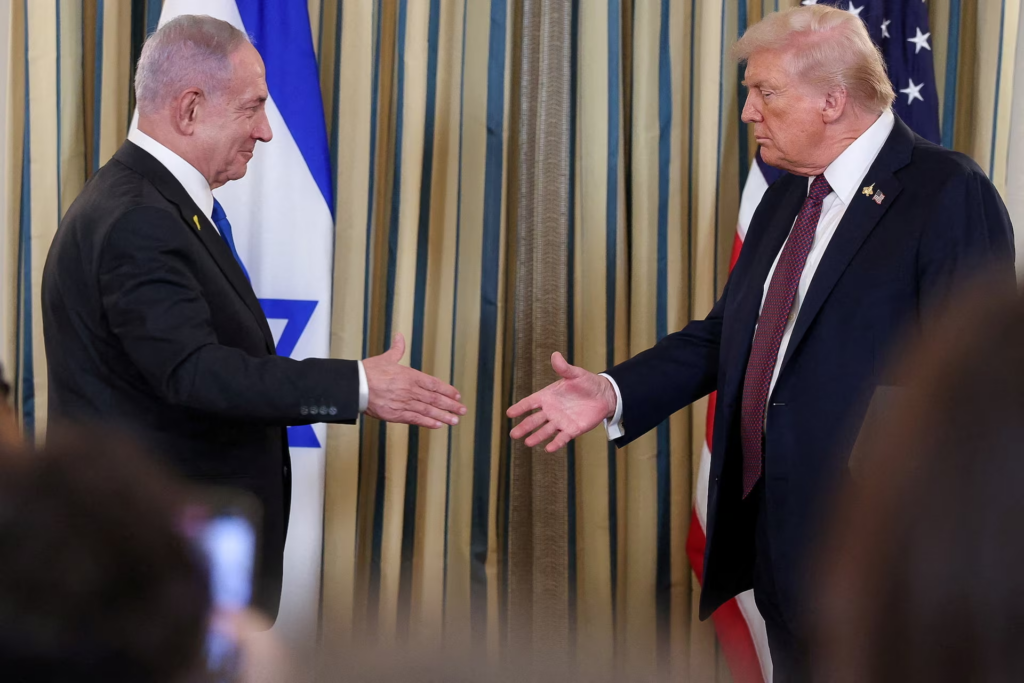
Tensions between United States and Israel appeared to surface publicly following a recent strike on Iran’s South Pars gas field, with both nations trading barbs in high-profile statements. U.S. officials, led by former President Donald Trump, claimed that Washington had no prior knowledge of the Israeli operation, describing it as an action “out of anger” that could jeopardize regional stability. Trump further emphasized that the U.S. would not allow Israel to strike the gas fields again, signaling a strong public stance meant to assert control over military actions targeting Iran’s energy infrastructure.
In contrast, Israeli officials have pushed back forcefully against these claims. A senior Israeli source described the notion that Washington was kept in the dark as “nonsense,” insisting that the strike had been coordinated and green-lit with appropriate channels, highlighting a sophisticated division of military responsibilities. According to reports, Israeli forces focused on the North and West sectors, while U.S. operations primarily covered East and South targets, illustrating a strategic partition designed to maximize operational effectiveness while minimizing the risk of miscalculations.
Despite the public disagreement, private coordination between Trump and Israeli Prime Minister Benjamin Netanyahu reportedly remains robust. Sources indicate that the two leaders speak daily to ensure ongoing alignment, keeping operational planning and strategic decisions out of the public eye. Analysts suggest that the public friction may be a deliberate strategy, allowing both nations to manage domestic and international backlash while preserving operational cohesion in the field.
The implications of the South Pars strike are significant. The gas field is one of Iran’s most vital energy assets, supplying a substantial portion of domestic and export energy output. Attacks on such infrastructure are extremely sensitive, given the potential for regional escalation, global energy market disruption, and heightened civilian risk. Tehran has responded to the strike with warnings of “zero restraint” if energy facilities are attacked again, signaling that Iran views these targets as red lines and will retaliate if provoked.
Observers note that the apparent public clash between the U.S. and Israel reflects the delicate balancing act in allied operations. While the U.S. seeks to assert influence over military strategy and limit escalation risks, Israel prioritizes decisive actions against perceived Iranian threats. Both nations, however, remain aligned in their long-term objectives, aiming to degrade Iran’s strategic capabilities, particularly its energy and military infrastructure.
Analysts argue that this type of public discord serves multiple purposes. First, it allows the U.S. to project a degree of autonomy and accountability, signaling to domestic audiences that Washington maintains oversight of military engagements in the region. Second, it provides Israel with political cover, demonstrating to its citizens and regional partners that it is capable of independent action when necessary. Finally, the verbal disagreements may act as a diplomatic buffer, allowing both countries to navigate sensitive international negotiations without revealing the full scope of coordination.
The operational dynamics of the conflict highlight the complexity of modern allied military campaigns. By dividing responsibilities across geographic sectors and maintaining constant communication, the U.S. and Israel are attempting to avoid friendly fire, reduce collateral damage, and maximize pressure on Iranian targets. Even amid high-profile public statements, this coordination remains a critical aspect of the broader strategy, ensuring that airstrikes and other military actions continue to achieve their intended objectives.
Tehran’s warning of “zero restraint” adds another layer of risk. Energy facilities like South Pars are strategically vital, not only for Iran’s domestic economy but also for global energy supply chains. Any further strikes could trigger retaliatory actions, potentially escalating into broader regional confrontation involving neighboring Gulf states and international actors. This creates a scenario in which public messaging, private coordination, and operational discipline must be carefully balanced to avoid unintended escalation.
Observers also emphasize that the U.S.-Israel relationship is likely to remain strong despite public disagreements. While verbal clashes attract media attention and create the impression of friction, operational intelligence suggests that the core alliance is intact, with both nations committed to a shared long-term goal of neutralizing Iran’s capacity to threaten regional and global stability.
In conclusion, the public dispute over the South Pars strike demonstrates the complex interplay of politics, military strategy, and international messaging. While Trump and Netanyahu have exchanged strong words in the public sphere, secret daily coordination ensures that operational objectives remain aligned. The incident underscores the high-stakes nature of the conflict in the Middle East, where strategic communication, energy security, and military precision are all intertwined in a delicate and volatile environment.