Al‑Qassam Brigades spokesman lauds Lebanese resistance fighters for strategic impact against Israeli military amid expanding Middle East conflict
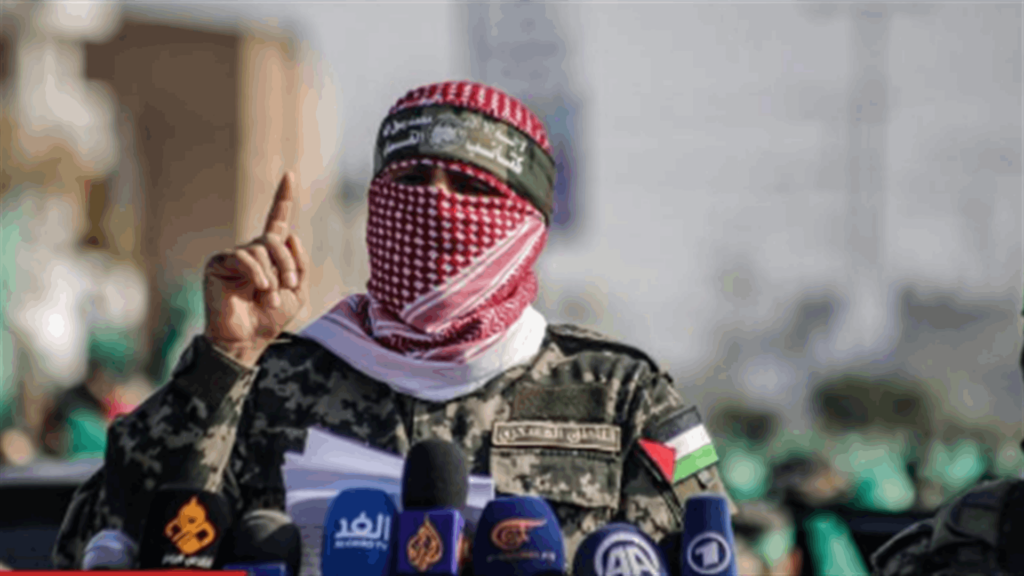
In a significant public statement that reflects a widening alignment among armed resistance groups across the Middle East, Abu Obaida, the military spokesman for the Izz ad‑Din al‑Qassam Brigades — the armed wing of Hamas — issued high praise for the Lebanese group Hezbollah, describing its fighters’ actions as “heroic” and lauding their role in striking positions deep inside Israeli territory. Abu Obaida’s remarks underscore the growing military cooperation and shared resistance narrative among militant organizations confronting Israeli forces amidst a volatile regional conflict.
Although the full text of Abu Obaida’s latest statement has been circulated primarily via social media and militant channels rather than mainstream media outlets, his declaration of solidarity with Hezbollah resonates with longstanding positions taken by militant groups in the region that have framed their operations as part of a unified resistance against Israel. Independent monitoring summaries have noted that several armed factions have publicly welcomed reciprocal military actions in the context of ongoing hostilities, emphasizing shared objectives in confronting Israeli military operations.
Abu Obaida’s Background and Historic Role
Abu Obaida’s emergence as a leading voice of the Al‑Qassam Brigades dates back over a decade. Born Houdhayfa Samir Abdallah al‑Kahlout, he served as the spokesman for Hamas’s military wing until his reported death in an Israeli airstrike in August 2025 during intense fighting in Gaza. During his tenure, Abu Obaida became one of the most recognizable voices representing militant resistance, frequently issuing statements detailing operations against Israeli military targets and framing them as legitimate defense against occupation.
His posthumous messages and the continued dissemination of his rhetoric by allied groups reflect the extent to which militant networks remain committed to a shared narrative of resistance — one that places particular emphasis on cooperation with other organizations engaged in armed struggle.
Hezbollah’s Engagement in the Ongoing Conflict
Hezbollah, a powerful Lebanese armed group and political movement, has been actively involved in military operations against Israeli forces, particularly along the Lebanon‑Israel border. Over recent months, Hezbollah units have engaged in cross‑border clashes, ambushes on Israeli patrols, and artillery engagements, contributing to a dramatic escalation of hostilities between the two sides.
Military analysts have noted that Hezbollah’s offensive actions have inflicted notable setbacks on Israeli military units and have complicated ground and aerial operations in southern Lebanon. In some engagements, Israeli forces have reportedly been forced to retreat after encountering firm resistance bolstered by effective anti‑armor defenses and well‑coordinated positions established by Hezbollah fighters.
These developments have occurred against the backdrop of a wider regional conflagration following a major escalation in Iranian involvement in the conflict. Iran’s Revolutionary Guard units and allied militias have launched multiple missile and drone strikes into Israeli territory in retaliation for a series of Western and Israeli strikes targeting Iranian military leadership and key strategic installations. As a result, networks of resistance fighters — including Hezbollah, Palestinian militias, and other allied groups — have presented themselves as a multi‑front response to what they describe as Israeli and Western aggression.
Themes in Abu Obaida’s Praise
Abu Obaida’s commendation of Hezbollah underscored several recurring themes:
- Unity of Resistance: He framed Hezbollah’s operations as part of a broader “resistance axis” committed to defending Arab and Muslim lands against perceived external aggression. This aligns with the rhetoric long used by militant leaders to connect disparate armed groups under a shared ideological banner.
- Inflicting Strategic Losses: Abu Obaida emphasized that Hezbollah had succeeded in “inflicting significant losses” on Israeli forces and striking targets deep within Israeli territory — language that mirrors claims in militant communiqués published by Lebanese resistance leaders.
- Defense of Sovereignty: His remarks reinforced the view that all military actions undertaken by resistance groups represent legitimate defense of territorial sovereignty and national dignity, a key narrative element in resistance messaging.
While Abu Obaida’s praise reflects a perspective rooted in militant ideology, it also aligns with broader patterns of solidarity among armed factions confronting Israel. For Hezbollah’s leadership and many fighters, such external recognition from the Palestinian resistance reinforces internal claims of effectiveness and strategic impact.
Broader Implications and Regional Dynamics
The emergence of clear support statements between armed groups like the Al‑Qassam Brigades and Hezbollah has potential implications for the wider Middle East. As these factions continue to exchange rhetorical backing and, in some cases, coordinate battlefield activities, the conflict risks further entrenching regional divisions and complicating diplomatic efforts aimed at deescalation.
International actors, including Western governments and United Nations representatives, have repeatedly warned that escalation between Hezbollah and Israel could trigger broader instability. Historically, the 2006 Lebanon War serves as a stark reminder of how quickly localized confrontations can evolve into wider regional conflagrations.
For populations caught in conflict zones — from Gaza to southern Lebanon — the human cost of such escalations remains severe. Civilians frequently bear the consequences of cross‑border hostilities, including displacement, infrastructure destruction, and loss of life.
Conclusion
Abu Obaida’s statement praising Hezbollah highlights how militant resistance groups continue to frame their actions within a collective struggle against Israeli forces. By emphasizing strategic achievements, shared objectives, and unity of resistance, his remarks reflect longstanding narratives that have shaped militant rhetoric across the Middle East. As the conflict unfolds, such declarations are likely to influence both militant engagements on the ground and the broader geopolitical discourse surrounding resistance movements and regional stability.