Assembly of Experts selects son of Ali Khamenei to lead the Islamic Republic amid regional conflict and political uncertainty
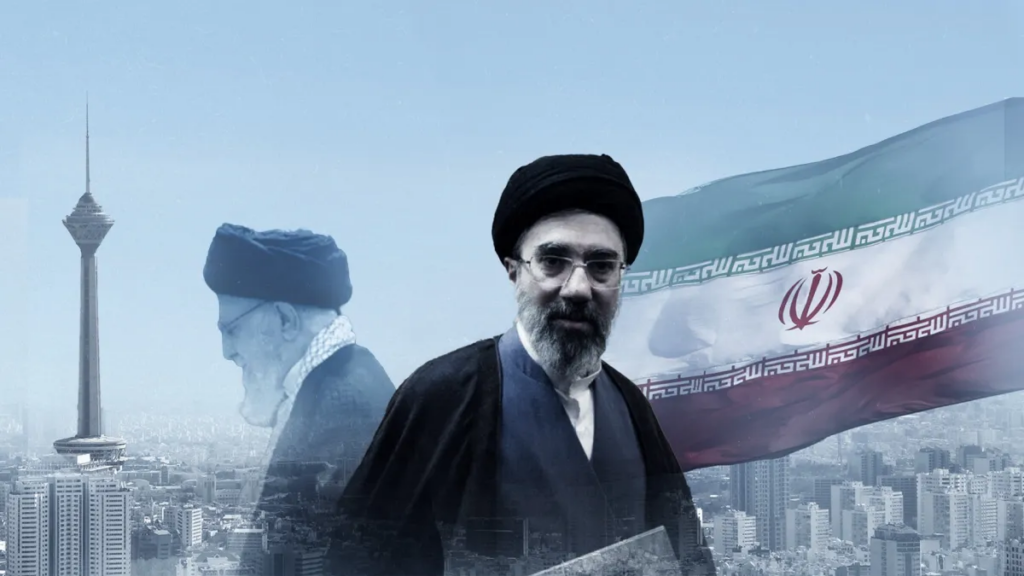
Iran has officially appointed Mojtaba Khamenei, the son of the late Supreme Leader Ayatollah Ali Khamenei, as the new Supreme Leader of the Islamic Republic following an emergency session of the country’s powerful clerical body, the Assembly of Experts. The decision marks one of the most significant political developments in Iran’s modern history and comes at a time of intense regional conflict and internal political tension.
The Assembly of Experts — an 88-member council of senior clerics responsible for appointing and overseeing Iran’s Supreme Leader — announced that Mojtaba Khamenei had been chosen as the country’s third supreme leader since the 1979 Islamic Revolution. His appointment follows the death of his father, Ali Khamenei, who led the country for more than three decades and was killed during a period of escalating hostilities in the region.
Emergency Leadership Transition
Following the death of Ali Khamenei, Iran temporarily established an interim leadership council consisting of President Masoud Pezeshkian, Judiciary Chief Gholam-Hossein Mohseni-Eje’i, and senior cleric Alireza Arafi. The council assumed the responsibilities of the supreme leader until a permanent successor could be selected.
Within days, the Assembly of Experts convened an emergency session to determine Iran’s future leadership. After internal deliberations and consultations with religious and political authorities, the council announced that Mojtaba Khamenei had secured the necessary support to assume the country’s highest political and religious office.
The position of Supreme Leader holds ultimate authority over Iran’s government, military, judiciary, and key strategic institutions, including the Islamic Revolutionary Guard Corps (IRGC). As the highest authority in the Islamic Republic, the leader has the power to shape foreign policy, direct military strategy, and influence domestic governance.
Who Is Mojtaba Khamenei?
Mojtaba Khamenei, born in 1969 in Mashhad, Iran, is the second son of Ali Khamenei and has long been considered one of the most influential figures behind the scenes in Iranian politics. Despite maintaining a relatively low public profile, he has reportedly played an important role within the inner circle of Iran’s leadership for decades.
Educated in the Qom seminary, Mojtaba holds the clerical rank of Hojatoleslam and has strong connections with Iran’s religious establishment and security apparatus. Analysts say he cultivated deep ties with the Islamic Revolutionary Guard Corps and influential clerics within the Iranian political system, making him a powerful figure even before officially assuming leadership.
Supporters within Iran’s ruling elite argue that Mojtaba’s experience working closely with his father and senior officials makes him uniquely positioned to guide the country during a period of geopolitical crisis. They believe his leadership will ensure continuity and stability within Iran’s political and security structures.
Controversy Over Dynastic Succession
However, Mojtaba Khamenei’s appointment has sparked debate both inside and outside Iran. Critics argue that a son succeeding his father resembles a form of hereditary rule, something the Islamic Revolution of 1979 originally sought to eliminate when it overthrew the monarchy of Shah Mohammad Reza Pahlavi.
Some political observers and Iranian reformist figures have warned that the move could deepen internal divisions and raise questions about the legitimacy of Iran’s leadership selection process. Nevertheless, supporters of the decision emphasize that the Assembly of Experts — constitutionally responsible for choosing the leader — made the final decision based on its evaluation of qualified candidates.
Regional Conflict and Global Reaction
Mojtaba Khamenei’s rise to power comes during a period of heightened tensions across the Middle East. Iran has been engaged in an escalating conflict involving Israel, the United States, and several regional actors, leading to missile strikes, military operations, and widespread geopolitical instability.
Analysts suggest that the new leader will face immediate challenges, including managing Iran’s military response to external threats, stabilizing the domestic political environment, and navigating complex international relations. The leadership transition also carries significant implications for Iran’s nuclear program, its alliances with regional groups, and its broader strategic posture in the Middle East.
A Historic Moment for Iran’s Political System
The appointment of Mojtaba Khamenei marks the first time in the history of the Islamic Republic that the son of a supreme leader has directly succeeded his father. The development represents a turning point in Iran’s political structure and may shape the direction of the country’s policies for years to come.
As Iran enters this new chapter under Mojtaba Khamenei’s leadership, the global community will be closely watching how the new supreme leader handles internal political pressures, ongoing regional conflicts, and the evolving balance of power in the Middle East.