U.S. President condemns Iran’s leadership decision, warns of geopolitical consequences as Middle East war intensifies
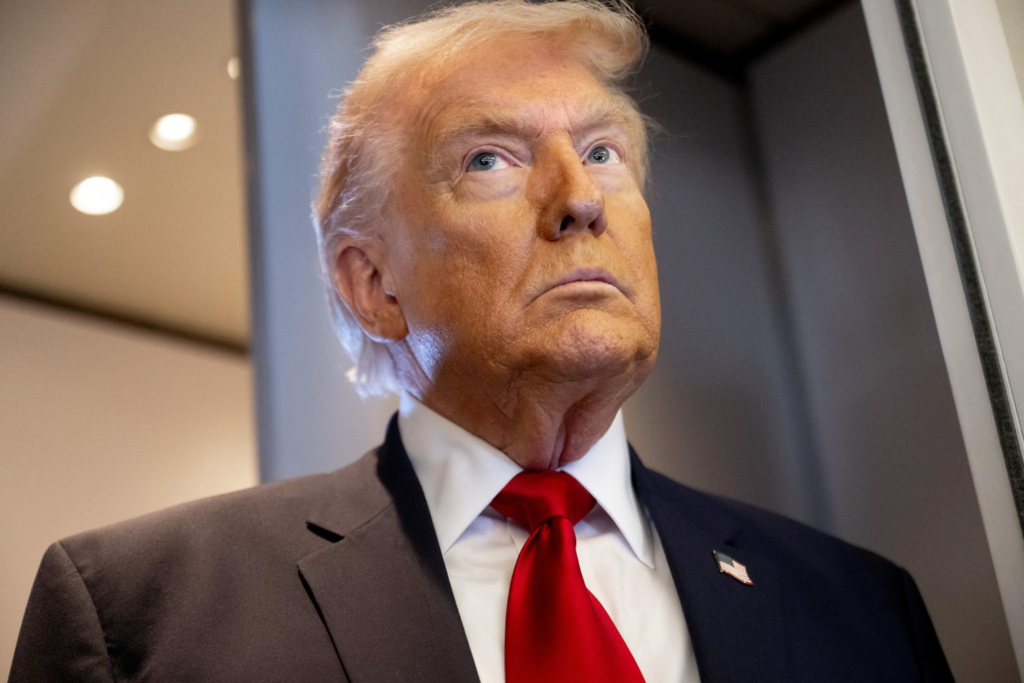
In a stark rebuke to Iran’s recent leadership transition, **U.S. President Donald Trump said that Tehran “made a big mistake” by selecting Mojtaba Khamenei as the country’s new Supreme Leader — a comment that signals deepening hostility between Washington and Tehran amid one of the most volatile regional conflicts in decades. Trump’s remarks, delivered during interviews with U.S. media, reflect growing U.S. frustration with Iran’s hardline succession and are intertwined with the broader U.S.–Israel war against Iran that has engulfed the Middle East.
Background: Iran’s Leadership Shift in Wartime
On March 8, 2026, Iran’s powerful clerical body, the Assembly of Experts, formally appointed Mojtaba Khamenei — the 56‑year‑old son of the late Supreme Leader Ayatollah Ali Khamenei — as the third Supreme Leader in the Islamic Republic’s history, following his father’s death in a U.S.–Israeli airstrike that marked a dramatic escalation in ongoing hostilities.
The role of Supreme Leader — the highest authority in Iran’s political system — encompasses control over the military, judiciary, security services, and foreign policy. By choosing Mojtaba, whom many analysts describe as a hardliner with close links to the Islamic Revolutionary Guard Corps (IRGC), Iran’s clerical establishment signaled continuity in its ideological and strategic direction at a time of war and heightened international pressure.
Trump’s Reaction: A ‘Big Mistake’
In comments aired on U.S. networks, Trump criticized Iran’s decision to elevate Mojtaba Khamenei, characterizing the choice as a significant strategic misstep by Tehran. “I think they made a big mistake,” Trump told interviewers, while refusing to fully endorse the leadership outcome and questioning the long‑term stability such a transition might bring.
Trump has repeatedly expressed scepticism of Mojtaba’s suitability for leadership, previously describing him as an “unacceptable” option and advocating that the United States should have a say in determining Iran’s next leader. In past interviews he even suggested a scenario in which Iran’s leadership transition should reflect U.S. strategic interests.
The U.S. president’s comments are deeply rooted in the current wartime context: a pitched conflict involving U.S. and Israeli strikes on Iranian military infrastructure and strategic assets, and reciprocal Iranian missile and drone attacks aimed at U.S. forces, regional allies, and Israeli territory. This militarised standoff has fundamentally reshaped perceptions of Iran’s leadership choices.
Why Trump Believes It’s a Mistake
Trump’s criticism rests on several key points:
- Geopolitical Hardline Continuity: Trump and other U.S. officials argue that Mojtaba’s appointment ensures the continuation of tough, uncompromising policies in Tehran. Unlike reformist figures or leaders inclined toward diplomacy, Mojtaba is seen as an ideologue likely to perpetuate the Islamic Republic’s resistance narrative against Western powers and Israel.
- Threat of Theocratic Consolidation: By elevating a direct descendant — rather than a widely respected cleric with broader legitimacy — Iran’s leadership shift might deepen internal divisions and hardline governance, according to Trump’s perspective. This risks entrenching systemic resistance to diplomatic engagement.
- Risk of Wider Conflict: Trump’s remarks reflect broader U.S. fears that Tehran’s leadership decision could harden Iran’s external posture, expanding its military engagements in the Middle East. The president has tied this view to the ongoing conflict, warning of extended hostilities and instability across the region.
Global and Regional Response
Trump’s assertion of a “big mistake” reverberates far beyond Washington. Western allies and regional partners have voiced concern that Tehran’s succession choice solidifies a hardline trajectory at a time when diplomatic solutions are both needed and elusive. Nations across Europe and the Gulf are closely watching how Mojtaba will approach negotiations, resistance alliances, and Tehran’s strategic objectives.
Meanwhile, within Iran, state media and clerical authorities have defended the succession as constitutionally legitimate and necessary for national stability amid external threats. Popular reactions in Tehran have varied, with state‑backed demonstrations supporting the appointment contrasting with subdued or cautious responses by dissidents and international observers.
Strategic Implications for the Middle East Conflict
Trump’s comments underscore the crux of U.S. policy in the region: that Iran’s political decisions are not isolated internal developments but drivers of broader regional dynamics. The incorporation of a hardline leader like Mojtaba is seen by Washington as reinforcing Iran’s resistance doctrine — one likely to amplify proxy activities, sustain support for allied militant groups, and reject conciliatory overtures.
The war now stretching across multiple countries — including Israel, Lebanon, Iraq, and parts of the Gulf — highlights how leadership changes in Tehran carry more than symbolic weight; they influence strategies on both sides of the conflict, shaping alliances, military priorities, and diplomatic calculations.
Looking Forward
As the Middle East crisis endures, Trump’s condemnation of Iran’s leadership choice is likely to persist as a cornerstone of U.S. rhetoric and policy. Whether this stance helps facilitate pressure on Tehran or further entrenches hostility remains a subject of intense debate among diplomats, analysts, and regional actors alike. What is clear, however, is that Iran’s leadership transition — and the reaction it has sparked from global powers — will help define the trajectory of Middle Eastern geopolitics in the months to come.