Russia backs Tehran’s leadership transition as geopolitical tensions escalate following U.S.–Israel strikes on Iran
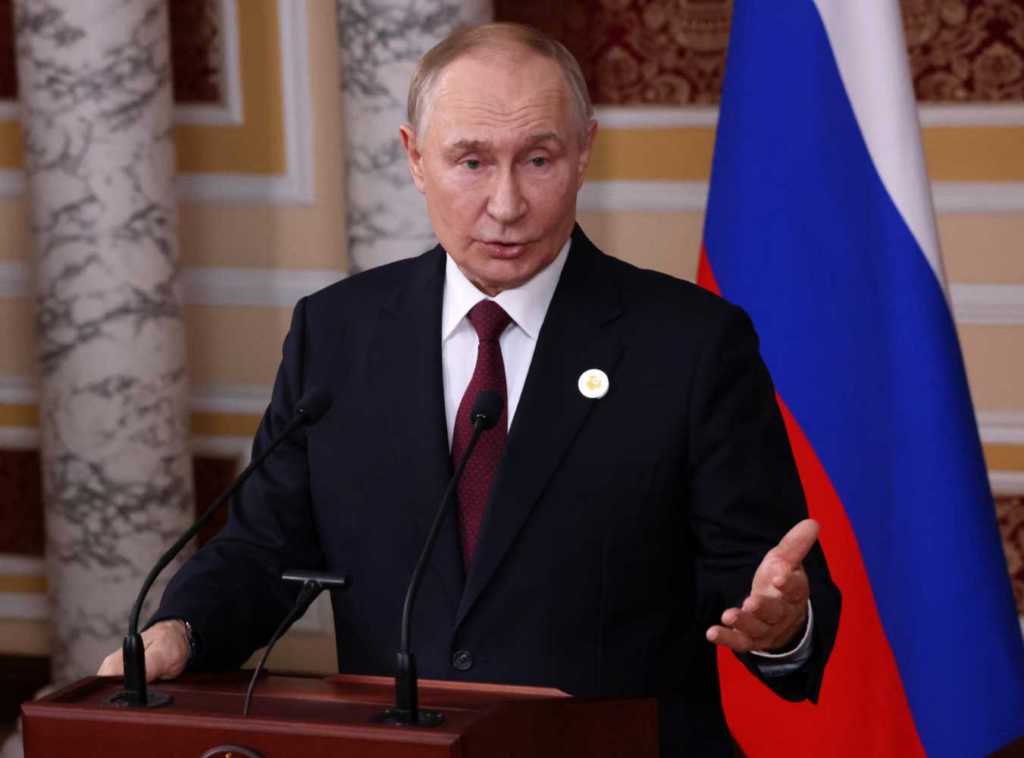
Russian President Vladimir Putin has pledged “unwavering support” for Iran’s newly appointed Supreme Leader Mojtaba Khamenei, reinforcing Moscow’s strategic alliance with Tehran at a time of escalating tensions in the Middle East. The Kremlin’s message of solidarity came shortly after Iran’s powerful Assembly of Experts formally selected Mojtaba Khamenei as the country’s new leader following the death of his father, Ali Khamenei, who had ruled Iran for decades.
In a congratulatory message sent to Tehran, Putin emphasized Russia’s commitment to standing by Iran during what he described as a difficult period marked by regional conflict and geopolitical pressure. The Russian president reaffirmed that Moscow “has been and will remain a reliable partner” for the Islamic Republic, expressing solidarity with the Iranian leadership and people.
The leadership transition in Iran occurred rapidly after Ali Khamenei’s death in an airstrike on Tehran during a wave of attacks carried out by the United States and Israel amid the ongoing regional war. The Iranian clerical body responsible for choosing the country’s supreme leader moved quickly to appoint Mojtaba Khamenei as the third Supreme Leader in the history of the Islamic Republic.
At 56 years old, Mojtaba Khamenei has long been viewed as a powerful figure behind the scenes in Iran’s political and religious establishment. Although he previously held no official government position, analysts say he maintained significant influence within Iran’s security apparatus and among senior clerics. His appointment signals continuity in Iran’s political structure and a commitment to maintaining the ideological legacy of his father’s leadership.
Putin’s statement of support highlights the increasingly close relationship between Russia and Iran, particularly in the context of growing confrontation with Western powers. In recent years, Moscow and Tehran have expanded cooperation in areas including military coordination, economic partnerships, and energy trade. The two countries also signed a strategic partnership agreement in 2025 aimed at strengthening long-term political and economic cooperation while countering Western sanctions.
The Kremlin’s message also reflected broader geopolitical calculations. Russia has consistently criticized military actions by the United States and Israel against Iran, describing them as destabilizing for the region. Putin has repeatedly called for diplomacy and negotiations to prevent a wider war in the Middle East.
However, the Russian president’s backing of Iran’s new leader has drawn criticism from Western governments and analysts who argue that it may further deepen divisions between global power blocs. The United States and several European allies have warned that Iran’s leadership change could intensify regional conflict, especially as Tehran continues missile and drone attacks against Israeli and Gulf targets in response to earlier strikes.
The appointment of Mojtaba Khamenei also sparked reactions from other international actors. Some countries expressed concern that the transition could reinforce Iran’s hardline policies and increase confrontation with Western nations. Meanwhile, Russia and China have signaled continued support for Iran’s sovereignty and leadership stability, emphasizing the need to avoid escalation.
Analysts say Putin’s endorsement is partly strategic. Iran is a crucial geopolitical partner for Russia, particularly as Moscow faces sanctions and political isolation from Western nations due to ongoing global conflicts. Strengthening ties with Tehran allows Russia to expand its influence in the Middle East while securing energy and defense cooperation with one of the region’s most powerful states.
At the same time, the evolving alliance between Russia and Iran has raised concerns about the balance of power in global politics. Both countries have increasingly coordinated their positions on major international issues, including sanctions, energy markets, and military cooperation. This partnership is often viewed by Western policymakers as part of a broader shift toward a multipolar world order.
Despite the political symbolism of Putin’s message, Russia has so far avoided direct military involvement in the ongoing Iran conflict. Instead, Moscow has focused on diplomatic engagement, urging an immediate ceasefire and warning that a prolonged war could destabilize the entire Middle East and disrupt global energy supplies.
For Iran’s new leader, international backing from major powers such as Russia could prove important as he consolidates authority at home while facing external pressure. Mojtaba Khamenei now assumes control over Iran’s military, security apparatus, and nuclear policy at a moment when tensions across the region are at their highest level in years.
As the Middle East crisis continues to unfold, Putin’s declaration of “unwavering support” for Iran’s new leadership underscores the deepening geopolitical divide shaping global politics. With alliances hardening and conflicts intensifying, the Russia-Iran partnership is likely to remain a key factor influencing the future balance of power in the region and beyond.