Tehran claims coordinated missile and drone strikes on American facilities across the Middle East as regional war intensifies
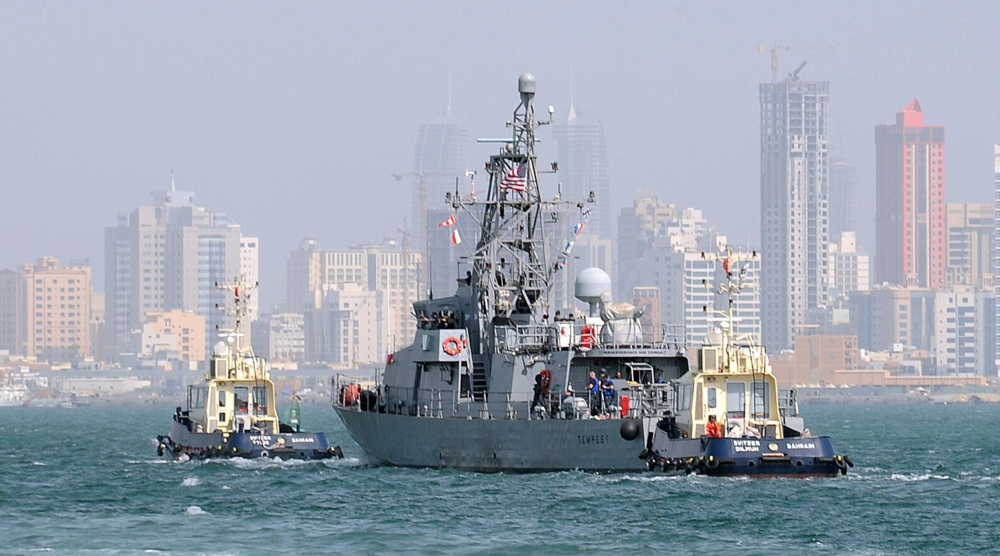
Iran has announced that it targeted five United States military bases across the Middle East, including the headquarters of the U.S. Navy’s Fifth Fleet in Bahrain, in what officials described as a large-scale retaliatory operation during the rapidly escalating Iran-U.S. conflict. The attacks, carried out by Iran’s Islamic Revolutionary Guard Corps (IRGC) using ballistic missiles and drones, mark one of the most direct confrontations between Iran and U.S. forces in decades and have significantly heightened fears of a wider regional war.
According to Iranian military statements, the strikes were part of a coordinated campaign targeting American military infrastructure throughout the region. Officials in Tehran said the operation was designed to retaliate for recent U.S. and Israeli attacks on Iranian territory and to demonstrate Iran’s ability to strike strategic military assets far beyond its borders.
U.S. Fifth Fleet Headquarters Among Key Targets
One of the most significant targets was the U.S. Navy’s Fifth Fleet headquarters in Manama, Bahrain, a critical command center responsible for American naval operations across the Persian Gulf, Red Sea, Arabian Sea, and parts of the Indian Ocean. The base hosts thousands of U.S. personnel and dozens of warships that safeguard international shipping lanes and energy routes.
Iranian officials said missiles were fired toward the naval complex during the attack, while regional authorities reported explosions and air-raid sirens across parts of Bahrain. Some missiles were intercepted by air-defense systems, though damage to nearby infrastructure and injuries were reported.
Satellite imagery released after the strike showed smoke rising from areas close to the base, suggesting that at least some projectiles reached their intended vicinity.
Five U.S. Bases Reportedly Targeted
Iran claimed that the strikes were not limited to Bahrain. According to Iranian state media and regional reports, the operation also targeted American facilities in several countries hosting U.S. troops and equipment. These reportedly included bases in Qatar, Kuwait, the United Arab Emirates, and Jordan, forming a wide arc of military targets across the Middle East.
Among the facilities believed to have been targeted were Al Dhafra Air Base in the UAE, Al Minhad Air Base, and other installations used by American and allied forces. Many of the missiles and drones were intercepted by regional air-defense systems, though debris from interceptions caused damage in several cities.
The attacks formed part of a broader wave of Iranian retaliation across the region, which also included strikes on Israeli military infrastructure and strategic sites linked to U.S. allies.
Escalation in the 2026 Iran War
The missile strikes occurred amid the expanding 2026 Iran war, which began after large-scale U.S. and Israeli airstrikes targeted Iranian military and nuclear infrastructure. Tehran responded with waves of ballistic missiles and drones aimed at American bases, Israeli targets, and strategic infrastructure throughout the region.
Since the start of the conflict, the Middle East has witnessed one of the largest exchanges of missile and drone attacks in modern regional history. Several Gulf countries have reported intercepting hundreds of projectiles, while civilian infrastructure and energy facilities have been damaged in multiple locations.
Strategic Importance of U.S. Bases in the Gulf
The United States maintains an extensive network of military bases across the Middle East to support operations, monitor maritime trade routes, and deter regional threats. Facilities in Bahrain, Qatar, Kuwait, and the UAE host thousands of American troops and advanced military assets including fighter aircraft, missile defense systems, and naval vessels.
The U.S. Fifth Fleet, headquartered in Bahrain, plays a particularly crucial role in protecting shipping routes through the Strait of Hormuz, one of the world’s most important oil transport corridors. Any attack on this facility carries major geopolitical implications because it threatens both global energy markets and the security architecture of the Gulf region.
Regional and Global Reactions
The Iranian claims of striking multiple U.S. bases triggered alarm among Gulf governments and Western allies. Several countries in the region activated air-defense systems and temporarily closed airspace as missiles and drones were detected moving across the Gulf.
The United States has condemned the attacks, warning that further strikes against American forces could provoke a powerful military response. Meanwhile, international leaders have called for restraint and diplomatic engagement to prevent the conflict from escalating into a full-scale regional war.
Security analysts warn that direct strikes between Iran and U.S. forces represent a dangerous turning point in the conflict. Unlike previous proxy confrontations, these attacks involve direct military engagement between two major powers operating across multiple countries simultaneously.
A Region on Edge
As the situation continues to unfold, the Iranian announcement that it targeted five U.S. bases underscores the widening scope of the conflict. With American forces stationed across the Middle East and Iran demonstrating its ability to launch long-range missile attacks, the risk of further escalation remains extremely high.
Military experts say the coming weeks will be critical in determining whether the conflict stabilizes or expands into a broader war involving additional regional actors. For now, the strikes on U.S. bases — including the symbolic targeting of the Fifth Fleet headquarters — represent one of the most dramatic moments in the ongoing confrontation between Iran and the United States.