Tehran signals military escalation after leadership transition, targeting Israel, U.S. assets, and Gulf infrastructure
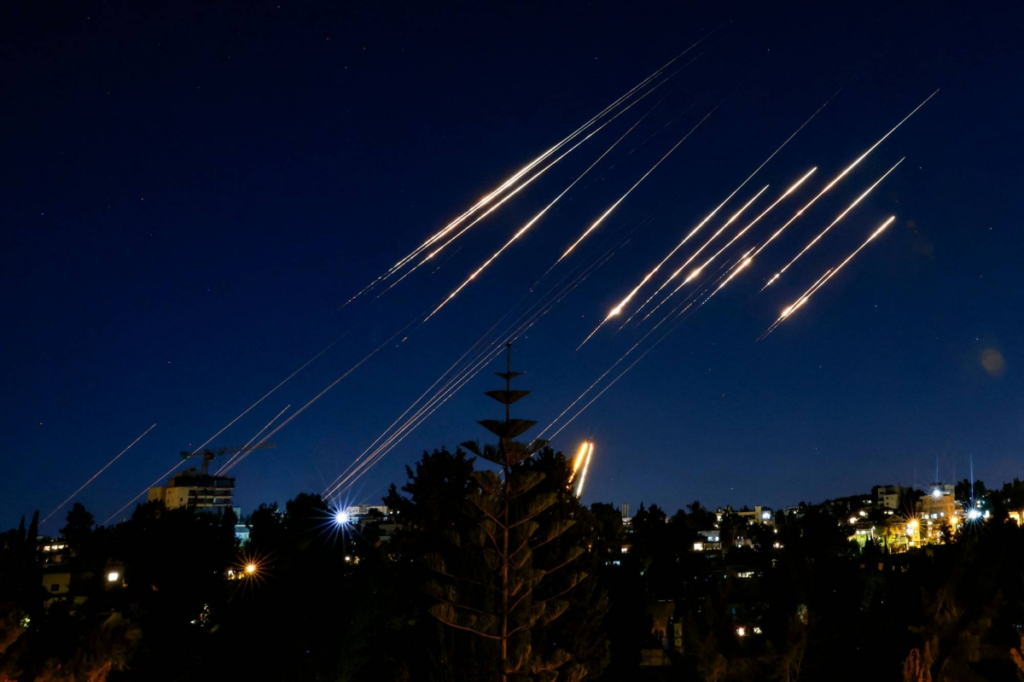
Iran has launched a new wave of missile and drone attacks across the Middle East following the appointment of Mojtaba Khamenei as the country’s new Supreme Leader, marking a dramatic escalation in the ongoing regional war involving Iran, Israel, and the United States. The barrage, announced by Iran’s Islamic Revolutionary Guard Corps (IRGC) shortly after the leadership transition, is widely seen as the first major military action under Khamenei’s leadership and a signal that Tehran intends to continue its confrontational strategy despite mounting international pressure.
The attacks come in the immediate aftermath of a historic leadership change in Iran. Mojtaba Khamenei, the son of longtime Supreme Leader Ali Khamenei, was appointed by Iran’s Assembly of Experts following his father’s death in a U.S.–Israeli airstrike during the early stages of the war. The leadership transition occurred rapidly amid intense military conflict and political turmoil across the region.
First Major Military Action Under the New Supreme Leader
According to Iranian state media and military officials, the missile barrage was part of a coordinated operation involving both ballistic missiles and long-range drones. The IRGC reportedly deployed advanced missile systems such as the Khorramshahr, Fattah, and Kheibar missiles alongside aerial drones, demonstrating Iran’s continued reliance on its expanding missile arsenal as a central element of its military strategy.
Iranian officials described the operation as a response to continued U.S. and Israeli strikes on Iranian territory and strategic infrastructure. Military commanders stated that the attacks were carried out in defense of Iranian sovereignty and were intended to target what they referred to as “occupied territories” and foreign military positions in the region.
The missile wave reportedly targeted multiple locations including Israeli cities, U.S. military installations in the Middle East, and critical energy infrastructure in Gulf states. Some of the projectiles were intercepted by regional air-defense systems, while others reportedly caused damage and injuries in several areas.
A War Already Spanning the Middle East
The conflict between Iran and the U.S.–Israel alliance has rapidly expanded into one of the largest military confrontations in the Middle East in years. Since the beginning of the war in late February 2026, Iran has reportedly launched hundreds of ballistic missiles and thousands of drones targeting military and strategic sites across the region.
Analysts say Iran’s missile strategy reflects both deterrence and retaliation. By targeting a wide range of regional locations, Tehran aims to demonstrate its ability to strike far beyond its borders and challenge the military presence of Western forces in the Middle East.
The latest missile wave also reflects Iran’s broader military doctrine, which relies heavily on missile forces and allied militias rather than large conventional armies. This approach allows Iran to project power across multiple countries simultaneously while avoiding direct large-scale ground confrontations.
Symbolic Loyalty to Mojtaba Khamenei
The attacks also carried a strong symbolic message of loyalty to Iran’s new leader. Iranian media circulated images of missiles inscribed with messages pledging allegiance to Mojtaba Khamenei, reinforcing the idea that the country’s military establishment stands firmly behind the new Supreme Leader.
Within Iran, government officials and military leaders have publicly called for unity under Khamenei’s leadership during what they describe as a national struggle against foreign aggression. Supporters have held rallies in several cities expressing support for the new leader and Iran’s military response.
Regional and Global Reactions
The missile barrage has triggered alarm across the Middle East and among global powers. Countries including Saudi Arabia, Bahrain, and Turkey have reported intercepting Iranian drones or missiles entering their airspace. The attacks have also disrupted energy markets and international shipping routes, particularly around the Strait of Hormuz, a key global oil corridor.
Western governments have condemned the attacks and warned that continued escalation could lead to a broader regional war. Meanwhile, U.S. and Israeli forces have responded with additional airstrikes targeting Iranian military facilities and infrastructure.
Global financial markets have reacted sharply to the intensifying conflict. Oil prices have surged amid fears that prolonged fighting could disrupt supplies from the Persian Gulf, which accounts for a significant portion of the world’s energy exports.
Strategic Implications of the Missile Campaign
The launch of new missile waves under Mojtaba Khamenei suggests that Iran’s leadership change will not lead to a moderation of its foreign policy. Instead, many analysts believe the appointment of the new Supreme Leader reinforces the influence of hardline factions within Iran’s political and military establishment.
Iran’s missile program remains one of the most advanced in the Middle East and is considered a key pillar of its deterrence strategy. With ongoing hostilities and rising geopolitical tensions, the conflict is increasingly shaping global security dynamics and raising fears of a wider regional confrontation.
As the war enters a new phase under Iran’s new leadership, military exchanges between Iran and its adversaries show little sign of slowing down. The latest missile wave highlights how leadership transitions during wartime can rapidly reshape strategic decisions and escalate conflicts far beyond national borders.
For now, the Middle East remains on edge as Iran continues to demonstrate its military capabilities while global powers debate how to prevent the crisis from spiraling into a full-scale regional war.