Pyongyang accelerates weapons development amid U.S. redeployment of THAAD and Patriot systems to support Iran war, raising regional security concerns
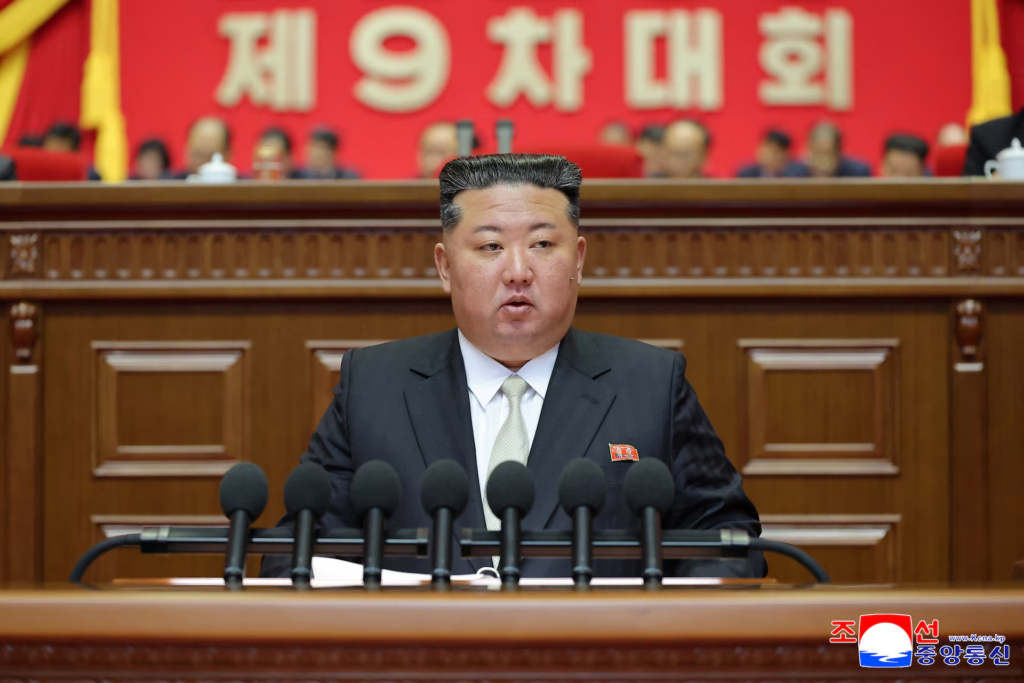
North Korea has conducted its second cruise missile test from its newest warship in a single week, signaling an acceleration in its naval strike capabilities at a time when the United States is reportedly shifting critical air defense assets from South Korea to the Middle East amid its widening conflict with Iran. The missile tests, overseen by North Korean leader Kim Jong‑un, reflect Pyongyang’s intent to expand its strategic weapons development while geopolitical tensions rise both on the Korean Peninsula and in West Asia.
According to reports from state‑run media in North Korea, the Choe Hyon‑class destroyer, a large naval vessel commissioned to enhance the country’s maritime strike potential, fired strategic cruise missiles that traveled over sea and struck designated target areas off the country’s west coast. The test was monitored by Kim himself via video link, alongside appearances by his daughter, Kim Ju‑Ae, who has increasingly appeared at high‑level military events, suggesting her expanding role in the leadership narrative.
This marks at least the second cruise missile launch from the vessel in a week, underscoring Pyongyang’s focus on rapidly developing sea‑to‑surface strike systems. North Korean state media described the missiles as part of the country’s “offensive weapon systems,” highlighting their importance in enhancing deterrence and self‑defense capabilities — although independent analysts caution that state descriptions often emphasize political messaging over operational disclosure.
Strategic Context: Iran War and U.S. Redeployments
The timing of North Korea’s weapons tests comes amid reports that the United States is relocating parts of its anti‑missile defense systems — including components of the Terminal High Altitude Area Defense (THAAD) system and Patriot interceptors — from South Korea to the Middle East to bolster defensive coverage as Washington supports operations against Iran. These reports, confirmed in part by official statements from South Korean and U.S. sources, indicate that some elements of the U.S. missile defense network originally deployed to deter North Korean attacks are being reassigned to counter missile threats in and around the Gulf region.
South Korea’s President Lee Jae Myung acknowledged the transfer, noting that while Seoul had expressed reservations, the shift was a reality driven by U.S. military needs amid the evolving conflict in Iran. Lee stressed that the redeployment would not significantly undermine South Korea’s deterrence posture against North Korea, emphasizing South Korea’s strong conventional capabilities and urging the development of more autonomous defense systems.
Defense analysts say the redeployment of air defense assets to the Middle East highlights Washington’s shifting strategic priorities. With Iranian missile and drone attacks intensifying across the Gulf — including strikes near Gulf states such as the UAE and Bahrain — the United States faces heightened demand for advanced missile defense systems in that theater, prompting resource realignment from the Indo‑Pacific.
North Korea’s Missile Advances
The Choe Hyon‑class destroyer represents a major addition to North Korea’s naval arsenal. Built to carry long‑range cruise missiles, the vessel is part of Pyongyang’s broader effort to develop sea‑based strike capabilities that could complicate regional defense postures. According to state media-backed reports, these weapons are described as “strategic,” indicating potential long‑range or dual‑capable strike roles that could carry either conventional or nuclear payloads — though external verification of nuclear capability remains uncertain.
North Korea’s naval cruise missile tests come as Seoul and Washington conduct their annual Freedom Shield joint military drills, a routine exercise that Pyongyang consistently denounces as rehearsals for invasion. The tests may partly be Pyongyang’s attempt to signal deterrence amid these exercises and to exploit perceived gaps in allied defenses due to U.S. asset redeployment.
The tests involved multiple missiles fired from the destroyer, with images released by North Korean state media showing the launches and subsequent impacts on distant target areas. The presence of Kim Ju‑Ae in related broadcasts is seen by analysts as an effort to reinforce internal narratives around the continuity of leadership and military strength, potentially positioning her as part of future succession scenarios.
Implications for Regional Security
North Korea’s missile testing in the context of U.S. focus on the Iran war raises strategic concerns across East Asia. The possible redistribution of THAAD and Patriot systems reduces the density of high‑altitude interceptors stationed around the Korean Peninsula, prompting debate among analysts and policymakers about regional air defense sufficiency. While South Korean officials maintain confidence in their ability to deter North Korean threats, some observers warn that any reduction in allied air defense coverage could embolden Pyongyang to pursue more aggressive posturing.
The interplay between the Iran war and Korean Peninsula tensions illustrates the global nature of contemporary security challenges. As the United States reallocates resources to confront immediate threats in the Middle East, adversaries and regional powers are watching closely for shifts in deterrence dynamics.
Moreover, Pyongyang’s continued missile development — especially with advanced sea‑based systems — not only expands its offensive capabilities but also signals its intent to integrate maritime strike options into its strategic toolkit. Such advances could complicate future diplomatic negotiations over denuclearization and regional stability.
The Road Ahead
With North Korea conducting repeated cruise missile tests and the United States recalibrating its defense deployments to address the crisis in Iran, the global military balance is in flux. The situation underscores how interconnected security theaters can influence one another, with resource movements in one region prompting strategic reactions in another.
Going forward, the pace and scale of North Korea’s weapons tests will likely remain a focal point for East Asian security officials, especially if the Iran conflict continues to draw U.S. defense assets away from longstanding commitments in the Pacific region. How Seoul, Tokyo, Washington, and regional partners adjust to these developments will shape strategic deterrence strategies for years to come.