Trump champions sweeping election reform and social policy package amid fierce national debate
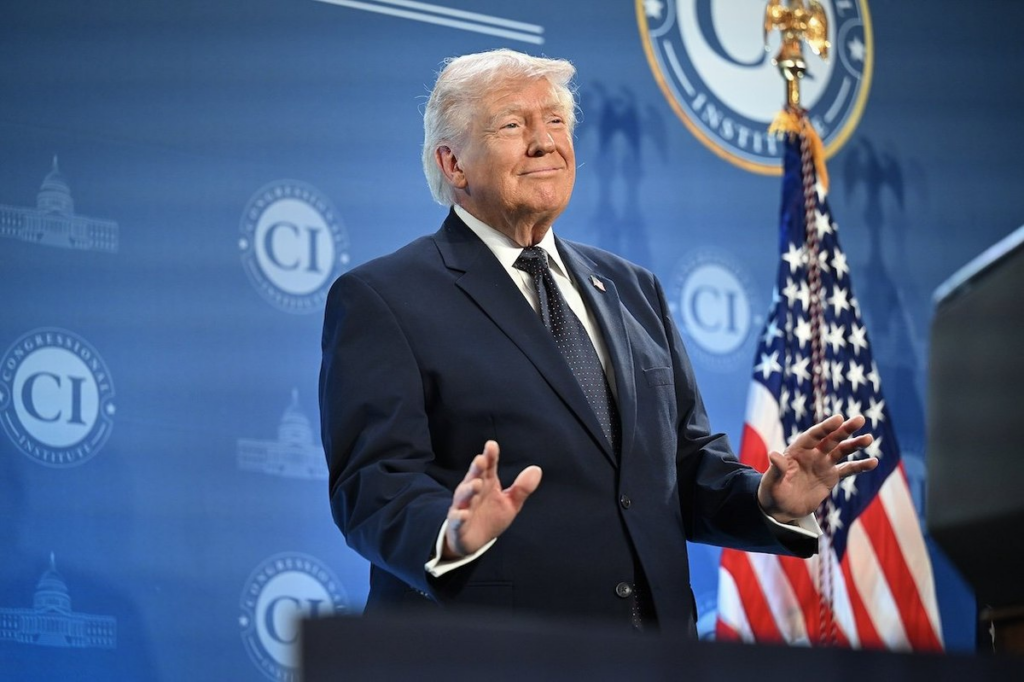
U.S. President Donald Trump recently described the SAVE America Act as “the most popular bill I think I’ve ever put before Congress,” signaling both his strong personal support and his belief that the legislation resonates with broad segments of the American public. The statement came during a high‑profile interview, where Trump also framed the bill as a cornerstone of his domestic agenda and an essential step toward strengthening election integrity, reshaping social policy, and redefining federal governance leading up to the 2026 midterm cycle.
The SAVE America Act (Safety, Accountability, Voting Integrity, and Election Reform Act) is a comprehensive and controversial legislative proposal that includes sweeping changes to voting procedures, requirements for mail‑in ballots, and new social provisions on transgender participation in sports and gender‑affirming medical care for minors. While Trump and his allies describe the bill as a historic reform effort, critics argue it would undermine voting rights and promote exclusionary policies. The President’s recent comments underscore his intention to make the bill a defining element of his political legacy.
Trump’s Endorsement: “Most Popular Bill” Comment
During a televised interview, Trump repeatedly emphasized his confidence in the SAVE America Act’s appeal, asserting that hearings and public polling suggest widespread backing among voters, especially within Republican and independent constituencies. “It’s the most popular bill I think I’ve ever put before Congress,” Trump told reporters, framing the legislation as both a product of strong public demand and a necessary response to perceived weaknesses in the U.S. electoral system.
The President’s statements reflect a broader communications strategy aimed at mobilizing grassroots support and pressuring lawmakers—especially Republicans—to pass the bill. Trump has made it clear that he will resist signing other major legislation until the SAVE America Act reaches his desk, raising the stakes for Congressional negotiations.
What the SAVE America Act Includes
The SAVE America Act is notable for its breadth and ambition, encompassing several major policy areas:
1. Voter Identification Requirements
One of the most publicized provisions mandates that all voters show government‑issued photo ID at the polls. While many states already require voter ID, the act would standardize such requirements for federal elections, effectively eliminating states’ discretion to set different rules.
2. Proof of U.S. Citizenship for Voting
The bill would require all federal voters to show documentary proof of U.S. citizenship when registering and again when voting — a provision supporters say prevents illegal voting, but opponents argue could disenfranchise eligible voters, especially minorities, older citizens, and low‑income Americans.
3. Curtailing Mail‑In Ballots
Under the act, mail‑in ballots would be sharply restricted unless a voter qualifies under limited exemptions such as disability, illness, military service, or travel. Proponents claim that restricting mail voting reduces fraud risks, while critics say it could disproportionately impact voters who rely on absentee ballots.
4. Ban on Transgender Participation in Women’s Sports
Another high‑profile component is a ban on transgender athletes competing in women’s sports, a provision intended to address concerns about fairness in athletic competition. Opponents label it discriminatory and harmful to transgender youth.
5. Prohibition on Gender‑Affirming Surgery for Minors
The act also calls for a federal ban on gender‑affirming surgeries for individuals under 18, aligning with a broader push by conservative lawmakers to restrict such medical procedures. Supporters argue this protects minors, while major medical organizations oppose the ban as harmful and medically inappropriate.
Partisan Battles and Public Reaction
The SAVE America Act has ignited intense debate on Capitol Hill and across American media. Republicans who support the bill argue that it will restore confidence in the electoral process, protect women’s sports, and protect children from irreversible medical procedures. Many conservative voters share these concerns, and the Trump administration has used public polling to argue that the bill’s provisions are widely popular.
However, Democrats and voting‑rights advocates strongly oppose the legislation, labeling it a vehicle for voter suppression and discrimination. They argue that proof‑of‑citizenship rules and restrictions on mail‑in ballots would disproportionately harm groups such as elderly voters, rural residents, and people of color. Major civil rights organizations have pledged legal challenges if the bill becomes law.
The inclusion of social policy items — such as transgender sports participation and medical bans — has also broadened the controversy, making the bill a focal point in culture wars and raising questions about how far federal government should go in regulating personal medical choices and athletic participation.
Congressional Outlook
The SAVE America Act has faced significant hurdles in Congress. Although it passed the House of Representatives with strong Republican backing, it has stalled in the Senate due to the filibuster and unified Democratic opposition. With a closely divided Senate, most analysts believe the legislation would likely require changes or concessions to secure the 60 votes needed to advance.
Trump’s insistence that the bill is popular and worth fighting for has added pressure on Republican senators in swing states, many of whom face reelection campaigns in 2026. Some senators have expressed concern about the bill’s political risks and have urged a more targeted approach to election reform.
Strategic Importance for Trump and Republicans
In framing the SAVE America Act as “the most popular bill” of his career, Trump is attempting to shift public focus and rally support from the Republican base. The bill connects to broader themes of election integrity, cultural conservatism, and distrust of establishments — all core elements of Trump’s political brand.
For the Republican Party, passing some version of the SAVE America Act could energize the party’s conservative base ahead of the 2026 midterms. However, it also risks alienating moderate voters who see key provisions as too restrictive or discriminatory.
Conclusion: Legislative Controversy Ahead
As President Trump continues to champion the SAVE America Act, describing it as exceptionally popular and essential for America’s future, Congress faces one of the most heated legislative battles in recent memory. Should the bill advance, it could reshape federal election rules and social policy on a national scale. But the fierce debate over voter access, civil rights, and government authority ensures that passage will be neither quick nor easy — and it may define American politics for years to come.