Authorities Investigate Cause as Residents Report Widespread Damage and Panic in Israel’s Coastal City
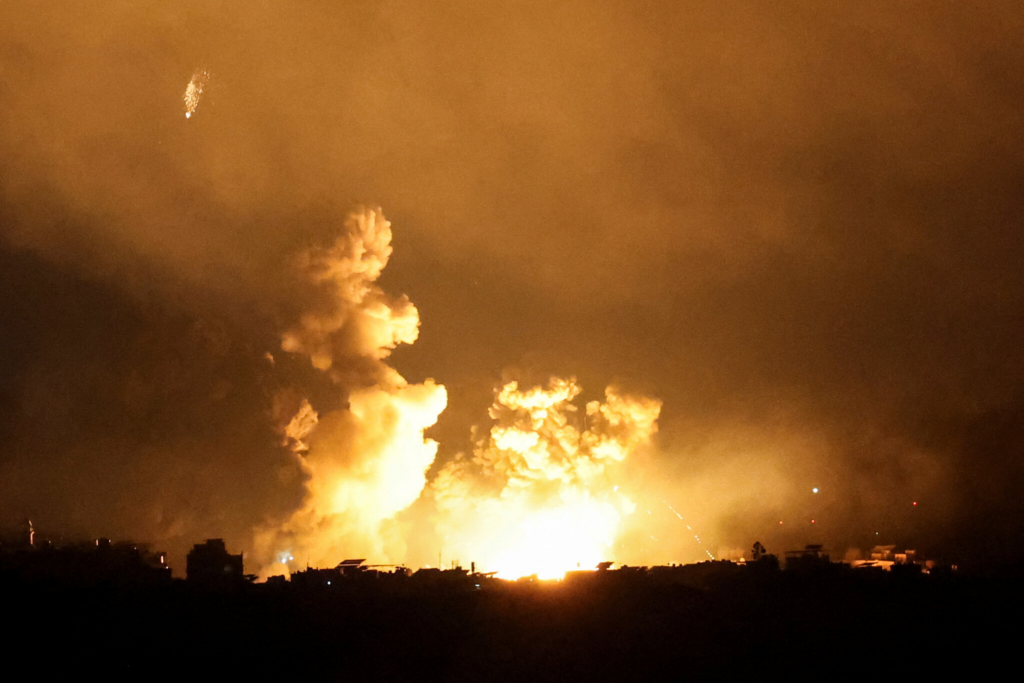
Tel Aviv, Israel’s largest coastal city, was rocked by five massive explosions in rapid succession, sending shockwaves through neighborhoods and raising alarms about potential missile or drone attacks amid ongoing regional conflicts. Eyewitnesses reported loud blasts, thick plumes of smoke, and widespread panic as residents rushed to seek shelter, while emergency services scrambled to respond to the unfolding situation.
Israeli authorities confirmed the explosions and stated that investigations are underway to determine their cause. While initial reports suggest that at least some of the blasts may be linked to intercepted rockets or drone strikes, officials have not ruled out other possibilities, including industrial accidents or sabotage. The explosions come at a time of heightened security alert, as Israel faces increasing missile and drone threats from adversaries across the Middle East.
Local media reported that the blasts occurred in multiple parts of the city, creating widespread fear among residents. Emergency sirens were sounded shortly after the first explosion, warning citizens to take cover and avoid open areas. Hospitals and medical facilities were placed on high alert to handle potential casualties, though authorities have not yet released official casualty figures.
Tel Aviv is a major economic and cultural hub in Israel, home to government offices, corporate headquarters, high-rise residential buildings, and critical infrastructure, including transportation networks, power grids, and communication systems. The explosions have reportedly caused property damage in several districts, with shattered windows, debris, and smoke affecting both residential and commercial areas.
Experts note that urban centers like Tel Aviv are particularly vulnerable during periods of conflict due to their population density and concentration of strategic assets. Missile defense systems, including the Iron Dome, are designed to intercept incoming projectiles, but multiple simultaneous attacks can challenge their capacity, increasing the risk of damage and civilian injuries.
Eyewitnesses described scenes of chaos, with residents evacuating buildings, traffic gridlocks forming as people attempted to leave the city, and first responders working to secure affected areas. Social media platforms have been flooded with videos and images of explosions, smoke plumes, and emergency responses, fueling public concern and speculation about the source of the blasts.
While the cause of the explosions is still under investigation, defense analysts suggest that they could be the result of targeted missile or drone attacks launched from Gaza, Lebanon, or Iranian-backed factions. In recent months, Israel has faced an increasing number of aerial attacks, testing the limits of its multi-layered air defense network. These attacks aim not only to cause physical damage but also to disrupt daily life, create fear, and test the country’s readiness.
The Israeli government has urged citizens to remain calm and follow safety protocols, including taking shelter in reinforced areas, staying away from windows, and heeding emergency alerts. Authorities are coordinating with security services, police, and medical teams to assess damage, provide aid to affected residents, and ensure that critical infrastructure remains operational.
The explosions in Tel Aviv also underscore the broader strategic tensions in the region, where missile and drone technology has become an increasingly common tool of asymmetric warfare. State and non-state actors are leveraging these capabilities to target urban centers, energy facilities, and military installations, challenging Israel’s defense systems and prompting ongoing investment in advanced interception technologies.
Air defense officials are reportedly reviewing the performance of Israel’s Iron Dome batteries during the incident to ensure that they are adequately positioned and capable of handling simultaneous attacks. Analysts suggest that the city may face further threats in the coming days, highlighting the importance of public preparedness and rapid response measures.
Beyond immediate physical threats, the psychological impact of repeated explosions in a major city cannot be underestimated. Urban populations exposed to frequent attacks may experience heightened stress, anxiety, and disruption to daily life, which can affect work, education, and social activities. Authorities are emphasizing communication and public awareness to mitigate panic and maintain public confidence in security systems.
While the investigation continues, Tel Aviv residents are being advised to monitor official news channels for updates and follow instructions from local authorities. Emergency services are actively clearing debris, securing affected areas, and conducting damage assessments to restore normalcy as quickly as possible.
The incident marks another chapter in the ongoing escalation of Middle East tensions, illustrating the vulnerability of urban centers to missile and drone attacks. As Israel navigates this period of heightened conflict, the effectiveness of air defense systems, emergency preparedness, and coordinated response strategies will be critical in minimizing casualties and maintaining the safety of civilian populations.