Iran-aligned Houthi rebels announce a third ballistic missile strike toward Israel in coordination with Iran and Hezbollah, as air defenses intercept the latest barrage and tensions surge across the Middle East.
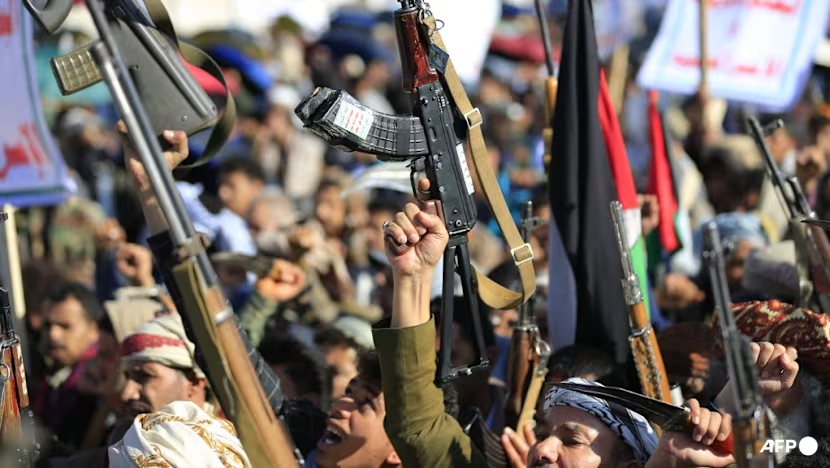
Yemen’s Iran-aligned Houthi movement has claimed responsibility for a third missile attack targeting Israel, marking a significant escalation in the broader Middle Eastern conflict linked to the 2026 war involving Israel, the United States, and Iran-backed forces. The Houthi military wing announced the latest strike on Wednesday, saying it was carried out jointly with their allies in Iran and Lebanon’s Hezbollah group and aimed at what they described as “sensitive Israeli enemy targets.”
According to Israeli military sources and international media reports, Israel’s air defense systems responded to the missile launch from Yemen, intercepting the projectile before it caused casualties or significant damage. Residents were allowed to leave protected areas after the threat passed, with no immediate reports of injuries.
This latest attack represents the third in a series of long-range missile strikes claimed by the Houthis against Israel since they entered the conflict, a development that has widened the geographical scope of hostilities and drawn fresh international concern.
Background: Houthis’ Entry into the Conflict
The Houthi movement, formally known as Ansar Allah, is an armed group based in northern Yemen that has long received political and military support from Iran. Although the group initially focused on Yemen’s internal conflict and regional maritime operations in the Red Sea, it began targeting Israel in late March 2026, shortly after the outbreak of the wider war between Israel and Iranian forces.
On March 28, the Houthis fired ballistic missiles toward Israel, claiming their first military operation against the country since the 2026 conflict began. The Israeli military intercepted at least one of the missiles, signaling a new front in the expanding war.
Subsequent attacks have followed, including a second missile launch and now this third strike, underscoring the Houthis’ intention to sustain pressure on Israel and demonstrate solidarity with Iran and Hezbollah.
Coordination With Iran and Hezbollah
In its announcement, the Houthi military spokesman described the operation as a coordinated effort with Iran and Lebanon’s Hezbollah group. This alliance reflects a broader pattern in which Tehran’s regional proxies act in concert to challenge Israel and counter U.S. influence in the Middle East.
Iran has increasingly used allied militia groups in Iraq, Syria, and Lebanon as part of its strategy to project power and retaliate against Israel and U.S. military actions. The involvement of the Houthis adds a new dimension to this proxy network, expanding the conflict beyond the Levant into the Arabian Peninsula.
Air Defense Response and Civilian Impact
Israel’s military confirmed that its air defenses engaged the missile fired from Yemen, successfully intercepting it before it reached populated areas. Following the interception, authorities lifted shelter directives and permitted civilians to resume normal activities.
Although no casualties have been reported in this latest incident, previous Houthi missile launches have raised alarms within Israel, prompting the activation of early warning systems and civil defense protocols. The repeated need for air raid alerts places psychological strain on civilian populations and underscores the evolving threat landscape facing the region.
Strategic Implications for the Region
The escalation of Houthi missile strikes against Israel carries significant strategic implications. First, it demonstrates the expanding reach of Iran-aligned forces, capable of launching long-range attacks from Yemen—approximately 2,000 kilometers away. This range challenges conventional assumptions about geographic constraints in the conflict and signals a new front that Israel must monitor.
Second, the coordination between the Houthis, Iran, and Hezbollah highlights the increasingly interconnected nature of Tehran’s proxy network. By aligning operations across multiple theaters—from Lebanon to Yemen—Iran seeks to stretch Israel’s defenses and create simultaneous pressures on multiple fronts.
Third, the strikes raise concerns about broader regional instability. Yemen’s strategic position near the Bab el-Mandeb strait—a critical chokepoint for global maritime traffic—means that military escalation there could disrupt international shipping and economic activity, especially if naval or aerial operations intensify.
International Reactions and Diplomatic Challenges
Global reactions to the Houthi missile attacks have been mixed. Western governments, including the United States and European allies, have condemned the strikes and reiterated support for Israel’s right to defend itself. At the same time, calls for de-escalation and renewed diplomatic engagement have grown louder, with some nations urging restraint and negotiations to prevent further widening of the conflict.
Efforts to broker ceasefires or localized truces have so far yielded limited results, as the complex web of alliances and rivalries complicates diplomatic initiatives. The involvement of non-state actors like the Houthis further complicates negotiations, as these groups often operate outside formal diplomatic channels.
Conclusion: A Conflict With No Clear End in Sight
The third missile attack claimed by Yemen’s Houthis targeting Israel underscores the shifting dynamics of the 2026 Middle East conflict. What began as a confrontation primarily between Israel and Iran has expanded to include multiple state and non-state actors, each pursuing strategic objectives that extend beyond national borders.
With air defenses on high alert and regional tensions continuing to rise, the conflict shows no immediate signs of de-escalation. The Houthi strikes serve as a reminder that modern warfare in the Middle East increasingly involves proxy networks capable of projecting force across vast distances, challenging traditional military and diplomatic paradigms.