President Trump Links Rising Global Oil Prices to Middle East Conflict but Says Preventing Iran’s Nuclear Program Remains America’s Top Priority
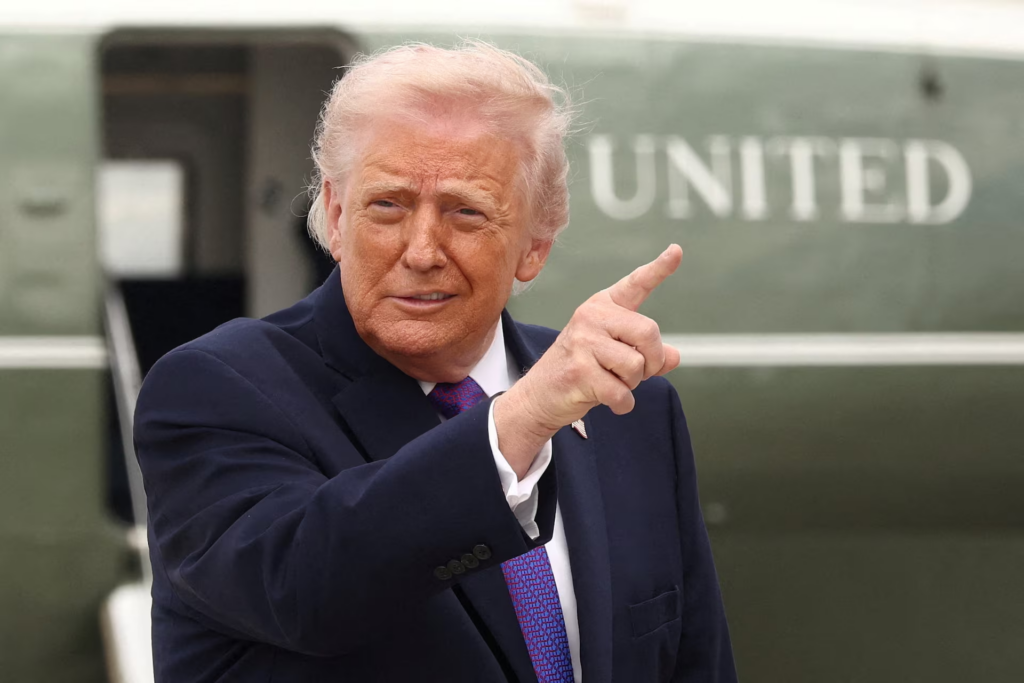
U.S. President Donald Trump has addressed growing concerns about rising global oil prices amid escalating tensions in the Middle East, emphasizing that the United States remains the world’s largest oil producer and can economically benefit from higher crude prices. However, Trump made it clear that his administration’s primary focus is preventing Iran from acquiring nuclear weapons, warning that the United States will take whatever steps are necessary to stop Tehran’s nuclear ambitions.
Speaking during remarks and in statements posted on social media, Trump said that although oil price increases can boost revenues for American energy producers, national security concerns about Iran outweigh economic considerations. “The United States is the largest oil producer in the world, by far, so when oil prices go up, we make a lot of money,” Trump said. He then stressed that his biggest priority remains preventing Iran from developing nuclear weapons, declaring, “I won’t ever let that happen.”
The comments come as global oil markets have been shaken by the ongoing military confrontation involving the United States, Israel, and Iran. Since late February 2026, hostilities between the countries have escalated dramatically following U.S. and Israeli strikes on Iranian targets and subsequent Iranian retaliation. The crisis has disrupted energy shipments in the Persian Gulf, particularly around the strategically vital Strait of Hormuz, through which roughly 20% of the world’s oil supply normally passes.
With tanker traffic reduced and shipping companies avoiding the region due to security threats, crude oil prices have surged past $100 per barrel, sparking fears of renewed inflation and economic volatility worldwide. Analysts warn that prolonged disruptions to Middle Eastern oil supplies could trigger another global energy shock similar to past geopolitical crises.
Despite the surge in energy costs, Trump has downplayed the political risks of higher gasoline prices in the United States. In interviews, he suggested that the price increases are temporary and justified by the broader goal of neutralizing Iran’s military and nuclear capabilities. According to Trump, short-term economic pain is a small price to pay for what he describes as long-term global security.
The U.S. administration has simultaneously taken steps to stabilize the energy market. Washington recently announced plans to release 172 million barrels of oil from the Strategic Petroleum Reserve as part of an international effort coordinated with the International Energy Agency to ease supply pressures and calm markets. The move is intended to prevent severe fuel price spikes while military operations and geopolitical tensions continue.
At the heart of Trump’s policy stance is Iran’s controversial nuclear program. Western intelligence agencies have long warned that Iran has accumulated significant amounts of highly enriched uranium, bringing it closer to the capability of producing nuclear weapons if enrichment continues. Reports suggest that Iran already possesses uranium enriched to about 60 percent purity, a level that could be further refined to weapons-grade material in a relatively short period.
The Trump administration argues that allowing Iran to obtain nuclear weapons would destabilize the Middle East and potentially trigger a regional arms race involving rival powers such as Saudi Arabia and Turkey. U.S. officials also warn that a nuclear-armed Iran could threaten Israel and disrupt global shipping lanes critical to energy markets. As a result, Washington has revived its “maximum pressure” strategy combining sanctions, diplomatic pressure, and military deterrence.
Trump has repeatedly framed the conflict as a necessary step to eliminate what he describes as an existential threat posed by Iran’s nuclear ambitions. Supporters of the administration argue that decisive action now could prevent a far larger conflict in the future. Critics, however, say the military escalation risks igniting a prolonged regional war that could destabilize the global economy and deepen humanitarian crises across the Middle East.
As tensions continue to mount, global leaders are closely watching developments in the Gulf region. Energy markets remain volatile, and diplomatic efforts to prevent further escalation are ongoing. While Trump maintains that the United States can withstand higher oil prices due to its domestic production strength, the broader geopolitical implications of the conflict—and the question of Iran’s nuclear future—remain central to the unfolding crisis.