Airstrike in Qazvin Region Highlights Intensifying Military Campaign as U.S. and Israel Expand Operations Across Iran
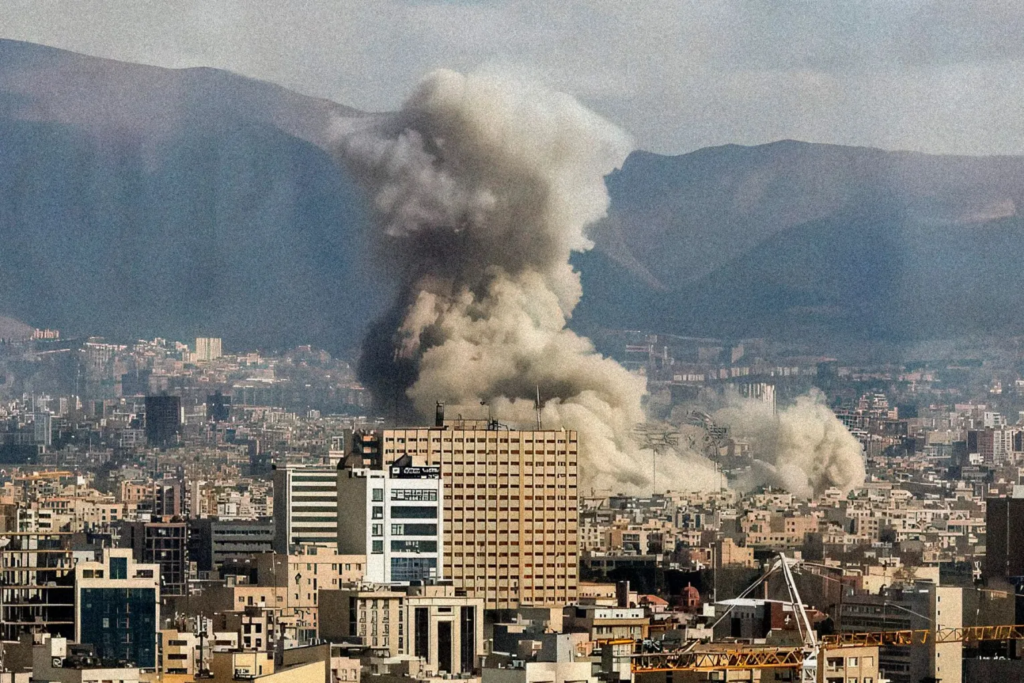
A reported joint strike by the United States and Israel in western Tehran province has left at least two people dead and five others injured, according to local Iranian media reports, marking another escalation in the rapidly expanding regional conflict between Iran and the U.S.–Israel alliance. The attack reportedly occurred in the Buin Zahra area of Qazvin province, located west of Iran’s capital Tehran, and has further heightened tensions in a war that has already caused widespread casualties and infrastructure damage across the Middle East.
According to reports from Iranian news agencies, the airstrike targeted a location in Buin Zahra, an area that has become strategically significant during the ongoing war due to its proximity to key transportation routes and possible military installations. Local authorities confirmed that at least two people were killed in the strike while five others sustained injuries, though the identities of the victims and the exact nature of the targeted facility have not yet been fully disclosed. Emergency services and rescue teams were reportedly dispatched to the scene shortly after the explosion, with injured individuals transported to nearby hospitals for treatment.
The strike comes amid a broader military campaign launched by the United States and Israel against Iranian targets, which began in late February and has since intensified with daily airstrikes, missile attacks, and drone operations across several Iranian provinces. Military analysts say the operation aims to weaken Iran’s military capabilities, including its missile systems, command centers, and nuclear-related infrastructure. Over the past two weeks, Tehran and surrounding regions have been repeatedly targeted as coalition forces attempt to disrupt Iran’s military logistics and strategic assets.
Reports from international media indicate that the ongoing conflict has already resulted in thousands of casualties across the region. Iranian officials have stated that hundreds of civilians and military personnel have been killed in strikes since the start of the war, while attacks have also affected neighboring countries and global energy markets. Some of the most intense bombardments have taken place in Tehran and western provinces, where explosions, fires, and damage to infrastructure have been widely reported.
Strategically, western Tehran province and the nearby Qazvin region are important due to their location along major military and logistical routes connecting the Iranian capital to the country’s western territories. Defense experts note that strikes in these areas may be intended to disrupt supply lines, destroy weapons storage facilities, or target suspected command posts. While U.S. and Israeli officials have not always confirmed individual strikes, the broader campaign has been described as part of an effort to significantly degrade Iran’s military and nuclear capabilities.
The conflict itself represents one of the most serious military confrontations in the Middle East in decades. It erupted after a series of escalating tensions involving missile attacks, regional proxy conflicts, and disputes over Iran’s nuclear program. In response to the initial U.S.–Israeli strikes, Iran has launched missiles and drones toward Israeli territory and targets across the Gulf region, leading to further retaliation and the expansion of the war beyond Iran’s borders.
International observers warn that continued strikes such as the one reported in western Tehran province could further destabilize the region. Diplomatic efforts by global powers and international organizations have so far struggled to halt the fighting, while humanitarian agencies warn that civilian casualties and displacement may rise significantly if the conflict continues to intensify. The United Nations and several governments have called for restraint and negotiations, emphasizing the risk that the conflict could spiral into a wider regional war involving multiple states.
Meanwhile, analysts suggest that attacks on areas like Buin Zahra may also serve as a psychological and strategic message, demonstrating the reach of coalition airpower deep inside Iranian territory. As both sides continue to exchange strikes, the possibility of further escalation remains high, with military operations expanding across multiple fronts including Iran, Israel, Lebanon, and the Gulf.
For residents of western Tehran province, the latest strike has added to growing fears of continued air raids and military escalation. Reports from the ground indicate that civilians in affected areas have begun seeking safer locations, while authorities have increased security measures and emergency preparedness in several provinces. With the war showing no immediate signs of de-escalation, incidents such as the Buin Zahra strike highlight the ongoing volatility and the human cost of the rapidly intensifying conflict.