Authorities Investigate Falling Missile Fragments in Fujairah as Regional Conflict Raises Security Concerns Across the Gulf
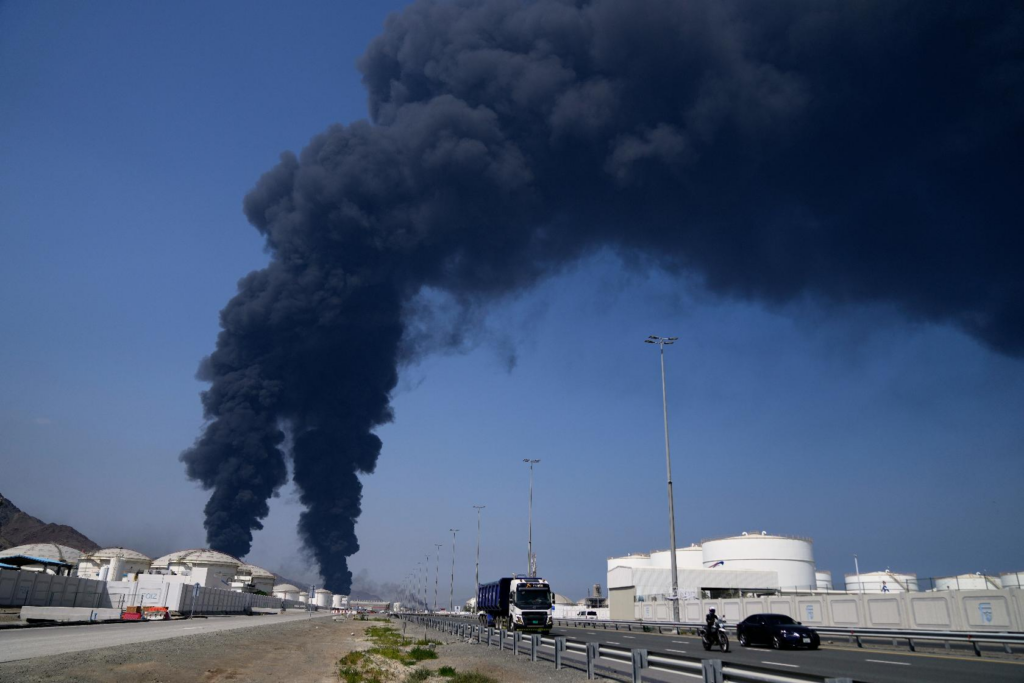
A Jordanian citizen was reported to be lightly injured after missile debris fell in the emirate of Fujairah, according to official reports from authorities in the United Arab Emirates. The incident has drawn attention to the growing risks posed by falling missile fragments during heightened regional tensions and military exchanges in the Middle East.
Local officials confirmed that the injury occurred when fragments believed to be from an intercepted missile landed in a residential or public area in Fujairah. Emergency response teams quickly arrived at the scene to assess the situation, provide medical assistance, and secure the surrounding area. The injured individual was transported to a nearby medical facility where doctors treated minor injuries. Authorities later confirmed that the person was in stable condition and did not suffer life-threatening harm.
The incident is believed to be connected to missile interceptions carried out by regional air defense systems during ongoing hostilities in the broader Middle East. Military forces across the Gulf have been on high alert as missiles and drones launched during the conflict are frequently intercepted before reaching their intended targets. However, even when interception is successful, falling debris from destroyed missiles can still pose a risk to civilians in nearby areas.
Fujairah, located on the eastern coast of the United Arab Emirates along the Gulf of Oman, is generally considered one of the country’s quieter emirates compared with major cities like Dubai and Abu Dhabi. Nevertheless, its strategic location and its role as an important shipping and energy logistics hub make it a critical part of the UAE’s national infrastructure network.
Security officials have not yet released detailed information about the missile involved in the incident. However, analysts believe the debris may have originated from an interception performed by air defense systems protecting the UAE and neighboring countries from potential missile attacks linked to the ongoing regional conflict.
Modern missile defense systems are designed to destroy incoming projectiles in mid-air, reducing the likelihood that they will reach their intended targets. Yet when these systems intercept a missile, the resulting fragments can scatter across wide areas depending on the altitude and location of the interception. In rare cases, pieces of debris may fall into populated zones.
Authorities in the UAE have emphasized that such incidents remain extremely uncommon, but they have nonetheless urged residents to remain cautious if they encounter suspicious objects or debris. Citizens and residents are advised to avoid touching unidentified fragments and instead contact local emergency services so that specialized teams can safely examine and remove the materials.
Following the Fujairah incident, security agencies launched an investigation to determine the precise origin of the missile debris and to analyze the fragments for technical information. These investigations typically involve cooperation between military experts, air defense specialists, and forensic teams to identify the type of missile and the trajectory it may have followed.
The UAE maintains advanced air defense systems designed to detect and intercept missiles and drones targeting the country’s territory or strategic assets. Over the past decade, Gulf nations have significantly expanded their defensive capabilities due to rising regional tensions and the increasing use of long-range missiles and unmanned aerial vehicles in modern warfare.
The Middle East has witnessed several instances in which missile fragments landed in civilian areas following successful interceptions. While such events rarely result in casualties, they highlight the complex challenges faced by defense systems attempting to protect densely populated regions from aerial threats.
Government officials in the UAE reassured the public that the country’s security agencies remain vigilant and that air defense networks continue to operate at a high level of readiness. Authorities also stressed that public safety remains a top priority and that emergency services are prepared to respond quickly to any similar incidents.
Experts say the Fujairah case illustrates how regional conflicts can sometimes produce indirect consequences even in locations far from the main battlefield. When missiles travel long distances across the region, interception operations may occur hundreds of kilometers away from their intended targets, increasing the likelihood that debris could fall into unexpected areas.
The UAE has repeatedly emphasized its commitment to protecting residents and maintaining stability despite the uncertain security environment. Officials say coordination between defense forces, emergency services, and local authorities plays a crucial role in ensuring that incidents like the Fujairah debris event are handled quickly and safely.
For the injured Jordanian citizen, the quick response from medical teams ensured that the situation remained minor and did not escalate into a more serious emergency. Authorities have not released the individual’s identity but confirmed that they received prompt medical care and are expected to make a full recovery.
As investigations continue, officials are urging the public to remain calm while staying aware of safety guidelines. Residents who encounter unfamiliar metal fragments, rocket components, or other unusual objects are encouraged to report them immediately rather than approaching them directly.
The Fujairah missile debris incident serves as a reminder that even defensive military actions can produce unexpected effects on the ground. While modern air defense systems greatly reduce the risk of direct attacks reaching their targets, the possibility of falling debris remains a factor that authorities must continue to monitor closely.