Group says cease-fire arrangement cannot progress as long as Israeli violations continue.
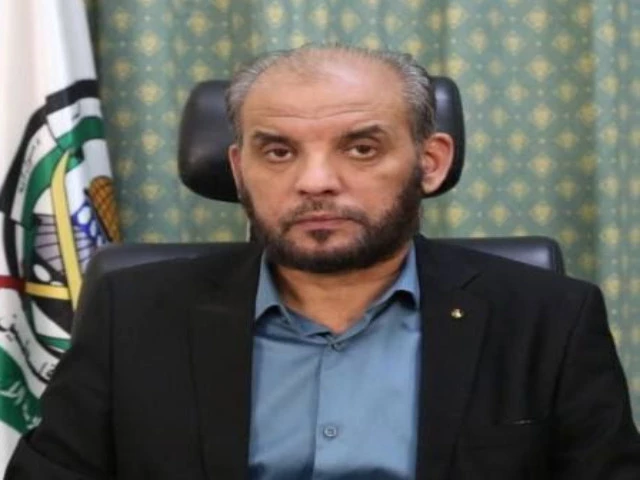
GAZA CITY: On Tuesday, Hamas stated that the Gaza ceasefire plan cannot advance to its second phase as long as Israeli “violations” continue, and urged mediators to compel Israel to obey the agreement.
The US-sponsored ceasefire, which has been in effect since October 10, has brought an end to the conflict that began on October 7, 2023, when Hamas launched a fatal attack on Israel. However, it remains shaky, with Israel and Hamas accusing each other of violations virtually every day.
Meanwhile, an Israeli official announced that the Allenby gate on the Israeli-controlled border between Jordan and the occupied West Bank would reopen on Wednesday to assistance vehicles bound for Gaza for the first time since late September.
Hossam Badran, a Hamas political bureau member, accused Israel of failing to observe the Gaza ceasefire agreement, claiming that under its provisions, Israel should have reopened the Rafah gate with Egypt and boosted the amount of supplies entering the region.
He encouraged the mediators, which include Egypt, Qatar, and the United States, to put pressure on Israel “to complete the implementation of the first phase of the cease-fire agreement.”
The accord required Palestinian militants to release the remaining 48 surviving and dead detainees held in the region. All of the hostages have been released save for one body.
In compensation, Israel has released roughly 2,000 Palestinian inmates and returned the remains of hundreds of slain Palestinians.
The first phase of the truce also requires that much more aid enter Gaza.
Israeli Prime Minister Benjamin Netanyahu has stated that the second phase of the agreement will begin shortly, while Badran has stated that it cannot begin “as long as the occupation (Israel) continues its violations”.
Dispute over the withdrawal line
In a statement announcing the opening of the Allenby crossing, an Israeli official stated that “aid trucks destined for the Gaza Strip will proceed under escort and security, following a thorough security inspection”.
Israel blocked the Jordan Valley bridge, commonly known as the King Hussein Bridge, after a Jordanian truck driver killed an Israeli soldier and a reserve officer near the border in September.
Israel generally reopened the bridge to travellers a few days later, but not to humanitarian aid bound for the Gaza Strip, which has been devastated by more than two years of conflict.
Under the opening steps of the cease-fire plan, Israeli troops withdrew to positions behind a so-called “Yellow Line” in Gaza, despite the fact that they still control more than half the region.
Lieutenant General Eyal Zamir, Israel’s military leader, was quoted on Sunday as claiming that the delineation line was the “new border line”.
On Tuesday, Badran condemned Zamir’s comments. “The statements… clearly reveal the criminal occupation’s lack of commitment to the ceasefire agreement,” added the commander.
The second step of the truce proposal included disarming Hamas, withdrawing Israeli forces until a transitional authority is constituted, and deploying an international stabilisation force.
Israel has stated that the next phase cannot begin until the body of the last Gaza captive, Israeli Ran Gvili, is handed over.
The agreement’s end goal is for Israeli forces to withdraw from Gaza in phases if specific conditions are met.
Hamas has stated that it is willing to hand over its weapons to the government of a future Palestinian state on the condition that the Israeli occupation end.