Analyzing Trump’s Remarks on Iran and the Geopolitical Consequences of Military Intervention
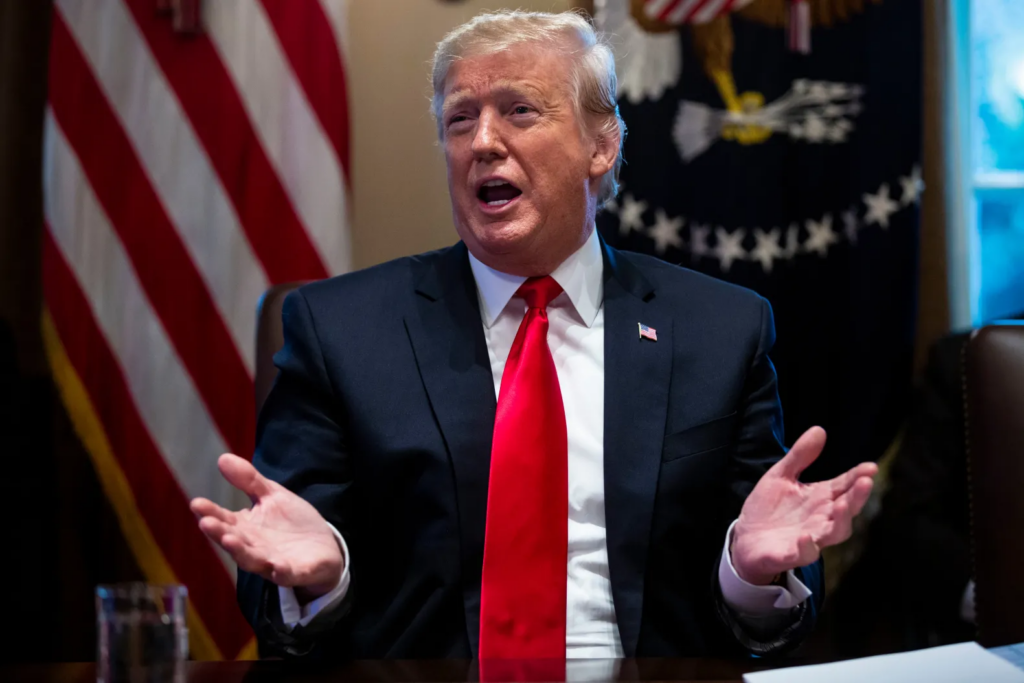
In a shocking and provocative statement, former President Donald Trump recently declared that the United States would “bomb Iran,” escalating concerns over the already volatile relationship between Washington and Tehran. The rhetoric, though not an official declaration of military action, has sent ripples across global political landscapes, with analysts and policymakers alike questioning the potential consequences of such a statement. As tensions between the two nations continue to simmer over issues ranging from Iran’s nuclear ambitions to its regional military influence, Trump’s comments signal a potential turning point that could further destabilize the Middle East.
This article delves into the context behind Trump’s remark, explores its potential ramifications, and analyzes the broader geopolitical impact of a possible military intervention in Iran.
The Context of Trump’s Statement
Former President Donald Trump’s statement came during a series of public appearances and discussions related to U.S. foreign policy and military strategy. Although Trump was not in office at the time of the remark, his history of tough rhetoric towards Iran is well-documented. During his presidency, Trump took a hardline approach toward Tehran, pulling the U.S. out of the Joint Comprehensive Plan of Action (JCPOA) in 2018, a landmark nuclear deal that had been negotiated during the Obama administration. Trump’s decision to withdraw from the agreement was framed as part of his “maximum pressure” campaign, designed to curb Iran’s nuclear program, missile development, and regional influence.
Trump’s comment about bombing Iran was not made in a vacuum. It seems to be part of a broader strategy by his administration to apply maximum pressure on Iran, especially as tensions over Tehran’s nuclear ambitions and missile capabilities continue to simmer. While it is unclear whether Trump intended his remark to be taken literally or as part of a broader political strategy, the implications are far-reaching.
The Historical Context of U.S.-Iran Relations
To understand the potential fallout from Trump’s comment, it is crucial to examine the historical context of U.S.-Iran relations. Since the 1979 Iranian Revolution and the subsequent U.S. embassy hostage crisis, Iran and the U.S. have been in a state of adversarial relations. However, under the Obama administration, a diplomatic breakthrough occurred with the signing of the Iran nuclear deal, which sought to limit Iran’s nuclear capabilities in exchange for sanctions relief.
Trump’s decision to unilaterally pull out of the nuclear deal and reimpose harsh sanctions on Iran reignited tensions. Following the assassination of top Iranian military commander Qasem Soleimani by a U.S. drone strike in January 2020, the situation further deteriorated, bringing the two countries to the brink of war. The killing of Soleimani, a key figure in Iran’s regional influence, significantly escalated tensions, and many feared that a direct military confrontation could follow.
Trump’s recent comments about bombing Iran should be viewed in the context of these past confrontations and the ongoing standoff between the U.S. and Iran. His rhetoric reflects a continued focus on military intervention as a means to address the Iranian threat.
The Geopolitical Consequences of Military Intervention
Trump’s statement, whether it is taken as a literal threat or an expression of frustration, raises serious questions about the potential consequences of military action against Iran. A military strike on Iran would have profound implications not only for the U.S. but also for the entire Middle East and beyond.
First and foremost, a military strike on Iran would likely trigger a full-scale regional conflict. Iran is not only a powerful military force in the region, but it also has deep ties to non-state actors and proxy groups across the Middle East, including Hezbollah in Lebanon, the Houthis in Yemen, and various Shiite militias in Iraq and Syria. Any military action would likely prompt retaliatory attacks from these groups, putting U.S. interests, allies, and military personnel in the region at risk.
Additionally, Iran has sophisticated missile defense systems and military capabilities, meaning that any U.S. airstrikes could result in significant casualties on both sides. Iran has previously threatened to close the Strait of Hormuz, a vital shipping lane for global oil transport, which could have a devastating impact on global energy markets.
The broader geopolitical ramifications of such an intervention would also be profound. A military strike on Iran would likely increase anti-American sentiment throughout the Middle East, especially among populations that already view the U.S. as a foreign aggressor. It could also drive Iran further into the arms of Russia and China, both of which have shown increasing support for Tehran in the face of Western pressure.
Diplomatic Efforts and the Role of Allies
A key consideration in this scenario is the role of U.S. allies, particularly in Europe. The European Union has been a staunch supporter of the nuclear deal and has criticized Trump’s withdrawal from the agreement. Many European leaders have expressed their opposition to military action against Iran, preferring instead to pursue diplomatic avenues to resolve the nuclear dispute.
The U.S. military has historically relied on its NATO allies, such as the United Kingdom and France, in any military action in the Middle East. However, the lack of consensus among NATO members on the Iranian issue suggests that any unilateral military intervention could isolate the U.S. diplomatically, potentially undermining global support for its actions.
Impact on Global Security and Economy
Beyond the immediate region, a military intervention in Iran would have far-reaching consequences for global security. An escalation could disrupt international trade routes, particularly in the Persian Gulf, where a significant portion of the world’s oil passes through. The Strait of Hormuz, a critical chokepoint, could become a flashpoint for military conflict, further driving up oil prices and destabilizing the global economy.
Furthermore, the potential for nuclear proliferation could increase, as Iran may decide to accelerate its nuclear program in response to perceived existential threats. This would further destabilize the Middle East and could prompt other nations in the region, such as Saudi Arabia and Turkey, to develop their own nuclear capabilities in response to Iran’s perceived aggression.
Conclusion
Trump’s recent comments about bombing Iran highlight the continuing dangers of military escalation in the Middle East. While his remarks may be largely rhetorical, they underscore the fragile state of U.S.-Iran relations and the broader geopolitical instability in the region. A military strike on Iran would undoubtedly trigger severe consequences, both for the U.S. and the world. The international community must work together to defuse tensions and seek peaceful diplomatic solutions before any actions are taken that could lead to an all-out war in the region.