US President’s Remarks Raise Questions About Future of US-Iran Relations and Regional Stability
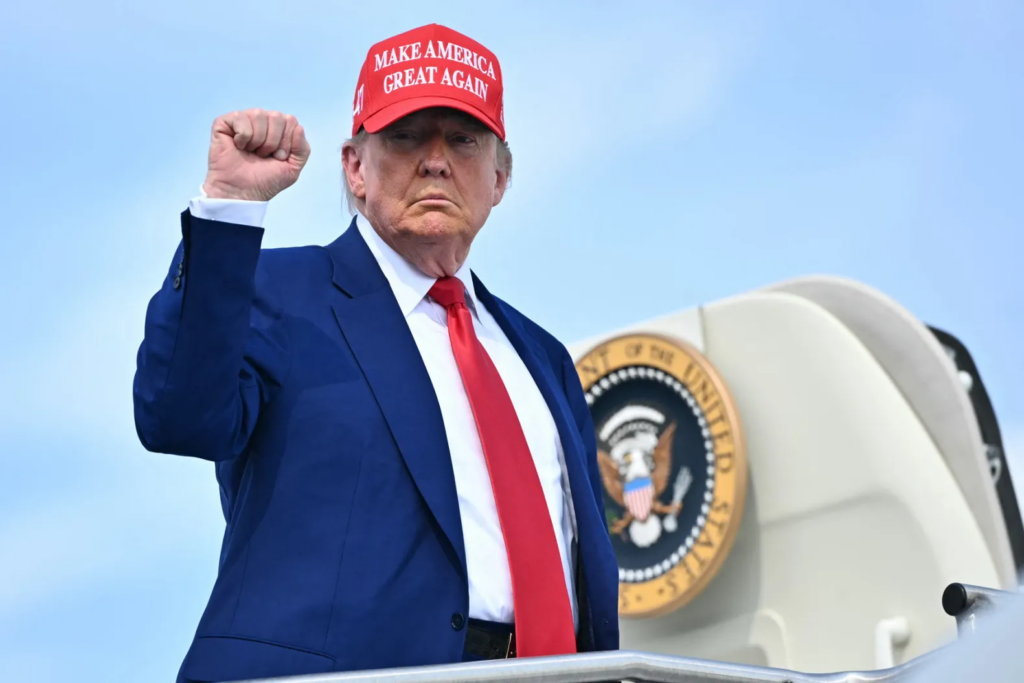
In a recent statement, US President Donald Trump remarked that there “may or may not be a regime change in Iran,” sparking widespread debate about the future trajectory of US foreign policy in the Middle East and the role of the Iranian government in the region.
These comments, though vague, add to the already high-stakes political discourse surrounding Iran’s nuclear program, its regional influence, and its ongoing tensions with Western powers. Trump’s statement raises questions about the US’s long-term approach to Iran and what steps might be taken if the current Iranian regime persists or if a political upheaval occurs in Tehran.
Trump’s Statement: A Shift in Tone or Status Quo?
The ambiguity in Trump’s statement, “there may or may not be a regime change in Iran,” highlights a shift in tone when compared to earlier rhetoric. During his presidency, Trump had been adamantly critical of Iran, particularly its leadership and policies, labeling the Iranian regime as a major threat to global peace. He had also pulled the United States out of the 2015 Iran nuclear deal (the Joint Comprehensive Plan of Action, JCPOA), which was seen as a significant moment in US‑Iran relations. Trump’s administration imposed severe sanctions on Iran and supported opposition movements within the country, indicating a policy of maximum pressure aimed at destabilizing the regime.
In contrast, his latest remarks, delivered during a press conference in February 2026, appear more restrained, offering a more cautious approach. This raises questions: Is the US shifting its stance towards Iran, or is Trump simply acknowledging the unpredictability of the situation? The president’s statement, while carefully worded, does little to clarify what specific actions the United States might take in the coming months or how it envisions a potential regime change.
Context: Iran’s Geopolitical Role and Internal Unrest
Iran remains a pivotal player in the Middle East, with its nuclear ambitions and support for proxy groups throughout the region being key concerns for both the US and its allies. Tensions between Iran and the West have been high for years, exacerbated by Iran’s involvement in conflicts in Syria, Iraq, and Yemen and its support of militias in Lebanon and elsewhere. The US and Iran have been on opposing sides of several conflicts, and the sanctions imposed by the US have severely damaged Iran’s economy and increased domestic unrest.
Domestically, Iran has faced widespread protests over economic conditions, corruption, and the oppressive regime led by the Supreme Leader, Ali Khamenei. These protests, though periodically suppressed, have highlighted a growing dissatisfaction among the Iranian people with the current regime. These internal pressures have prompted speculation about whether Iran’s leadership could eventually be overthrown or if reforms could be enacted from within.
President Trump’s remarks about the possibility of regime change could be seen as acknowledging the internal divisions within Iran and the increasing possibility that these protests could eventually lead to a shift in the political landscape. However, Trump did not specifically commit to any action on the part of the US to support such a change, leaving the door open for both diplomatic engagement or continued pressure on the regime.
Regime Change: A Dangerous Path?
While regime change in Iran is a common point of discourse among Western leaders and analysts, it is a far more complex and potentially dangerous proposition than simply removing a government. The potential military and diplomatic consequences of such an endeavor could be severe, not just for Iran but for the entire Middle East region. A change in Iran’s leadership could destabilize the country further, leading to civil unrest, economic collapse, or even broader regional warfare, especially given the complex web of alliances and rivalries in the area.
Additionally, while Trump’s statement leaves open the possibility of regime change, it does not indicate a clear path to such an outcome. Military intervention is always a possibility, but any military action against Iran would involve high costs, both financially and in terms of human lives. It would also likely draw in other major powers, including Russia and China, who have strong interests in preventing a regime change in Iran.
The US’s Position and Policy Shifts: What Does This Mean?
The possibility of regime change in Iran also raises questions about the future of US policy in the region, particularly with regard to Iran’s nuclear program. President Trump’s comment that “there may or may not be a regime change” could be interpreted as an acknowledgment that the US approach to Iran is evolving. Despite a heavy reliance on economic sanctions and diplomatic isolation, Trump’s remarks may signal an openness to diplomatic channels or reengagement with the Iranian regime under certain circumstances, especially as the situation in the region continues to evolve.
Furthermore, while regime change is always a talking point for hardliners, the pragmatic approach might focus on curbing Iran’s nuclear ambitions through renewed talks or international pressure rather than aiming to overthrow its government. Trump’s stance could suggest an understanding that removing a regime doesn’t always translate to peace or stability in the region, as history has shown with interventions in places like Iraq and Libya.
Conclusion: An Unpredictable Future for US-Iran Relations
Trump’s comments on Iran’s future highlight the unpredictability of US foreign policy, particularly in the volatile context of the Middle East. While regime change in Iran remains an idea that many in Washington see as a possible outcome, the consequences of such a dramatic shift are fraught with uncertainty. It remains to be seen whether the US will pursue aggressive action, diplomatic engagement, or continue to use economic pressure as a primary tool to influence the situation in Iran.
What is certain, however, is that Iran’s future remains a pivotal issue for the US and the broader Middle East, with global consequences hanging in the balance.