Comprehensive Analysis of President Donald J. Trump’s Warning to Iran After Tehran Threatened a Fierce Retaliation Following Airstrikes That Killed Ayatollah Ali Khamenei
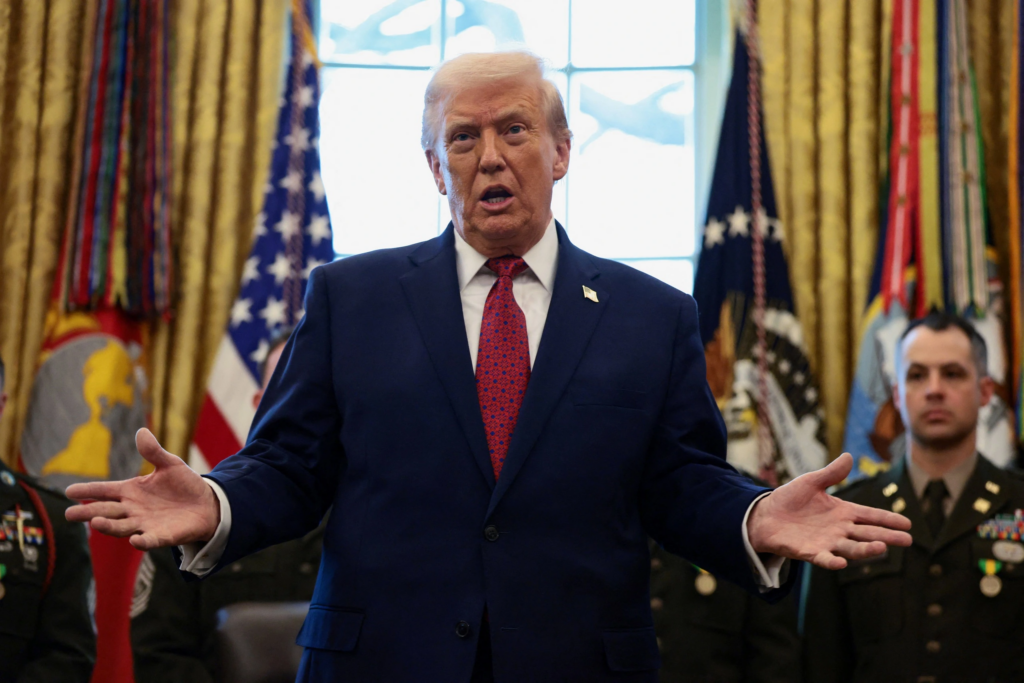
In the midst of one of the most volatile global crises in decades, United States President Donald J. Trump issued a stark warning to the Iranian regime on 1 March 2026, after Tehran signaled plans for a powerful retaliation following U.S. and Israeli military strikes that killed Iran’s Supreme Leader Ayatollah Ali Khamenei. In a post on his Truth Social platform, Trump declared that if Iran were to strike back “very hard … harder than they have ever hit before,” the United States would respond with a military force “that has never been seen before.” This statement has amplified global concerns about a possible dramatic escalation in the Middle East conflict and its far‑reaching implications for international security.
Context: Deadly Strikes and Rising Tensions
The warning from President Trump comes after a massive joint military operation conducted by the United States and Israel against Iranian targets, which reportedly led to the death of Iran’s Supreme Leader Ayatollah Ali Khamenei and several senior Iranian officials. Tehran’s leadership responded by indicating that it was preparing a “very hard” counter‑attack, a phrase suggesting a significant military retaliation against American and Israeli interests.
Following the initial strikes, reports emerged of Iranian missile and drone attacks across the Gulf region, including areas hosting U.S. military personnel and allied forces, as well as attacks on Israeli sites. These hostilities have triggered alarm among international observers, with fears that the conflict could draw in regional powers and further destabilize an already turbulent Middle East.
Trump’s Warning: “Force That Has Never Been Seen Before”
In reaction to Iran’s threat, President Trump took to social media early Sunday, writing:
“Iran just stated that they are going to hit very hard today, harder than they have ever hit before. THEY BETTER NOT DO THAT, HOWEVER, BECAUSE IF THEY DO, WE WILL HIT THEM WITH A FORCE THAT HAS NEVER BEEN SEEN BEFORE! Thank you for your attention to this matter!”
This message underscores a dramatic shift in rhetoric and signals Trump’s intention to portray U.S. military power as overwhelming and unequivocal. The phrasing suggests that any Iranian military action against U.S. interests would prompt an unprecedented American response — a formulation that dramatically raises the stakes and the prospect of a broader military confrontation.
The phrase “force that has never been seen before” implies not just conventional retaliation but potentially a level of military power and scale never previously deployed in U.S.–Iran confrontations. Analysts interpret this as a deterrence strategy aimed at dissuading Tehran from engaging in further attacks, though it also risks provoking Iran’s leadership to act more aggressively.
Strategic and Geopolitical Implications
President Trump’s warning reverberated across international diplomatic circles and military communities, with several concerning implications:
- Escalation of Military Conflict: By publicly threatening unprecedented force, the United States is raising the possibility of a rapid escalation to full‑blown conflict. If Iran follows through on its own threats, both nations could enter a cycle of strikes and counter‑strikes with devastating consequences for regional stability and global security.
- Impact on U.S. Military Presence: The presence of U.S. forces throughout the Gulf — including bases in multiple Gulf Cooperation Council (GCC) countries — places American personnel and infrastructure at heightened risk. A broadened conflict could draw these partner nations more directly into hostilities.
- Global Diplomatic Strains: Trump’s hardline stance has elicited mixed international reactions. Some U.S. allies may support strong deterrence against Tehran, while others are likely to call for restraint and diplomatic solutions to prevent a wider war that could disrupt global economies and international alliances.
- Economic and Security Fallout: An escalation in conflict could sharply affect global oil markets and trade routes, particularly the Strait of Hormuz — a critical artery for global energy supplies. Heightened military activity and insecurity in the region could send oil prices soaring and impact global economic stability.
Iran’s Response and Regional Dynamics
In the face of Trump’s warning, Iranian officials have doubled down on their rhetoric. Tehran’s parliament speaker and military leaders have described the U.S. and Israel as “filthy criminals” and warned that retaliation would be devastating if attacks continue. These statements reflect deep resentment and resolve within Iran’s political and military leadership, emphasizing Tehran’s intent to project strength in the face of foreign aggression.
Iran’s use of proxies and regional allies — including armed groups in Iraq, Lebanon, and Yemen — further complicates the battlefield, potentially expanding the scope of conflict beyond direct state‑to‑state engagements.
Public and Political Reactions
Domestically within the United States, Trump’s warning has stirred debate. Supporters of a strong defense posture argue that demonstrating overwhelming military resolve is essential to deterring hostile actions by adversaries. Critics, however, warn that such rhetoric risks dragging the nation into a prolonged conflict with severe human and economic costs.
Internationally, leaders and diplomats are calling for calm, urging both Washington and Tehran to exercise restraint and pursue de‑escalation through diplomatic channels before further lives are lost and regional stability collapses.
Conclusion: A Precarious Moment in Global Security
President Donald J. Trump’s warning to Iran — that any significant act of retaliation will be met with unprecedented force — reflects the extreme tensions gripping the Middle East following the killing of Ayatollah Ali Khamenei. It underscores a dangerous brinkmanship where every public statement carries the potential to either deter or inflame further conflict. As the situation evolves, world leaders and citizens alike watch nervously, hoping that rhetoric does not give way to a catastrophic escalation of violence.