Donald Trump’s openness to engaging with Iran’s new Supreme Leader sparks debate over potential thaw in U.S.–Iran relations
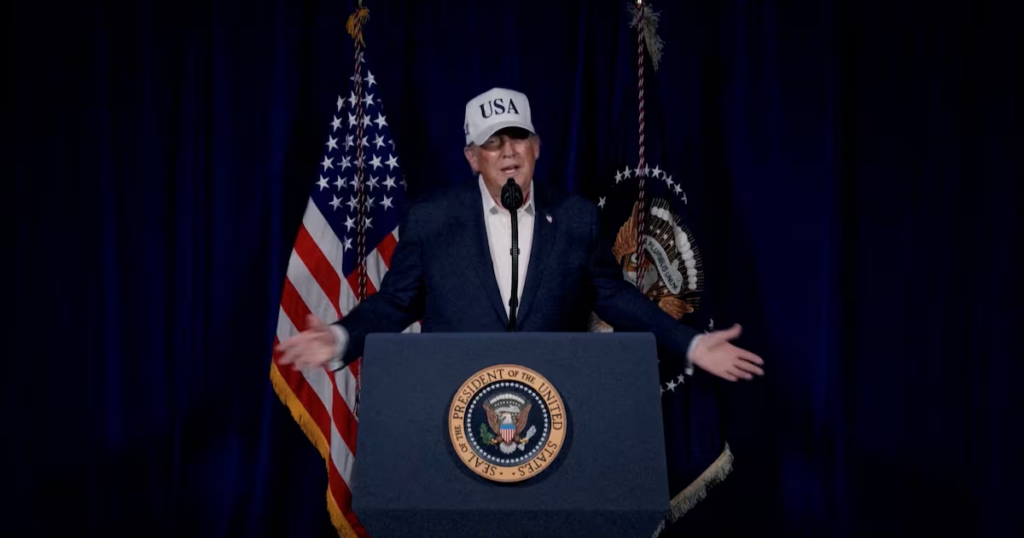
In a surprising shift in rhetoric, former U.S. President Donald Trump recently announced that he is willing to engage in diplomatic talks with Iran’s newly appointed Supreme Leader. This statement comes after months of intense geopolitical tension and military escalations between the United States and Iran. Trump’s openness to direct dialogue has raised eyebrows across political circles, given his previous hardline stance against the Iranian regime, as well as the recent killing of Ayatollah Ali Khamenei, the former Supreme Leader.
The Shift in Tone: Trump’s Surprising Offer to Iran’s New Leadership
On March 2, 2026, Trump made headlines by publicly expressing his willingness to communicate with Iran’s newly chosen Supreme Leader, despite the ongoing military conflict. His statement, made via Truth Social, reads:
“I am open to talking to the new Supreme Leader of Iran. Maybe he is open to the same. If so, we can have a productive discussion. I have always been open to negotiations when necessary, and if there is an opportunity for peace, we should pursue it. Let’s see where it leads.”
This statement marks a significant shift in tone from Trump’s previous rhetoric, where he had explicitly refused any negotiations or direct talks with Tehran, especially after the assassination of General Qasem Soleimani in 2020, which escalated tensions between the two countries. Trump’s past policy of “maximum pressure” involved heavy sanctions and military deterrence, which, according to his administration, was meant to force Iran to curtail its nuclear ambitions and support for militant groups in the region. However, with Khamenei’s death and a newly emerging Iranian leadership, Trump’s stance seems more flexible.
Why This Matters: A Potential New Chapter in U.S.–Iran Relations
Trump’s remarks have sparked significant debate among foreign policy experts and political commentators. While his stance of engagement seems to contrast with his previous tenure, it is essential to examine why he might have taken this position now. Several key factors may contribute to this sudden willingness to engage:
- The Changing Political Landscape in Iran: Following Khamenei’s death, Iran’s political and religious hierarchy has undergone a major shift. The new Supreme Leader, a relatively unknown figure compared to his predecessor, could present a more malleable counterpart for discussions. Trump’s statement may be designed to test whether this new leadership is more open to dialogue and negotiation.
- Strategic Repositioning: With the current conflict in full swing, there may be an underlying motivation for Trump to appear open to diplomacy. Given the significant military and economic toll the war has taken on both sides, Trump may see engagement as a way to ensure that the U.S. does not become embroiled in a prolonged, costly confrontation.
- A Shift in Global Power Dynamics: The global geopolitical balance has been shifting. China, Russia, and other regional powers have become increasingly influential in the Middle East, often taking a counter-position to U.S. policies. A diplomatic thaw between the U.S. and Iran could serve as a strategy to counterbalance these new dynamics.
- Public Perception and Legacy: As Trump gears up for a potential 2028 presidential run, his foreign policy legacy will play a significant role in his political appeal. By signaling a willingness to talk with Iran’s new leadership, Trump might be positioning himself as a peacemaker who could end the Middle East conflict and restore American global standing.
Iran’s Response: Will the New Supreme Leader Accept?
Iran’s response to Trump’s statement remains to be seen. The new Supreme Leader, who has not yet fully defined his public foreign policy stance, could see this offer as either a sign of weakness or a strategic opportunity. Historically, Iran has been cautious in its interactions with the U.S., especially given the history of broken deals, such as the 2015 Iran nuclear deal, which Trump pulled out of during his presidency in 2018.
However, the dynamics of the new leadership in Iran might open a door to dialogue. Some analysts suggest that Tehran’s new Supreme Leader could view these overtures as a chance to extract concessions, particularly with the global sanctions still crippling Iran’s economy. Diplomatic talks could allow Iran to secure new economic opportunities while avoiding further military escalation.
A New Era in U.S.–Iran Diplomacy?
The shift in U.S. rhetoric, particularly Trump’s willingness to engage with the new Iranian Supreme Leader, marks a potential new chapter in U.S.–Iran relations. If both sides can move past historical grievances, the door to meaningful negotiations may reopen. However, the complex dynamics of both countries—ranging from Iran’s nuclear program to American sanctions—suggest that any talks would be long and difficult.
While this new openness to dialogue is certainly a step toward de-escalation, the next few months will be critical in determining whether this shift leads to substantive diplomatic progress or simply another round of tense back-and-forth. Both sides will need to navigate the fraught historical context carefully to avoid further conflict while striving for a peaceful resolution.