Lavrov cautions that military escalation may spur Tehran—and possibly others—to pursue nuclear capacity, reversing non‑proliferation goals
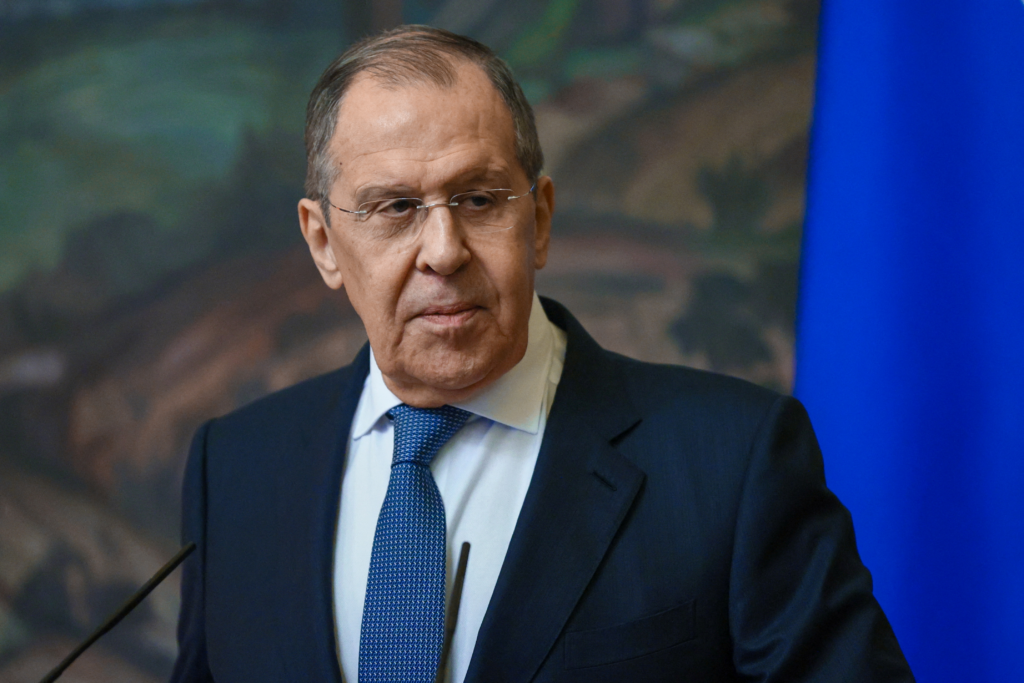
Russian Foreign Minister Sergey Lavrov has warned that ongoing military actions by the United States and Israel against Iran could inadvertently push Tehran toward seeking nuclear weapons—a stark departure from the stated goal of preventing nuclear proliferation. In a series of recent remarks, Lavrov framed the conflict not only as a geopolitical crisis but as a potential trigger for a broader nuclear arms race in the Middle East, heightening global security concerns.
Lavrov made these comments during a press conference in Moscow, where he addressed the continuing war sparked by joint US–Israeli strikes on Iranian territory at the end of February 2026. According to the Russian foreign minister, the paradox at the heart of the conflict is that a campaign allegedly aimed at curbing Iran’s nuclear ambitions might have the opposite effect: encouraging key regional powers to pursue their own nuclear deterrents. “The seemingly paradoxical declared noble goal of starting a war to prevent the proliferation of nuclear weapons may stimulate completely opposite trends,” Lavrov said, highlighting a risk that extends beyond Iranian calculations.
A central pillar of Lavrov’s argument is that perceptions of vulnerability—especially when a state faces large‑scale military attacks—can become a driving factor in decisions about nuclear capability. During his address, he explicitly noted that because “the US doesn’t attack those who have nuclear bombs,” some forces within Iran (and potentially neighboring Arab states) might conclude that possessing a nuclear weapon offers the strongest guarantee against external aggression. This logic, he suggested, could fuel a new wave of nuclear ambition in a region already fraught with historic tensions.
It’s important to underscore that Lavrov also reiterated Russia’s longstanding position that no clear evidence exists indicating Iran was actively developing nuclear weapons prior to the conflict. In talks with international counterparts, including Brunei’s foreign minister, he emphasized that Moscow—along with reports from independent bodies like the International Atomic Energy Agency (IAEA) and some US intelligence sources—had “seen no evidence that Iran was developing nuclear weapons,” even as Washington and Tel Aviv justified their military campaign on precisely that basis.
This stance places Moscow at odds with Western narratives that have framed Iran’s nuclear program as a latent threat. While the United States has insisted its actions are defensive and aimed at preventing Iran from crossing the threshold into weapons development, Lavrov’s comments highlight the broader nuclear proliferation risk associated with military escalation. If Iran or its neighbors conclude that nuclear deterrence is the only viable protection against powerful adversaries, the region could see a dramatic shift in security postures and alliances.
Moscow’s warnings also reflect Russia’s strategic interests. As a diplomatic actor seeking to maintain influence across the Middle East, Russia has consistently positioned itself against unilateral military action and in favor of negotiated solutions—albeit while supporting sovereign rights to peaceful nuclear activity. Russian officials argue that forcing another country into a corner through force or coercion will not eliminate security threats but transform them into more dangerous forms, such as nuclear détente or arms competition.
International security experts have long recognized that military conflict can have far‑reaching effects on nuclear policy. In regions where conventional asymmetries exist, states without nuclear weapons may see them as the ultimate form of strategic insurance. The Middle East is no exception: the presence of a nuclear‑armed state like Israel—whose nuclear arsenal, while unacknowledged officially, is widely believed to exist—has been a factor in regional strategic thinking for decades. Lavrov’s remarks suggest that the conflict’s current trajectory could amplify this dynamic rather than contain it.
Critics of Moscow’s perspective argue that Iran’s current nuclear infrastructure, under strict IAEA monitoring before the conflict, was primarily civilian in nature and that Tehran has repeatedly insisted it’s not pursuing a bomb. Nevertheless, setbacks in oversight—such as restrictions on inspectors or damage to monitoring systems during wartime—could weaken transparency and make future proliferation harder to track. The prospect of nuclear ambition rising amid diminished oversight is a key concern raised by analysts observing the ripple effects of the conflict.
The potential for increased nuclear proliferation in the Middle East is not merely theoretical. Other states in the region, such as Saudi Arabia and Egypt, have periodically signalled interest in nuclear capability as part of broader strategic calculations. Should Iran, feeling threatened by external intervention, pivot decisively toward nuclear armament, neighboring states could follow suit, leading to a cascade of proliferation that would challenge decades of global non‑proliferation norms.
For now, diplomatic efforts are struggling to catch up with the rapidly changing security climate. While calls for de‑escalation and renewed negotiations continue from various capitals, the specter of a nuclear arms race—as articulated by Lavrov—adds a complicating dimension to an already fraught conflict. Whether Tehran adjusts its strategic calculations or doubles down on conventional defenses will depend on how the war unfolds and on the pressure exerted by both global powers and internal factions.
In summary, Russia’s cautionary message underscores a profound paradox in international security: actions aimed at preventing nuclear proliferation can, under certain conditions, unintentionally encourage it. With Middle East tensions reaching unprecedented levels, Lavrov’s warning about the risks of spurring Iran—and potentially its neighbors—toward nuclear ambitions serves as a stark reminder of the delicate balance between deterrence, diplomacy, and conflict.