Comments Come After Khamenei’s Death as Washington Signals Desire to Influence Iran’s Political Future
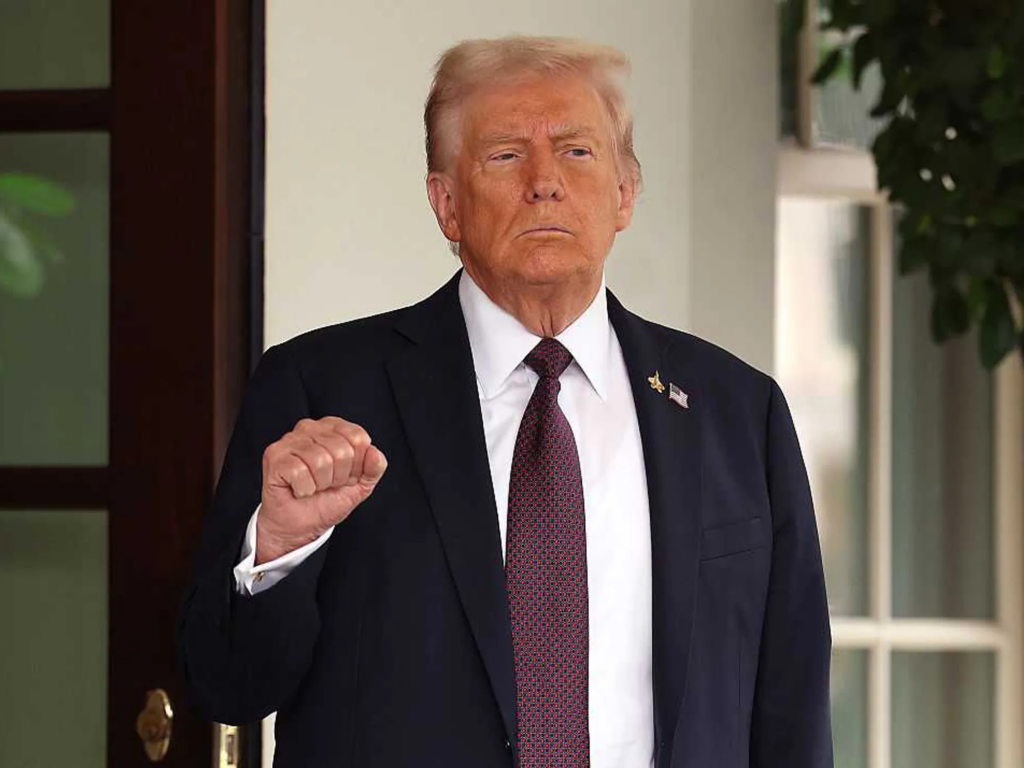
U.S. President Donald Trump has sparked global debate after saying the United States must play a role in determining who becomes Iran’s next supreme leader, following the death of Ali Khamenei and the resulting leadership crisis in Tehran. In an interview with Axios and other media outlets, Trump said he believes Washington should be personally involved in shaping Iran’s future leadership, arguing that the choice of Iran’s next ruler could determine whether the region moves toward stability or further conflict.
The remarks come at a moment of intense geopolitical tension in the Middle East. After a wave of U.S. and Israeli military strikes in late February 2026, Iran’s long-time supreme leader Khamenei was killed in an airstrike targeting senior Iranian leadership. The attack triggered a major succession crisis inside the Islamic Republic and set off a wider regional confrontation involving Iran, Israel, and the United States.
Speaking about the political transition in Tehran, Trump argued that the United States cannot remain a passive observer during such a critical moment. According to reports from the interview, he stated that he “must be involved” in selecting the next Iranian leader, emphasizing that Washington has strong strategic interests in ensuring the country moves toward stability rather than hostility toward the West.
Trump Rejects Mojtaba Khamenei as Potential Successor
One of the most controversial aspects of Trump’s statement was his direct criticism of Mojtaba Khamenei, the son of the late supreme leader, who is widely viewed by analysts as a potential successor. Trump described Mojtaba as an unacceptable choice for Iran’s leadership and suggested that a continuation of the previous political system could prolong confrontation between Tehran and Washington.
Trump reportedly said that the United States wants Iran to choose a leader capable of bringing “harmony and peace” rather than continuing the policies of confrontation that characterized Khamenei’s rule. His comments reflect the broader strategy of the Trump administration, which has frequently criticized the Iranian government and called for significant political change inside the country.
The U.S. president also compared his desired involvement in Iran’s leadership transition to Washington’s influence in political developments in other countries, including Venezuela. He argued that the United States should ensure that any new leadership in Tehran does not repeat what he considers the aggressive policies of previous Iranian governments.
How Iran Chooses Its Supreme Leader
Despite Trump’s remarks, the process of selecting Iran’s supreme leader is determined by Iran’s constitution. The decision is made by the Assembly of Experts, an 88-member body of senior clerics responsible for appointing and supervising the country’s highest authority.
The supreme leader holds enormous power within Iran’s political system, controlling the armed forces, overseeing major state institutions, and influencing foreign policy. Because of this authority, the succession process following Khamenei’s death has become a central issue in the ongoing geopolitical crisis.
Iranian officials have not publicly indicated that any foreign country will influence the decision, and many analysts believe Tehran’s leadership would strongly reject outside involvement. The Assembly of Experts is expected to make its decision based on internal political considerations and religious legitimacy rather than external pressure.
Global Reaction and Strategic Implications
Trump’s comments have generated significant international reaction. Critics argue that openly calling for U.S. involvement in selecting another country’s leader could escalate tensions further and reinforce Iranian claims that Washington seeks regime change. Supporters, however, claim that the United States has legitimate security interests given Iran’s military activities and regional influence.
The leadership transition also carries major strategic implications for the broader Middle East. Whoever becomes Iran’s next supreme leader will shape the country’s policies on nuclear development, regional alliances, and relations with Western powers. With ongoing military clashes and economic sanctions already straining the region, the outcome of the succession process could determine whether tensions ease or intensify in the coming years.
Analysts note that leadership transitions in Iran historically occur behind closed doors, often involving complex negotiations among clerics, political elites, and the powerful Islamic Revolutionary Guard Corps. External pressure from foreign governments rarely influences the formal process but can still affect the broader geopolitical environment surrounding the decision.
A Critical Moment in Middle East Politics
The debate over Iran’s next leader comes at one of the most volatile moments in recent Middle Eastern history. The assassination of Khamenei and the subsequent military escalation have reshaped the region’s political landscape and triggered a high-stakes power struggle within Iran itself.
Trump’s statement that the United States must have a role in choosing Iran’s next leader highlights how deeply the succession issue has become intertwined with global geopolitics. Whether Washington can actually influence the process remains uncertain, but the comments underscore the strategic importance of the leadership transition for the future of Iran, the Middle East, and international security.