Proposal Includes Voter ID, Proof of Citizenship, Limits on Mail Ballots, and Culture-War Policies
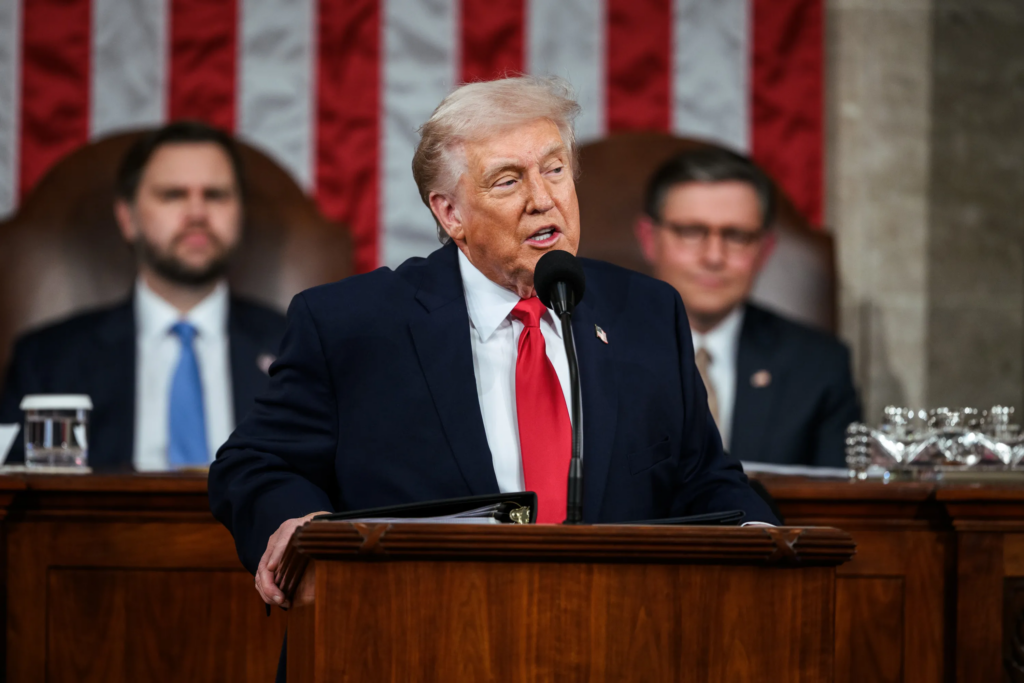
Former U.S. President Donald Trump has called on lawmakers and supporters to pass what he describes as the “SAVE America Act,” a sweeping proposal that combines election reforms with a series of broader social and cultural policy demands. The proposal has become one of the most controversial political initiatives in the United States ahead of the 2026 election cycle, sparking intense debate between Republicans and Democrats over election security, voting rights, and social policy.
Trump publicly promoted the proposal in a statement urging Congress to adopt strict national voting rules and several conservative policy priorities. The plan includes five key demands: mandatory voter identification, proof of citizenship for all voters, restrictions on mail-in ballots, banning transgender participation in women’s sports, and requiring parental consent for gender-affirming surgeries for minors. The proposal reflects many of the political themes that have defined Trump’s campaign rhetoric and the broader agenda of conservative lawmakers in recent years.
Core Voting Provisions of the SAVE America Act
At the center of the proposal are major changes to U.S. election procedures. One of the primary provisions would require every voter to present a valid government-issued photo identification when casting a ballot. Supporters argue that voter ID laws help prevent fraud and ensure confidence in election results. Similar requirements already exist in many U.S. states, though the specific rules vary widely.
The proposal also requires documentary proof of U.S. citizenship before a person can register to vote in federal elections. Acceptable documents could include a passport, birth certificate, or other government documentation showing citizenship status. The legislation builds on an earlier Republican-backed bill known as the Safeguard American Voter Eligibility (SAVE) Act, which passed the U.S. House of Representatives but has faced obstacles in the Senate.
Supporters of the measure say it would ensure that only American citizens participate in federal elections. However, critics argue that non-citizen voting is already extremely rare in the United States and that strict documentation requirements could prevent eligible voters from participating.
Restrictions on Mail-In Voting
Another central element of Trump’s proposal is the elimination of most mail-in ballots. Under the plan, absentee voting would only be allowed for specific situations such as illness, disability, military service, or travel. Proponents believe limiting mail voting would reduce the risk of fraud and restore trust in election results.
Mail voting expanded significantly during the COVID-19 pandemic and has remained widely used in many states. Critics of Trump’s proposal warn that restricting mail ballots could make voting more difficult for millions of Americans who rely on absentee voting because of work schedules, distance from polling stations, or other logistical challenges.
Election experts also note that current U.S. law already includes safeguards to verify voter identity and eligibility, including signature checks and registration verification systems.
Social Policy Components of the Proposal
Beyond election rules, the proposed SAVE America Act also includes controversial social policies that have become key issues in American political debates. One provision calls for banning transgender athletes from competing in women’s sports, a policy that has been adopted in several U.S. states but remains contested nationally.
Another provision would prohibit gender-affirming surgeries for minors without explicit written parental approval. Advocates supporting the policy say it protects children and ensures families maintain control over medical decisions. Opponents argue that such measures could restrict access to healthcare and stigmatize transgender youth.
By combining election reforms with social policy proposals, Trump’s statement reflects a broader conservative platform that links cultural debates with political reform efforts.
Political Reaction and National Debate
The SAVE America Act proposal has triggered strong reactions across the political spectrum. Republican leaders and conservative activists have largely welcomed the plan, arguing that stricter election laws are necessary to safeguard democracy and prevent potential abuse of the voting system.
Democrats and voting rights organizations, however, strongly oppose the legislation. Critics warn that stricter documentation requirements could disenfranchise millions of eligible voters, particularly those who do not have easy access to citizenship documents such as passports or birth certificates. Some studies suggest a notable portion of voting-age Americans lack immediate access to such documentation.
Civil rights groups also argue that election rules should focus on expanding access to voting rather than adding new requirements. They contend that voter fraud cases remain extremely rare and that existing safeguards already protect the integrity of elections.
Legislative Prospects and Future Outlook
Although elements of the proposal have been introduced in Congress, the SAVE America Act faces significant political hurdles. While Republicans control enough seats in the House of Representatives to pass certain voting bills, the Senate requires a larger majority to overcome procedural barriers such as the filibuster.
Political analysts say the proposal may serve as a campaign platform for Trump and Republican candidates heading into upcoming elections rather than an immediately achievable piece of legislation. Even if parts of the proposal pass Congress, they could face legal challenges in federal courts because election administration is traditionally handled by individual states.
Conclusion
The SAVE America Act proposal represents one of the most ambitious and controversial political agendas currently being debated in the United States. By combining strict voting requirements with social policy changes, the proposal aims to reshape key aspects of American elections and cultural policy. Supporters see it as a necessary step to restore trust in democratic institutions, while critics warn it could restrict voting access and deepen political divisions. As the 2026 election cycle approaches, the debate surrounding the SAVE America Act is likely to remain a central issue in U.S. politics.