Absence of Iran’s New Supreme Leader Fuels Speculation Amid Reports of Injuries and Intelligence Monitoring
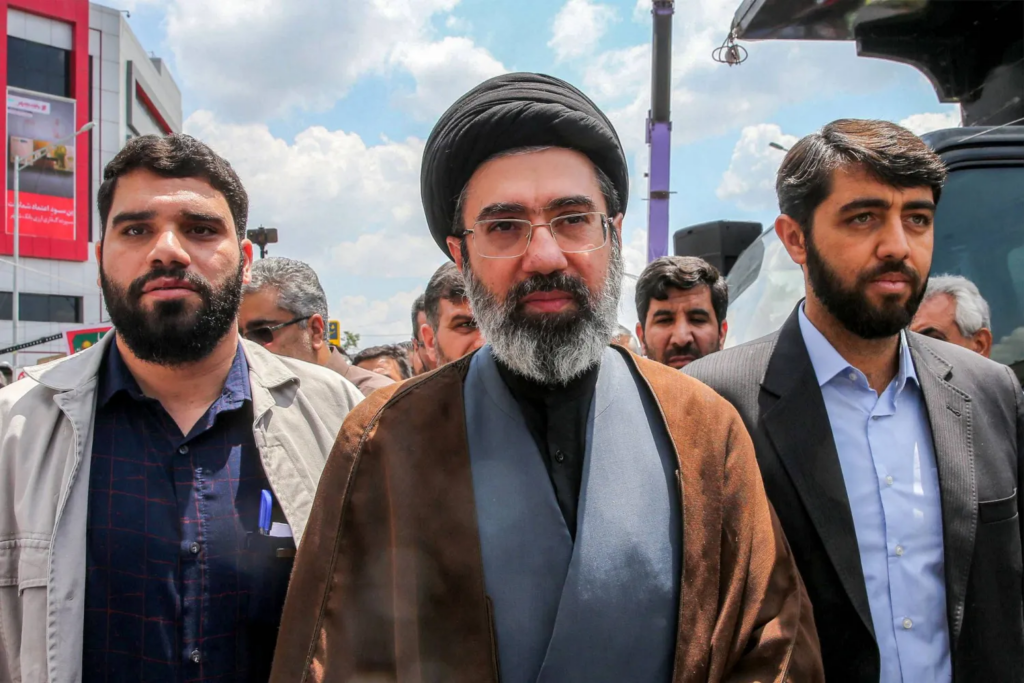
Speculation is growing across international media and intelligence circles over the whereabouts of Iran’s newly appointed Supreme Leader Mojtaba Khamenei, with reports claiming that his “fate is unknown” and that Israeli officials are closely monitoring his disappearance from public view. The uncertainty has intensified amid the ongoing Middle East conflict and follows weeks of conflicting reports about Khamenei’s health and condition after a series of military strikes targeting Iran’s leadership infrastructure.
Mojtaba Khamenei, the son of former Iranian Supreme Leader Ali Khamenei, assumed power after his father was killed in a major airstrike on February 28, 2026, during the early phase of the expanding regional war. Following the attack, Iran’s Assembly of Experts quickly selected Mojtaba as the country’s new Supreme Leader, placing him at the center of one of the most volatile geopolitical crises in recent decades.
However, despite taking on the highest leadership position in Iran, Mojtaba Khamenei has not made any confirmed public appearances, speeches, or televised statements since his appointment. His absence has sparked widespread speculation regarding his health, security status, and actual ability to exercise authority within Iran’s political and military system.
Several intelligence sources and analysts believe that Mojtaba Khamenei may have been injured in the same airstrike that killed his father and other members of the ruling family. Some reports suggest he suffered leg and arm injuries, while others claim the wounds may have been more serious than initially acknowledged by Iranian officials.
Israeli security officials have reportedly been closely monitoring the situation, describing the leader’s absence as highly unusual for a newly appointed supreme leader during wartime. According to intelligence assessments cited by international media, Israel believes Mojtaba may have been lightly wounded in the strikes, which could explain why he has not appeared publicly since assuming office.
The lack of verified images or videos of Mojtaba Khamenei has also fueled speculation. Recently circulated photographs claimed to show the Iranian leader recovering, but investigators later suggested that the images were digitally altered or generated using artificial intelligence tools, raising questions about whether the government is attempting to conceal his condition or location.
Adding to the confusion, U.S. officials have made statements suggesting that the new Iranian leader may have suffered significant injuries during the attack. One senior U.S. defense official claimed Mojtaba could be “wounded and possibly disfigured,” although these claims have not been independently verified.
Iranian authorities have strongly rejected suggestions that the leader is missing or incapacitated. The country’s foreign minister recently stated that there are “no problems” with Mojtaba Khamenei’s leadership, dismissing rumors circulating in Western and Israeli media. According to Iranian officials, the leader remains active in governing the country despite his limited public visibility.
Analysts say there are several possible explanations for Mojtaba Khamenei’s disappearance from public view. One possibility is that Iranian security agencies have placed the new leader in a secure undisclosed location to prevent another assassination attempt. Israel has openly warned that Iran’s leadership could remain targets during the ongoing war, increasing the likelihood that Tehran would hide senior officials for security reasons.
Another explanation is that Mojtaba may still be recovering from injuries sustained during the attack. Diplomats and Iranian insiders have suggested he could be receiving treatment in a heavily guarded medical facility in Tehran, which would explain why no public appearances have been arranged since he assumed power.
The uncertainty surrounding Iran’s leadership comes at a critical moment in the regional conflict. Iran has been engaged in missile and drone attacks across the Middle East, while U.S. and Israeli forces have continued airstrikes targeting Iranian military infrastructure, naval assets, and strategic installations. The conflict has already expanded into multiple countries, including Lebanon, the Gulf states, and parts of Syria and Iraq.
In such circumstances, the absence of a visible national leader could have significant political and strategic implications. Experts note that Iran’s political system relies heavily on the authority of the Supreme Leader, who oversees the armed forces, judiciary, intelligence services, and key state institutions. If Mojtaba Khamenei were unable to perform these duties, decision-making could shift toward military leadership, particularly the Islamic Revolutionary Guard Corps (IRGC).
Some analysts suggest that Iran may be temporarily relying on a collective leadership structure while Mojtaba remains out of sight. Such arrangements have historically been used during periods of crisis or transition within the Iranian political system.
For now, the exact status of Mojtaba Khamenei remains uncertain. Conflicting reports, intelligence speculation, and official denials have created a complex information environment in which definitive answers remain elusive.
What is clear, however, is that the mystery surrounding Iran’s new Supreme Leader has become a significant element of the ongoing geopolitical confrontation in the Middle East. As the war continues and international intelligence agencies closely monitor developments, the world is watching closely to determine whether Mojtaba Khamenei will reappear publicly — or whether the uncertainty surrounding his fate will continue to shape the narrative of one of the region’s most volatile conflicts.