China’s Escalating Warning to the US: What Does It Mean for Global Security and Taiwan’s Future?
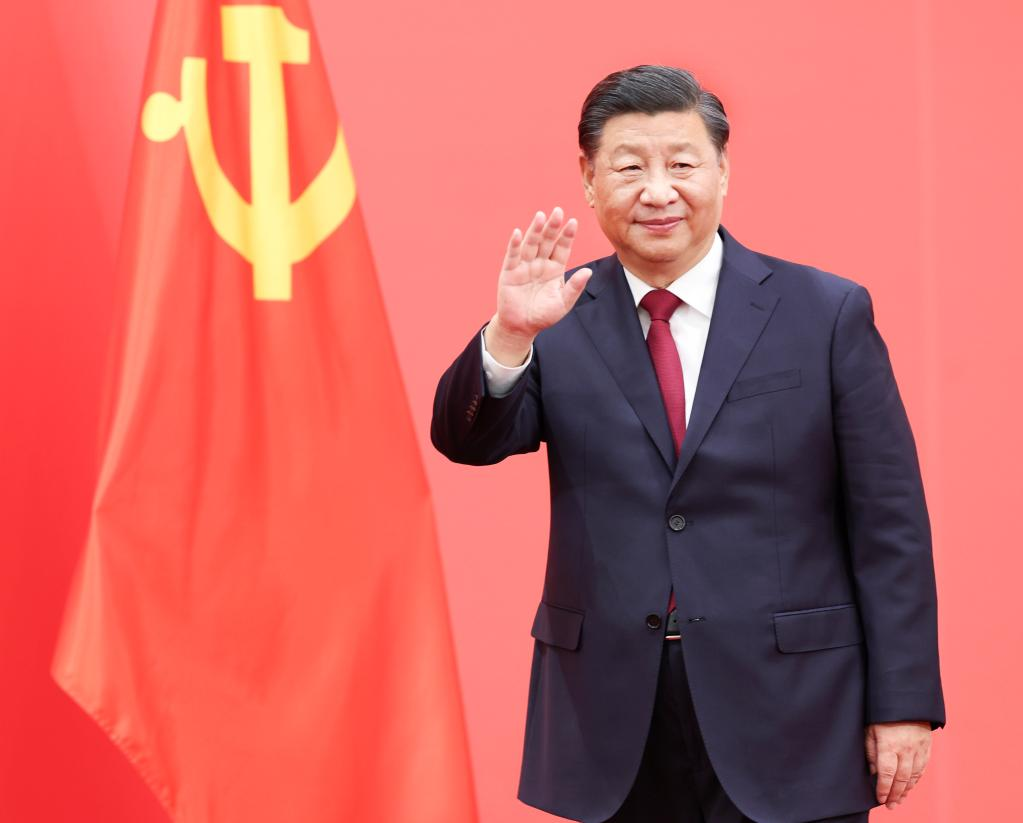
In an unprecedented move that has sent shockwaves through international diplomatic circles, China has officially warned the United States to steer clear of Taiwan, or else face a direct confrontation. The warning is the latest in a series of escalating tensions between the two global powers, as China asserts its claim over Taiwan, a democratic island nation it considers a breakaway province. The United States, meanwhile, has maintained its commitment to Taiwan’s defense under the guise of strategic ambiguity, providing military support while stopping short of officially recognizing Taiwan as a sovereign state. This delicate balancing act has kept tensions high in the region, but China’s latest statement marks a sharp shift towards a more aggressive stance.
China’s Strong Message to the US: A Direct Confrontation?
The Chinese government’s warning to the United States comes amid growing concerns that a conflict over Taiwan could spiral into a larger military confrontation between the two superpowers. On multiple occasions, Chinese officials have made it clear that they view Taiwan as an integral part of China’s territory and have repeatedly threatened to use force if necessary to bring the island under Beijing’s control.
In a recent statement, a Chinese Foreign Ministry spokesperson warned the United States that if it continues to interfere in Taiwan’s affairs or support Taiwanese independence, China will take “resolute and decisive measures” to protect its sovereignty. The warning is significant because it directly challenges U.S. involvement in the Taiwan issue, which Beijing considers a domestic matter. The spokesperson stated that if the U.S. continues its “reckless and provocative actions,” the consequences could be severe, including the possibility of direct military confrontation.
This statement adds fuel to an already volatile situation in the Taiwan Strait, where military tensions have been rising for years. China has ramped up its military presence near Taiwan, conducting frequent air and naval drills, while the U.S. has continued to provide arms and political support to Taiwan. Despite these actions, the U.S. has refrained from taking direct military action in defense of Taiwan, instead relying on its long-standing policy of strategic ambiguity. This policy, which aims to deter both China from attacking and Taiwan from declaring independence, has long been a cornerstone of U.S. policy in the region.
The US-Taiwan Relationship: A Delicate Balance
The United States has maintained a complex relationship with Taiwan for decades. While the U.S. does not officially recognize Taiwan as a sovereign state—recognizing the “One China” policy in 1979—it continues to support Taiwan through arms sales, military training, and diplomatic support. The Taiwan Relations Act, passed by the U.S. Congress in 1979, mandates that the U.S. provide Taiwan with the means to defend itself in the event of an attack, without specifying whether the U.S. would intervene militarily.
In recent years, however, the U.S. has taken a more active role in supporting Taiwan. High-profile visits by U.S. lawmakers to Taiwan and increased military aid have angered Beijing, which sees these actions as violations of China’s territorial integrity. Furthermore, U.S. rhetoric on Taiwan has grown more assertive under the administration of President Joe Biden, who has repeatedly reaffirmed U.S. support for Taiwan’s defense. Biden has even gone so far as to suggest that the U.S. would defend Taiwan if it were attacked by China, a statement that has sparked concern over whether the U.S. would become directly involved in a potential conflict over Taiwan.
The Taiwan Issue: A Flashpoint for US-China Tensions
The Taiwan Strait, one of the world’s most strategic waterways, is rapidly becoming one of the world’s most dangerous flashpoints. Taiwan, located just off the southeastern coast of China, is home to 23 million people and has developed into one of the world’s most advanced economies, with a vibrant democracy and a high-tech industry that is critical to global supply chains, particularly in semiconductor manufacturing. Taiwan’s role in global geopolitics has made it a focal point of U.S.-China tensions, with Beijing viewing the island as a breakaway province that must be reunified with the mainland, by force if necessary.
For China, the issue of Taiwan is deeply intertwined with national identity and historical grievance. The Chinese Communist Party (CCP) views Taiwan’s continued de facto independence as an affront to the legitimacy of the CCP’s rule, which seeks to consolidate Chinese territorial integrity. Taiwan’s democratic system, its thriving economy, and its alliance with the U.S. serve as a model for the Chinese people, who increasingly demand more freedoms and rights. For President Xi Jinping, resolving the Taiwan issue has become a core objective of his leadership, and he has made it clear that he will not tolerate any challenge to China’s territorial claims.
On the other side, Taiwan’s government, led by President Tsai Ing-wen, has repeatedly asserted its sovereignty and independence, despite China’s pressure. The Taiwanese government maintains that it will not be coerced into reunification with China and has warned that any attempt to forcibly annex the island will result in severe consequences for China.
The Global Impact of a Potential Confrontation
A direct confrontation between the U.S. and China over Taiwan would have catastrophic global consequences. Both countries are nuclear powers, and the economic ramifications of such a conflict would ripple across the entire world. The Taiwan Strait is a crucial shipping lane for global trade, and any disruption to the free flow of goods through the region would severely impact global supply chains, particularly in the technology sector. Taiwan is a critical hub for semiconductor production, and a conflict in the region could lead to widespread shortages of chips, which are essential for everything from smartphones to cars to military equipment.
Moreover, a military confrontation between the U.S. and China would likely draw in other regional powers, including Japan, South Korea, and Australia, all of which have close ties to the U.S. and have expressed concerns over China’s growing military presence in the region. The involvement of these nations could escalate the conflict into a broader regional war, with global ramifications for security and trade.
Conclusion: A Dangerous Path Forward
China’s warning to the United States is a stark reminder of the high stakes involved in the Taiwan issue. As tensions continue to rise, both sides must carefully navigate the risks of miscalculation and military escalation. The international community has a vested interest in preventing a conflict over Taiwan, but with China’s growing assertiveness and the U.S.’s unwavering commitment to supporting Taiwan’s defense, the situation remains precarious. The world is watching closely, and the coming months and years will determine whether diplomacy or confrontation will ultimately shape the future of Taiwan and the broader Asia-Pacific region.